
Culvert Installation
CULVERT INSTALLATION IN Hot Springs, AR
Anyone building a driveway onto a county right-of-way in Garland County has to clear the requirements with the Road Department first, and the state highway office handles anything touching a state road. Clients Choice Contracting installs culverts across Hot Springs, AR: driveway entrance pipe, cross road culverts, replacement of crushed or undersized pipe, headwalls and end sections, and the ditch work that feeds them. Sizing comes from the drainage area rather than from whatever the neighbor happened to use.
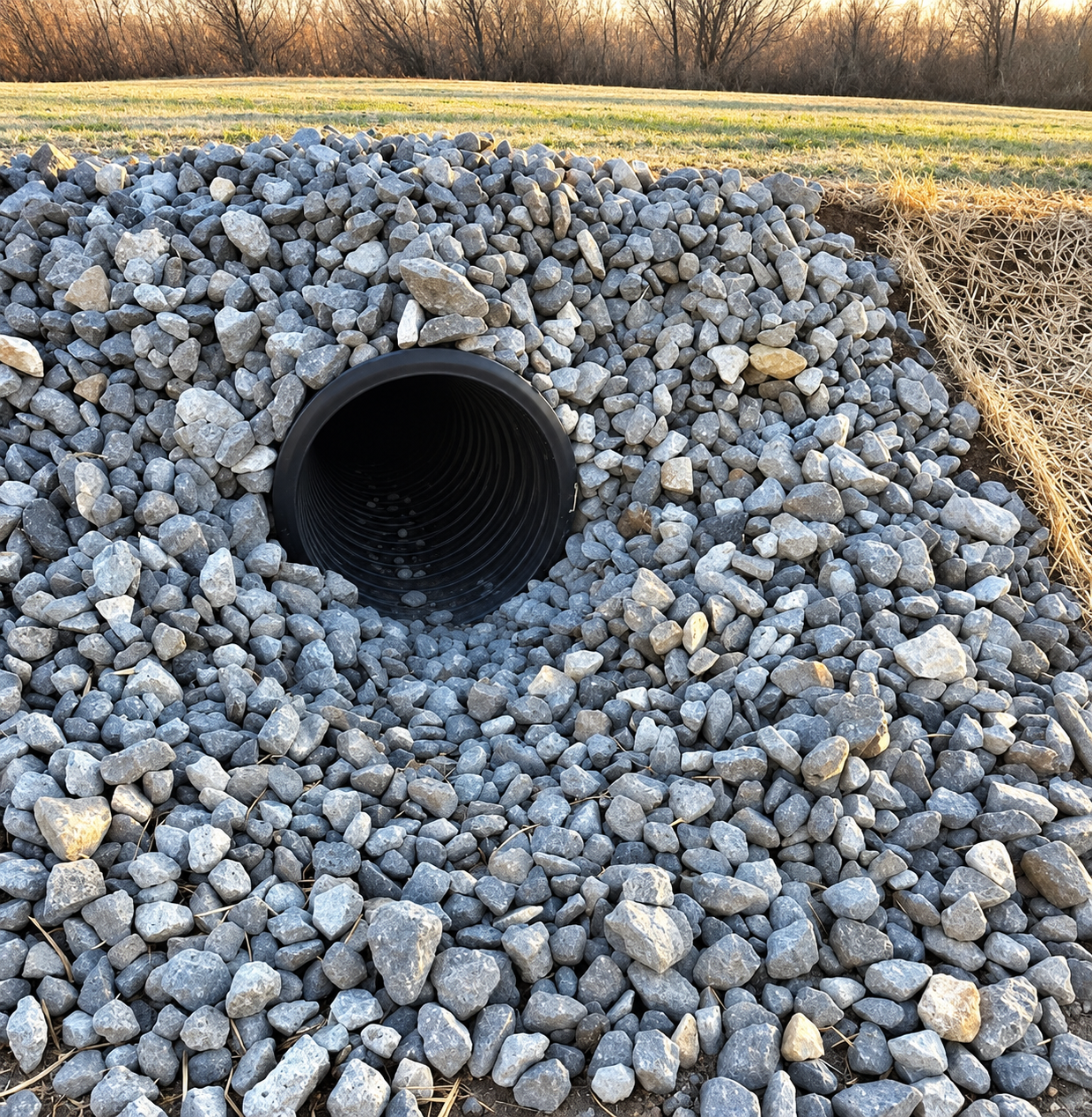
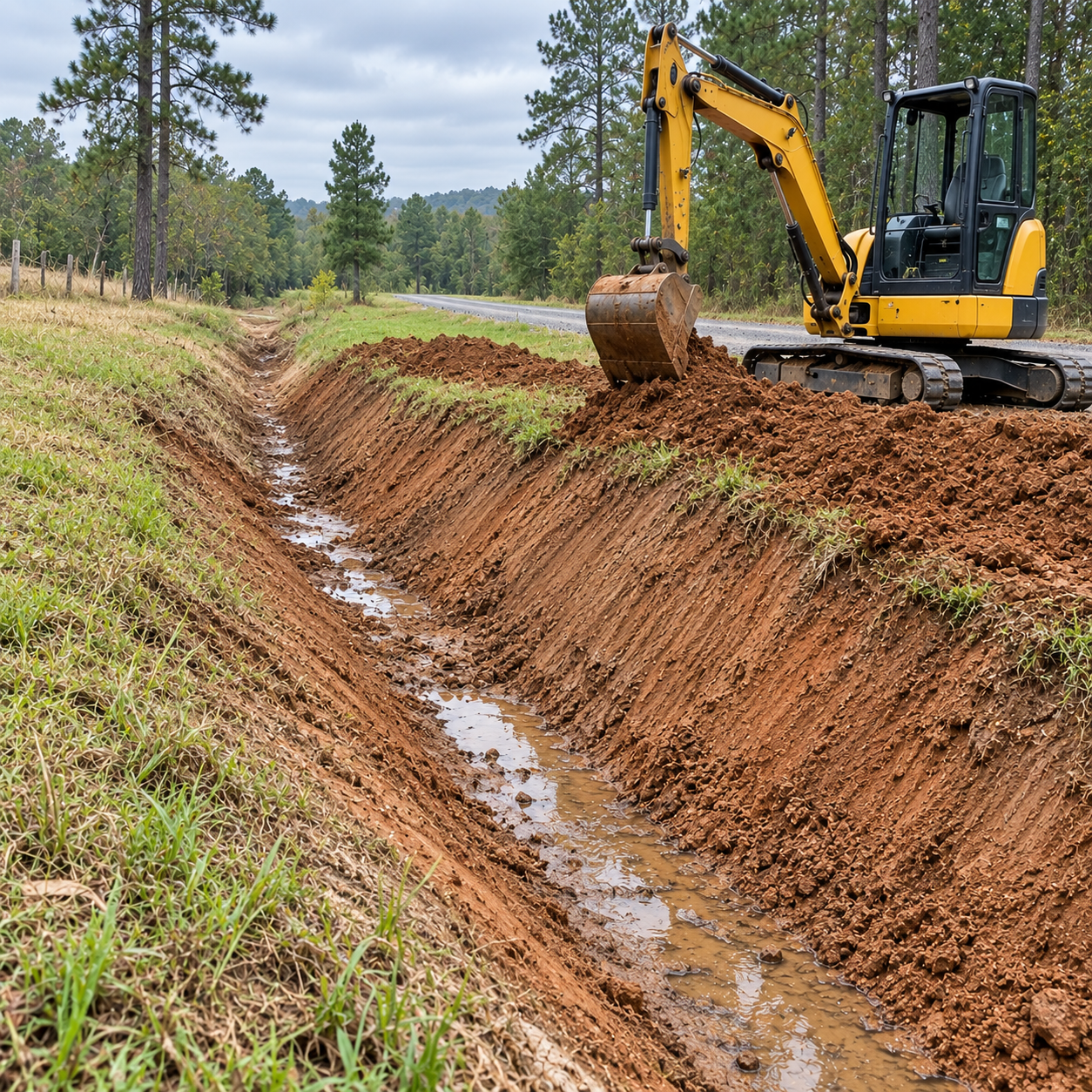
AN UNDERSIZED PIPE IS A DAM.
The most common culvert failure around here is not a broken pipe. It is a pipe that was never big enough, so during a real storm the water backs up behind the driveway, finds the low edge, and takes the fill out around the end. Then the pipe is fine, sitting in a channel that no longer touches it, and the driveway is gone.
Sizing the crossing correctly the first time costs a little more in pipe and saves you the entire cost of rebuilding the entrance after the first serious Arkansas spring.
✓ Sized to the drainage area upstream
✓ Bedded on compacted stone, not soil
✓ Cover depth the road department requires
✓ Inlets and outlets armored against scour
CULVERT INSTALLATION
HOW A PIPE IS BEDDED DECIDES HOW LONG IT LASTS.
Pipe laid straight onto native shale carries the load on a few high points, and a plastic or metal culvert will eventually deform there. Proper bedding means a shaped stone base, haunching worked in under the sides so the pipe is supported through its lower third, and backfill compacted in lifts rather than dumped over the top. That work is invisible when it is finished, which is exactly why it gets skipped so often.
THESE HOLLOWS MOVE A LOT OF WATER FAST.
A small Ouachita drainage that looks like nothing in July can run hard for hours after two inches of rain, because the shallow soil sheds almost everything it receives. Culverts here are sized for that behavior, not for the trickle you see on the day of the estimate. Velocity matters on steep ground too, which is why outlets get riprap and end sections rather than ending as bare pipe in soft dirt.
THE ROAD DEPARTMENT KNOWS US BY NAME.
Access onto a county road means talking to the Garland County Road Department before anything is installed, and state routes go through the highway office instead. Knowing which office to call, what they will want to see, and what pipe and cover they will accept turns a permitting delay into a phone call. We handle that conversation for you rather than leaving you to discover the requirements after the pipe is already in the ground.
WHY CHOOSE US FOR CULVERT INSTALLATION.
A CROSSING THAT SURVIVES STORMS
Correct sizing and armored ends mean the water goes through the pipe instead of around it, so the driveway is still there after the kind of spring that washes out the neighbors.
NO SURPRISE REBUILD IN THREE YEARS
Stone bedding and properly compacted backfill stop the settling, deformation, and sinkholes that turn a cheap installation into a full replacement well before its time.
APPROVALS HANDLED FOR YOU
Coordination with the county or the state highway office happens on our side, so the access work meets what they require before anybody has to come and look at it.
DITCHES THAT ACTUALLY FEED THE PIPE
An inlet only works if water reaches it. The ditch line, apron, and approach grade are shaped as part of the job rather than left for somebody else to sort out later.
ACCESS YOU CAN TRUST YEAR-ROUND
Delivery trucks, emergency vehicles, and your own car cross without you checking the forecast first, which matters most on the days when the weather is worst.
ONE CREW FOR THE WHOLE ENTRANCE
Pipe, ditching, base rock, grading, and the finished driveway surface all come from the same crew, so nothing falls through a gap between two contractors.
WHAT WE INSTALL
OUR CULVERT INSTALLATION WORK
Culvert work covers new crossings, replacements, and the repair of installations that were never right to begin with. These are the six we handle most often across Garland County and the Tri-Lakes.
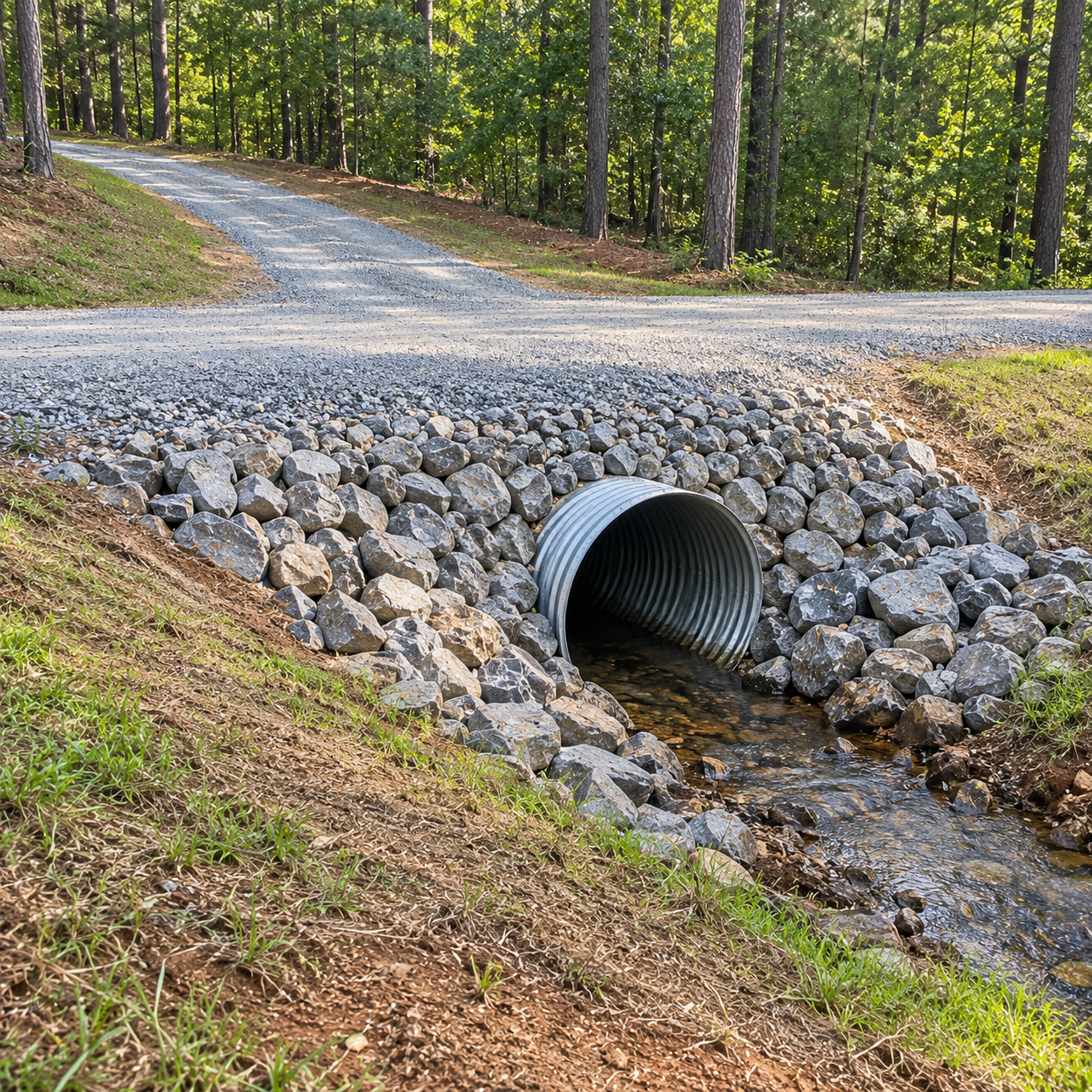
NEW ENTRANCE
Driveway Entrance Culverts
New access built where a drive meets a road ditch, with pipe sized to the ditch flow and set at the correct invert. Approach grades are shaped so vehicles are not scraping on the way in.
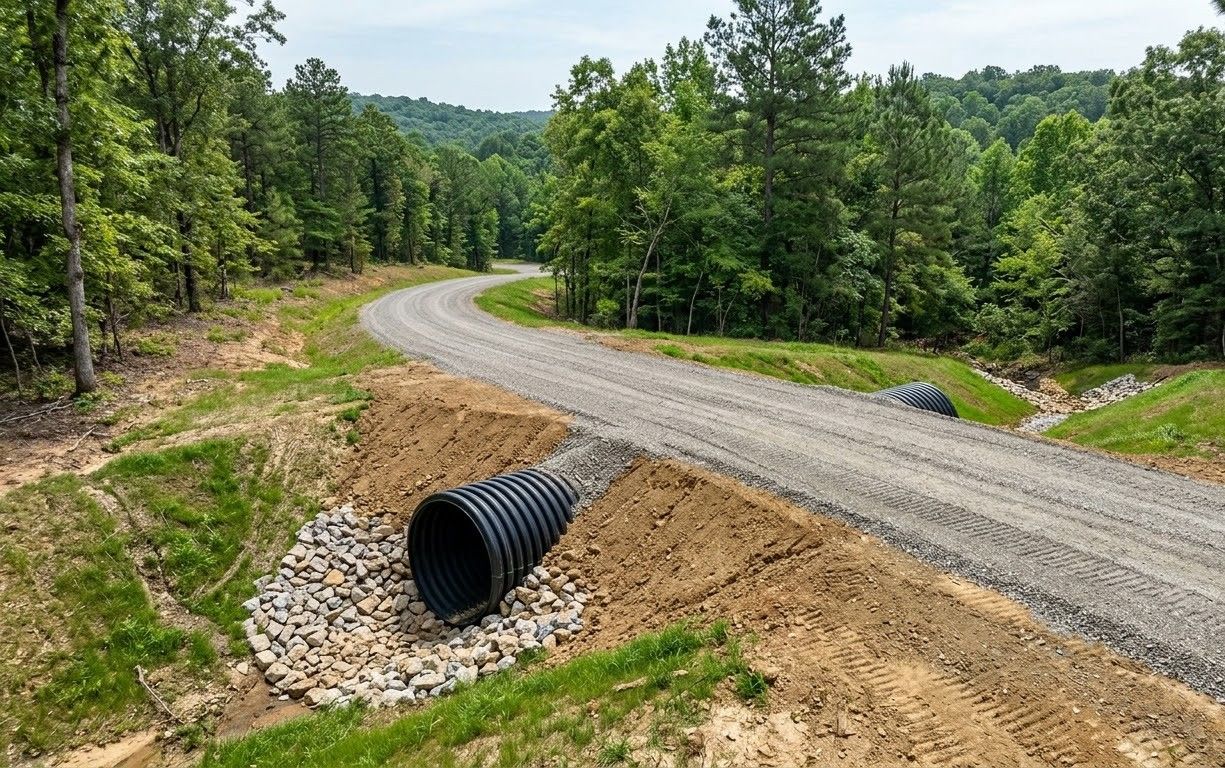
CROSS ROAD
Cross Drain and Field Culverts
Pipe carried under drives, lanes, and field crossings where a drainage way has to pass through. Alignment follows the natural channel rather than forcing water to turn a sharp corner.
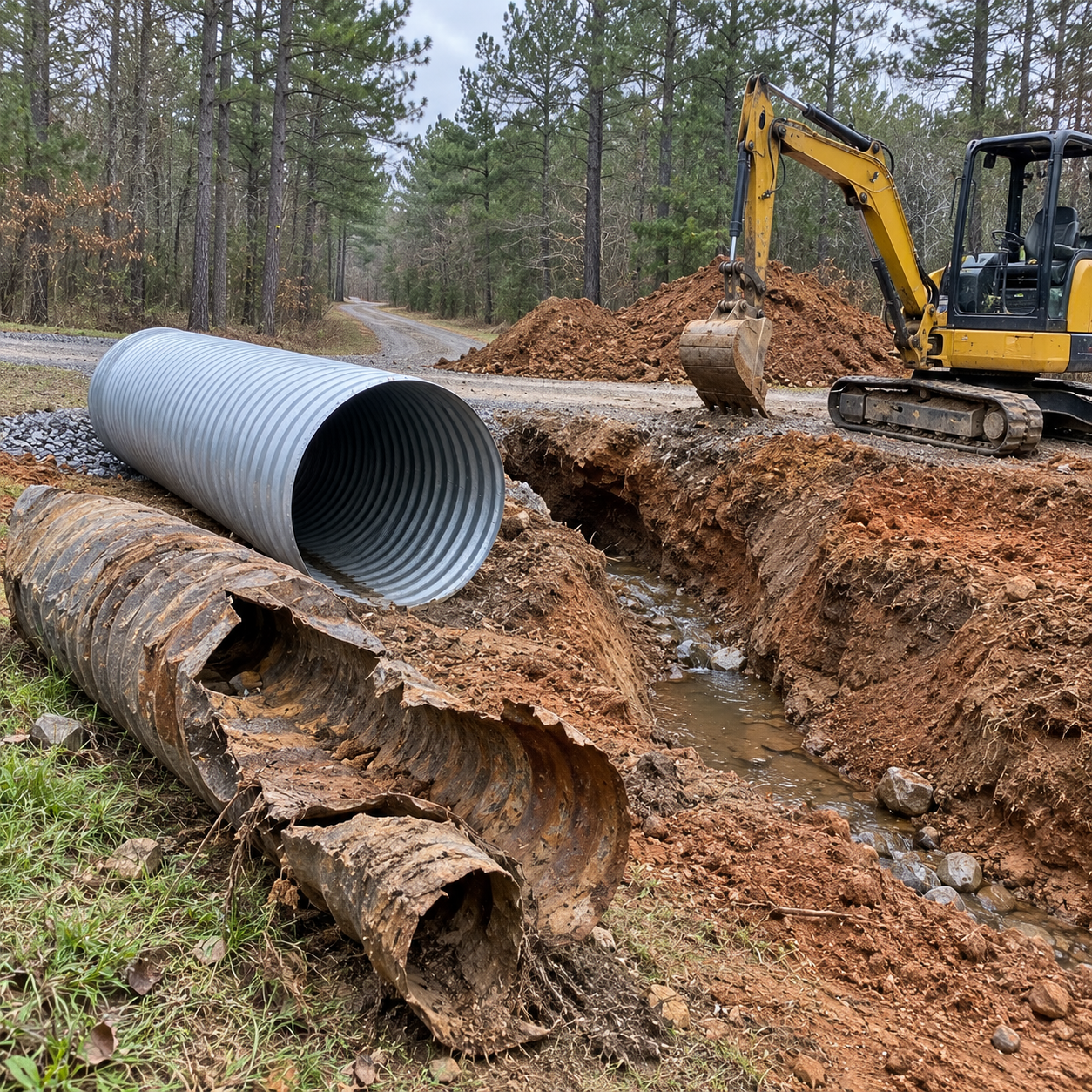
REPLACEMENT
Culvert Replacement and Upsizing
Crushed, rusted, collapsed, or undersized pipe removed and replaced with material and diameter matched to the real flow. Old pipe is pulled rather than abandoned in place under the fill.
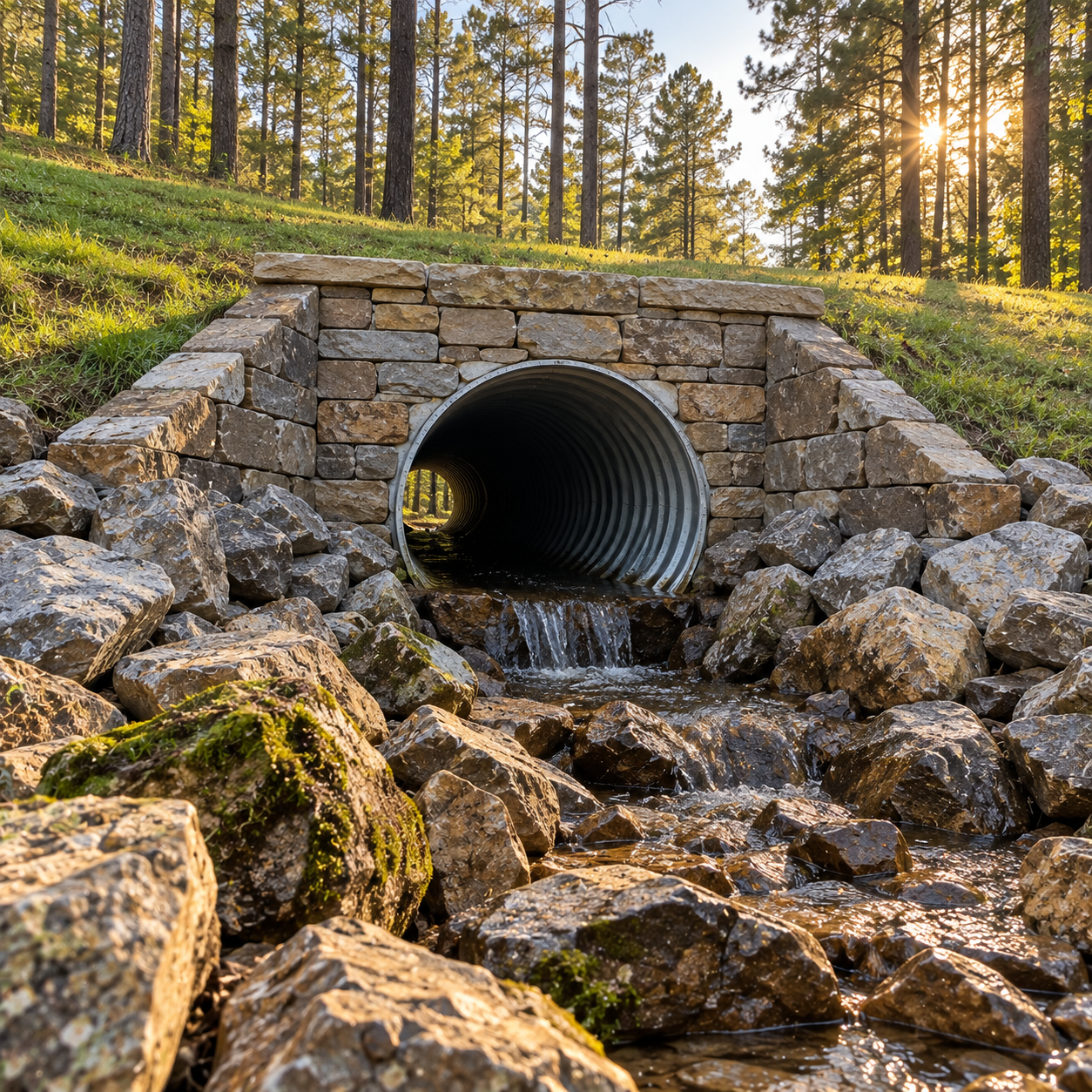
HEADWALLS
Headwalls, End Sections, and Riprap
Concrete or stone at the inlet and outlet to hold the fill, direct flow into the pipe, and stop scour at the discharge. This is what keeps ends from eroding backward year after year.
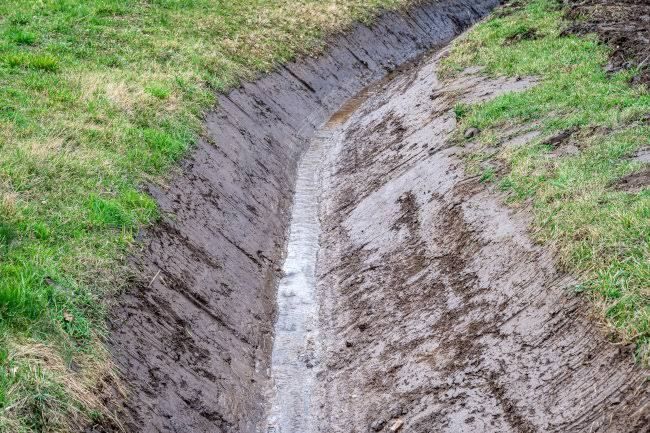
DITCH WORK
Ditch Cutting and Reshaping
Roadside and property ditches cut to grade so water reaches the culvert instead of standing or spreading. Side slopes are shaped to be stable and mowable rather than steep and eroding.
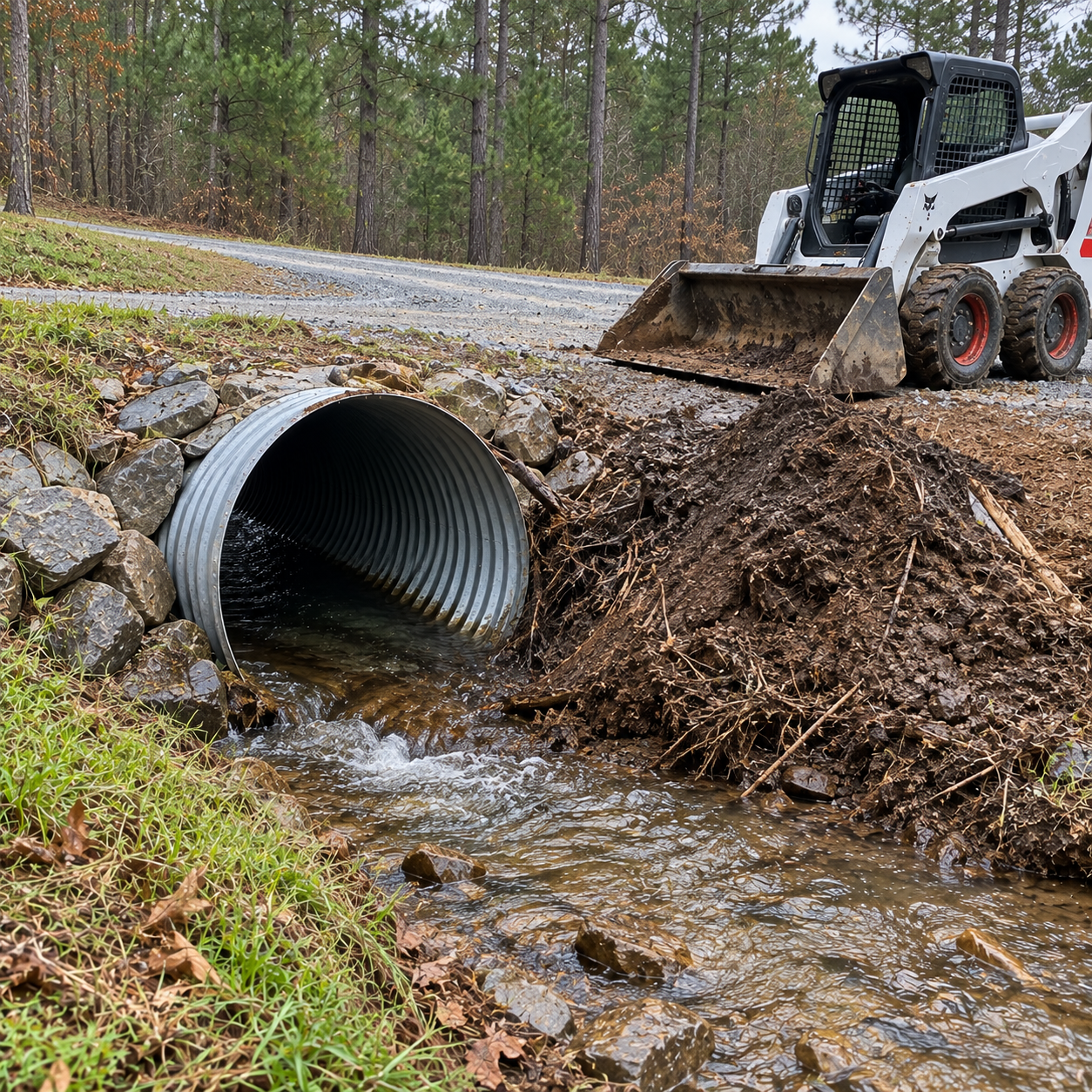
CLEANING
Culvert Cleaning and Restoration
Silted, root filled, or partially collapsed pipe cleaned out and restored to its full capacity wherever it can still be saved. Inlets are reshaped so debris stops catching at the entrance.
THE WORD ON OUR WORK
WHAT OUR CLIENTS SAY.
Access work is easy to appreciate after the fact. Property owners around Garland County have described driveways cut in off the main road and crossings that stayed put through storms, finished on the day promised and without the budget moving from where it started.
FAQ
FREQUENTLY ASKED QUESTIONS.
Culvert questions come down to size, depth, and permission: how big the pipe needs to be, how much cover it needs above it, and who has to approve the crossing.
What size culvert do I need for my driveway?
It depends on the drainage area feeding that ditch, the slope, and the road authority's own minimums. Many residential entrances land at 15 to 18 inches, but a larger contributing area upstream can easily push that considerably higher.
Do I need permission to install a driveway culvert?
For county roads, yes, through the Garland County Road Department, and anything touching a state route goes through the highway office instead. Clients Choice Contracting handles all of that coordination on driveway entrance work throughout Hot Springs, AR.
How much cover does a culvert need over the top?
Generally at least 12 inches of compacted material over the top of the pipe for residential drives, and more under heavy traffic. Too little cover is exactly why so many pipes crush under the first loaded delivery truck.
What is the best material for a driveway culvert?
Corrugated plastic is light, corrosion proof, and very common now. Galvanized metal handles heavy cover and abrasion well, and concrete lasts the longest under load. Site conditions and the required diameter will usually settle that choice for you.
Why does my culvert keep washing out at the end?
Almost always scour at an unarmored outlet, or a pipe that is too small so the water simply goes around it. Riprap, an end section, and correct sizing will together fix that problem for good rather than temporarily.
How long does a culvert installation take?
Most single driveway crossings go in within a day once the pipe is on site. Deeper crossings, larger diameters, rock, and headwall work can stretch that out, and the ditch work is usually done at the same time.
Can a driveway be used right after the culvert goes in?
Base rock is compacted and drivable immediately in most cases. Clients Choice Contracting typically finishes the driving surface the same day on Hot Springs, AR entrances, so access is never interrupted for longer than it has to be.
How often should a culvert be cleaned out?
Check it after every heavy storm and clear anything caught at the inlet. A full cleaning is worth doing every few years, and sooner than that where leaves, silt, or beaver activity keeps blocking the entrance to the pipe.
HOW WE WORK
FROM BLOCKED DITCH TO SOLID CROSSING, HERE IS HOW.
STEP 01
Look at the ditch and what feeds it
We walk the drainage upstream to see how much area is contributing, how fast it falls, and what the water has done historically. Old scour marks tell you more than any table can.
STEP 02
Size the pipe and check the requirements
Diameter, material, invert elevation, and the required depth of cover are all worked out together, then checked against what the county road department or the state highway office will accept for that particular road.
STEP 03
Price the crossing and call the locates
You get a free written estimate covering the pipe, the bedding stone, headwalls, ditching, and the finished driveway surface. Utility locates are requested well before anything is opened up anywhere near a right-of-way.
STEP 04
Excavate and bed the pipe properly
The trench is cut to line and grade, a shaped stone base goes in, and the pipe is set on it. Haunching is worked under the sides so the lower third is genuinely supported.
STEP 05
Backfill, compact, and armor the ends
Material goes back in lifts and gets compacted around the pipe rather than dumped over it. Headwalls, end sections, and riprap are installed at the inlet and outlet before the surface goes on.
STEP 06
Finish the drive and shape the ditch
Base rock is placed and rolled out to a drivable surface, the ditch line is cut to feed the inlet cleanly, and any disturbed shoulders are seeded before we pull the equipment off.
Get Your Free Estimate
SIZE THE CROSSING PROPERLY, FREE.
Send us the address and a photo of the ditch through the contact page. We will look at what drains to it, tell you what pipe the crossing actually needs, and put a written number in front of you.
WHAT YOUR CULVERT ESTIMATE COVERS
✓ Pipe diameter, material, and length
✓ Invert elevation and required cover depth
✓ Bedding stone and compacted backfill
✓ Headwalls, end sections, and riprap
✓ Ditch cutting on both sides of the pipe
✓ Coordination with the road authority