
Concrete Services
CONCRETE SERVICES IN Hot Springs, AR
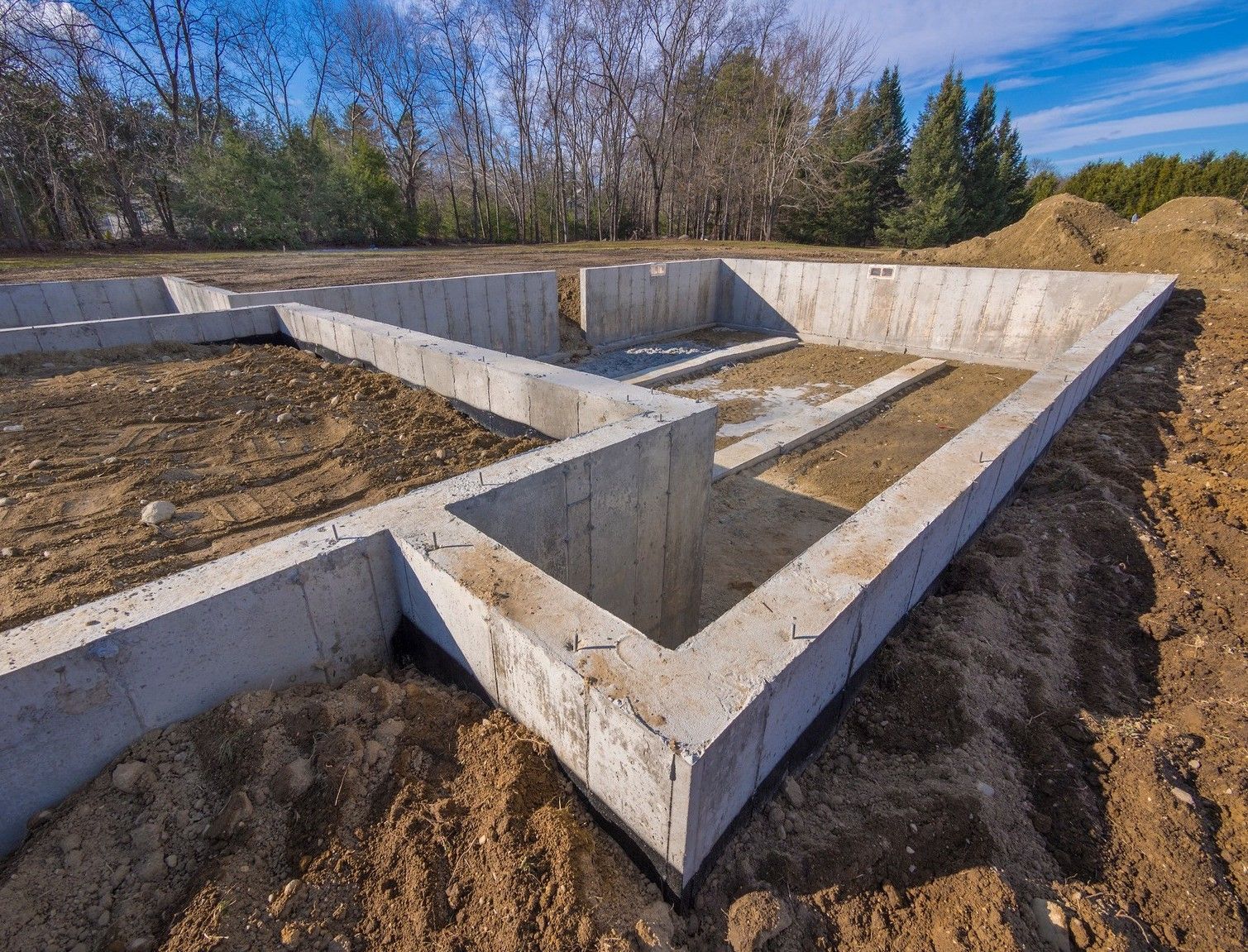
Concrete reaches most of its design strength in the first 28 days, but whether a slab cracks or stays flat is decided by the ground underneath it long before the truck arrives. Clients Choice Contracting pours concrete across Hot Springs, AR: driveways, garage and shop slabs, equipment pads, sidewalks and approaches, footings, and retaining structures. We prepare the subgrade ourselves, which means the base under your concrete gets the same attention as the finish on top of it.
A SLAB IS ONLY AS GOOD AS ITS BASE.
Every failed driveway we get asked to replace has the same story underneath. Topsoil never stripped, base rock never compacted, or fill placed the day before the pour. Concrete has enormous compressive strength and almost no ability to bridge a soft spot, so when the ground moves the slab breaks, and no amount of steel or thickness will save a poorly prepared subgrade.
Doing the earthwork and the concrete with the same crew removes the one seam where these problems normally hide, because nobody on the job is inheriting somebody else's base and hoping it holds.
✓ Subgrade stripped and compacted first
✓ Base stone placed and rolled to depth
✓ Reinforcement set on chairs, not walked in
✓ Control joints cut on time, not late
CONCRETE SERVICES
CRACKS GO WHERE YOU PUT THEM.
All concrete cracks, and the only real question is whether it happens along a line somebody chose or across the middle of a new driveway. Control joints cut to roughly a quarter of the slab depth, spaced sensibly for the thickness, and cut within the first day give the shrinkage somewhere to go. Skipping that step or cutting a week late is the single most common reason a good pour looks bad within a year.
POURING ON A GRADE NEEDS BRACED FORMS.
Flat lot concrete is straightforward. A driveway climbing a Ouachita grade needs the base keyed in so it cannot creep downhill, forms braced hard enough to survive the head pressure of wet concrete on a slope, and a surface texture with enough grip to be usable in a January rain. Drainage matters too, since water running down a drive has to leave it rather than pond at the garage.
CONCRETE FORGIVES NOTHING YOU SKIP UNDERNEATH.
You can hide a rushed subgrade for exactly one season. Time in this trade teaches you that the money is made or lost before the truck backs in: the stripping, the compaction, the stone depth, the vapor barrier, the steel height, the joint layout. All of it is invisible once the pour is finished, which is precisely why it deserves the attention. Would you rather pay for the base now or the replacement later?
WHY CHOOSE US FOR CONCRETE SERVICES.
FLATWORK THAT STAYS FLAT
A compacted base and properly placed steel keep slabs from settling at the edges, so a driveway still lines up with the garage floor after many freeze and thaw cycles.
CRACKING THAT STAYS INVISIBLE
Joints cut at the right depth and the right time put shrinkage where it belongs, which means a clean surface instead of a random line across the middle of the pour.
WATER THAT LEAVES THE SURFACE
Slopes are set so rain runs off rather than standing, and that keeps ice, staining, and freeze damage off the concrete through the worst weeks of the year.
ONE CREW, BASE TO FINISH
The same outfit that clears, cuts, and compacts also forms and pours, so no one can blame the earthwork contractor when something moves underneath the slab.
A FINISH THAT SUITS THE USE
Broom texture where grip matters, smoother where it does not, and edges tooled properly. The finish is chosen for how the surface gets used rather than for how it photographs.
SITE ACCESS ALREADY SOLVED
We build the approach the truck needs before pour day, which means no waiting on a mixer stuck at the bottom of a wet hill with a load going off.
WHAT WE POUR
OUR CONCRETE WORK
Most of our concrete follows earthwork we did ourselves, which is why the base is never a mystery. These are the six pours we take on most often around Garland County and the Tri-Lakes.
DRIVEWAYS
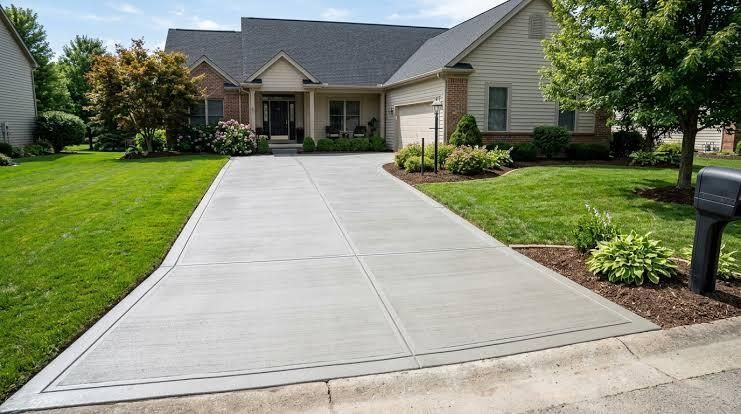
Concrete Driveways and Aprons
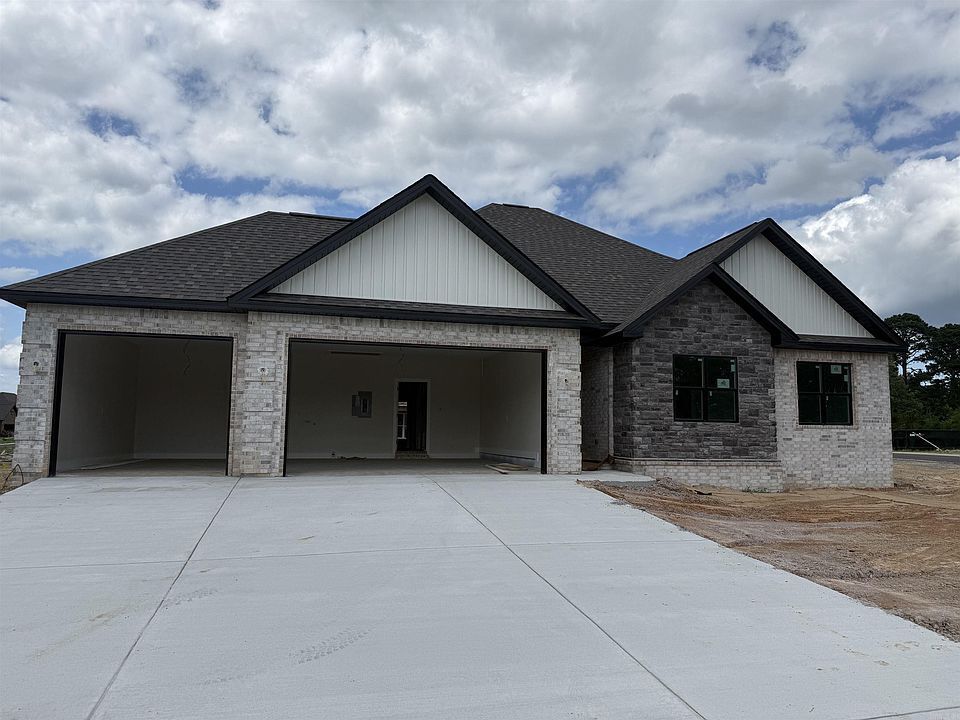
Residential drives, turnarounds, and road aprons poured on a compacted stone base with reinforcement and cut joints. Thickness and steel are set for the vehicles that will actually be using the surface.
SLABS
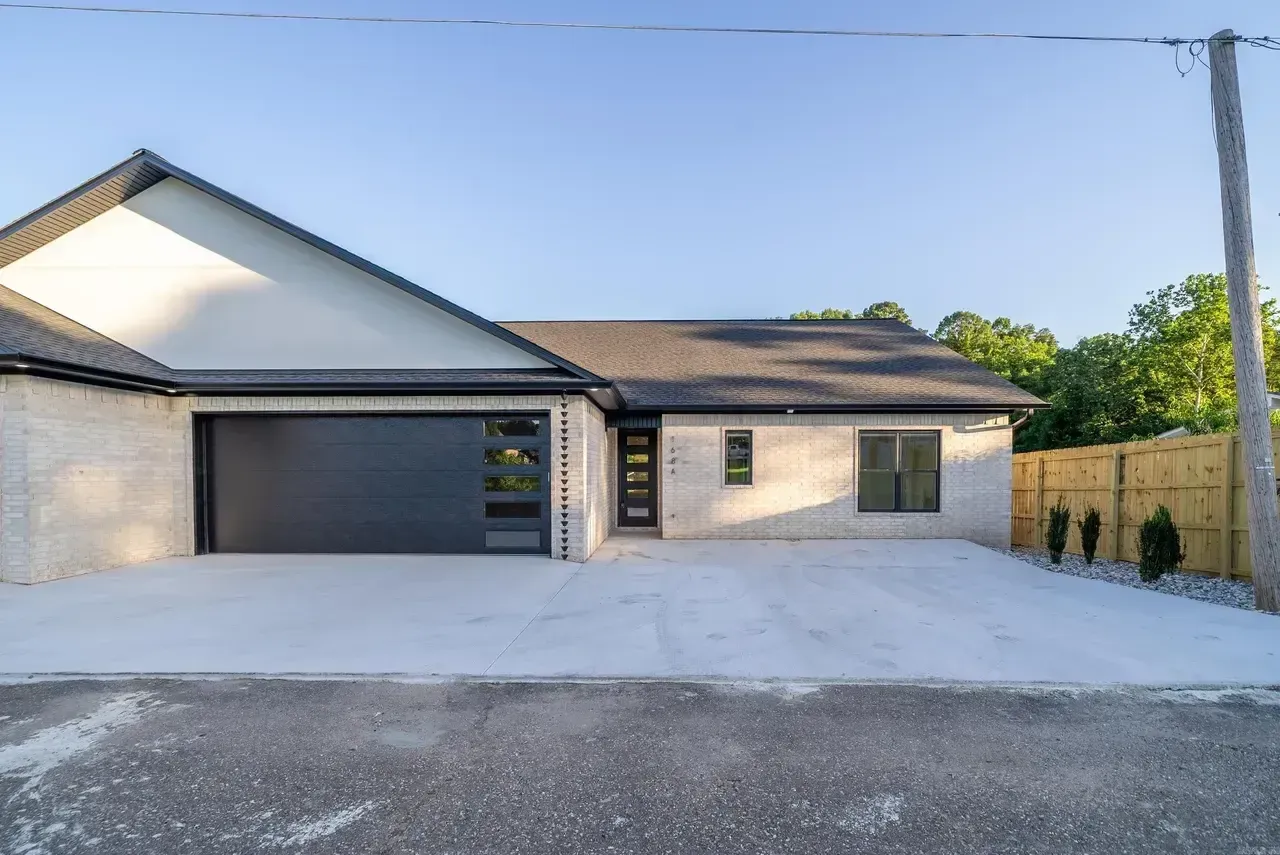
Garage, Shop, and Building Slabs
Slabs on grade for garages, shops, and outbuildings, including thickened edges, vapor barrier, and any embeds the structure needs. Elevation is set so water never runs toward the door opening.
PADS
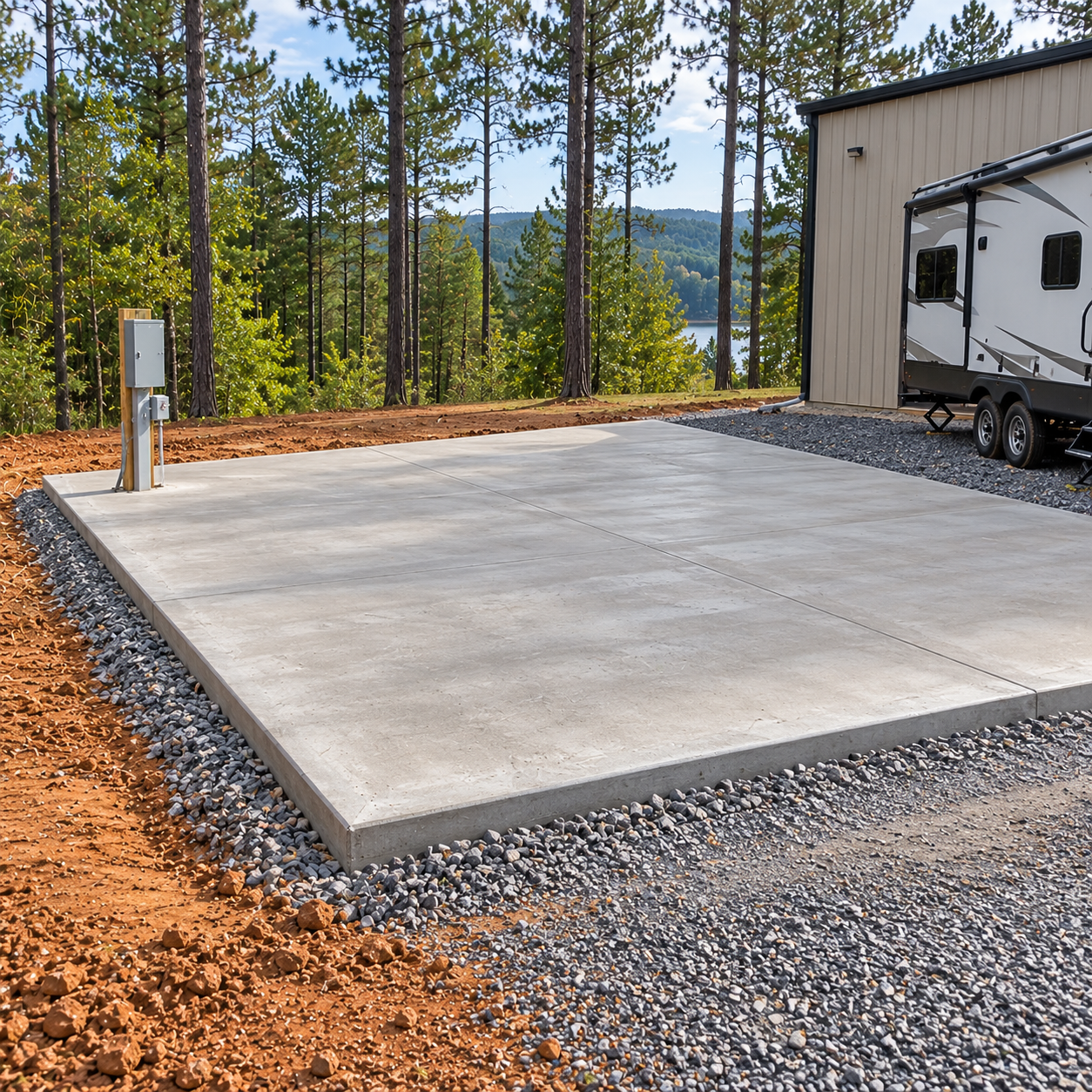
Equipment, RV, and Utility Pads
Pads for generators, fuel tanks, air conditioning units, RVs, dumpsters, and heavy machinery. Sized and reinforced for the actual point loads involved rather than poured at a standard residential thickness.
WALKWAYS
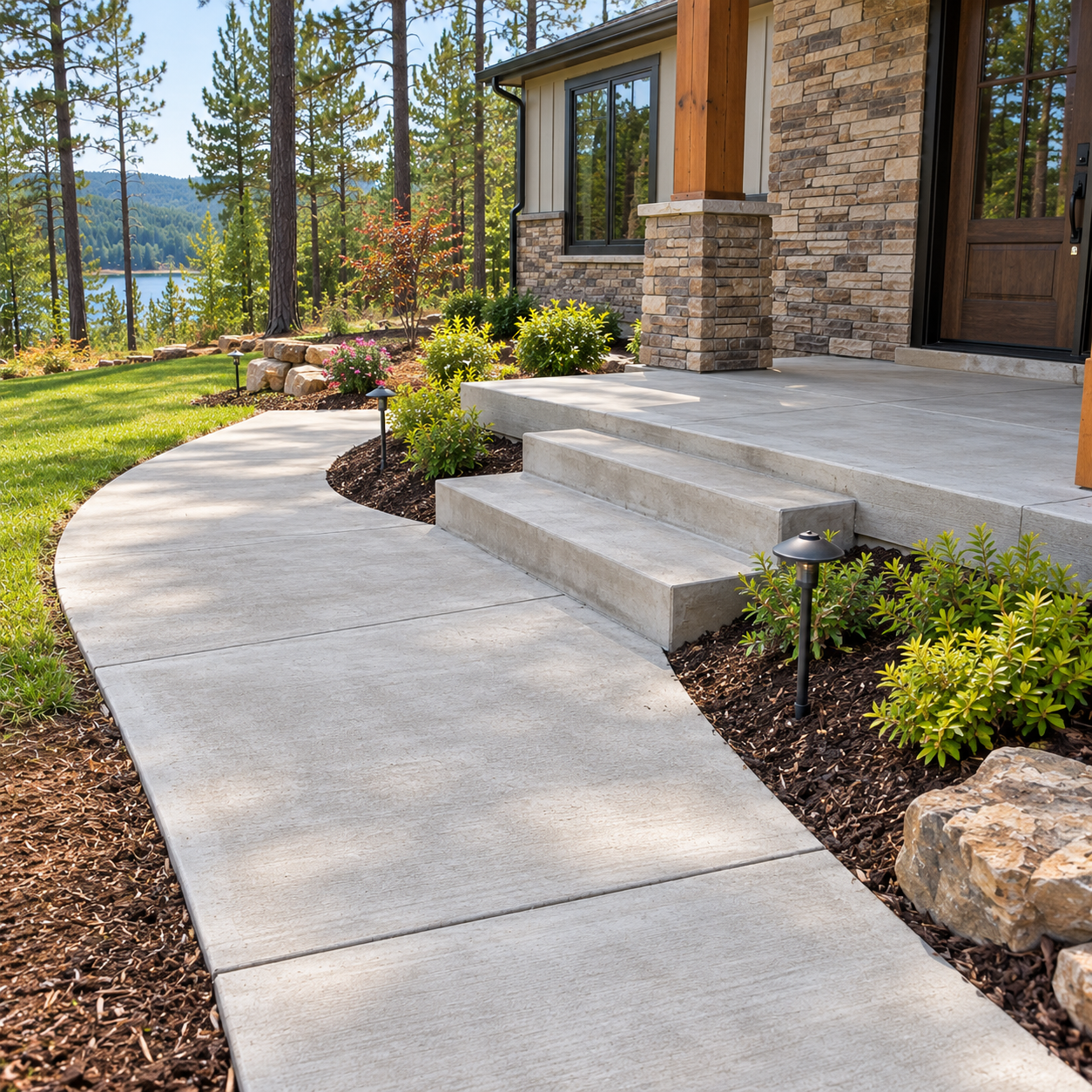
Sidewalks, Steps, and Landings
Walks, entry landings, and formed steps with consistent riser heights and a proper fall away from the structure. Handrail embeds are set during the pour itself rather than drilled in afterward.
FOOTINGS
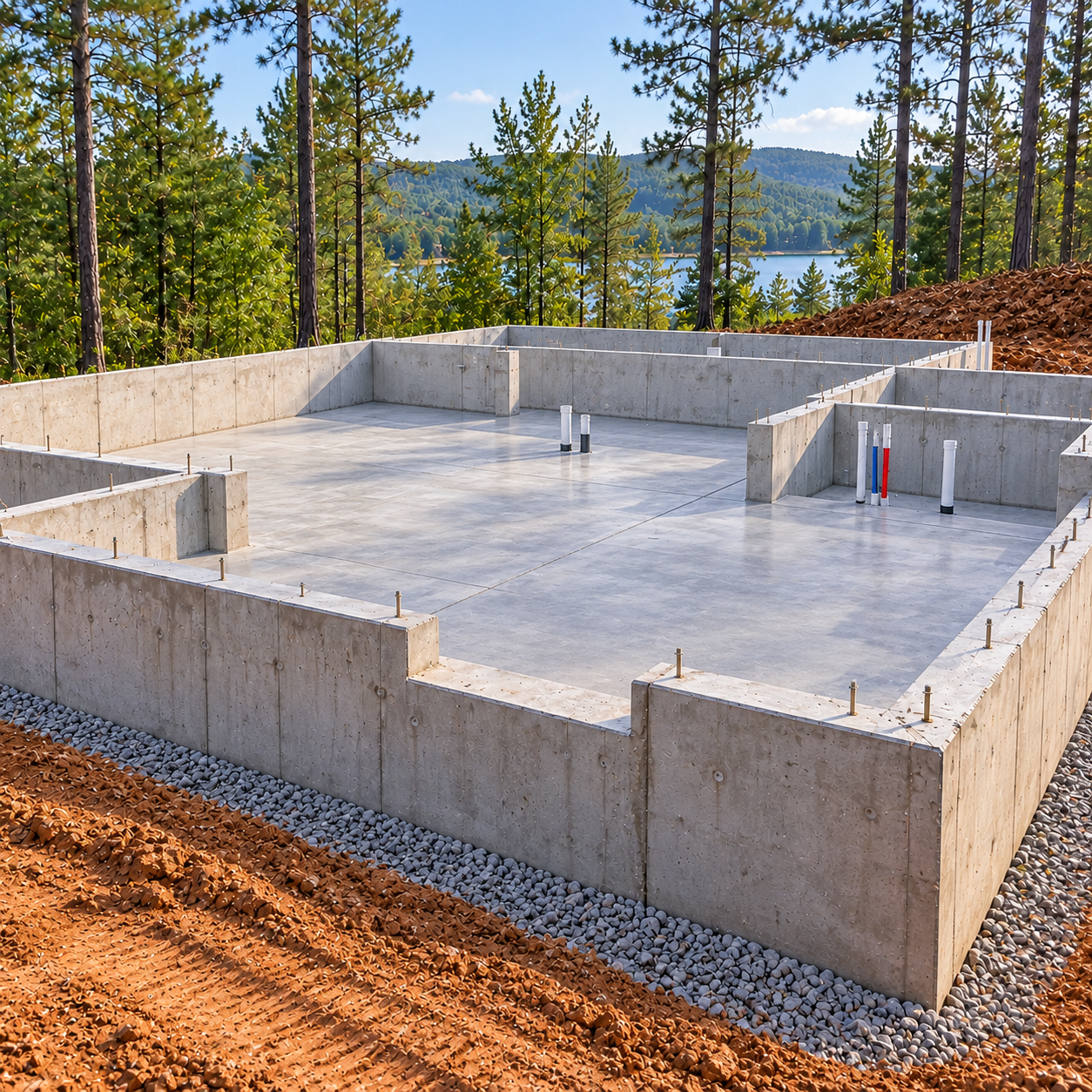
Footings and Foundation Walls
Continuous footings, pier pads, and short foundation walls poured to the plan dimensions on undisturbed bearing material. Steel placement and cover are both checked before any concrete is called for.
STRUCTURES
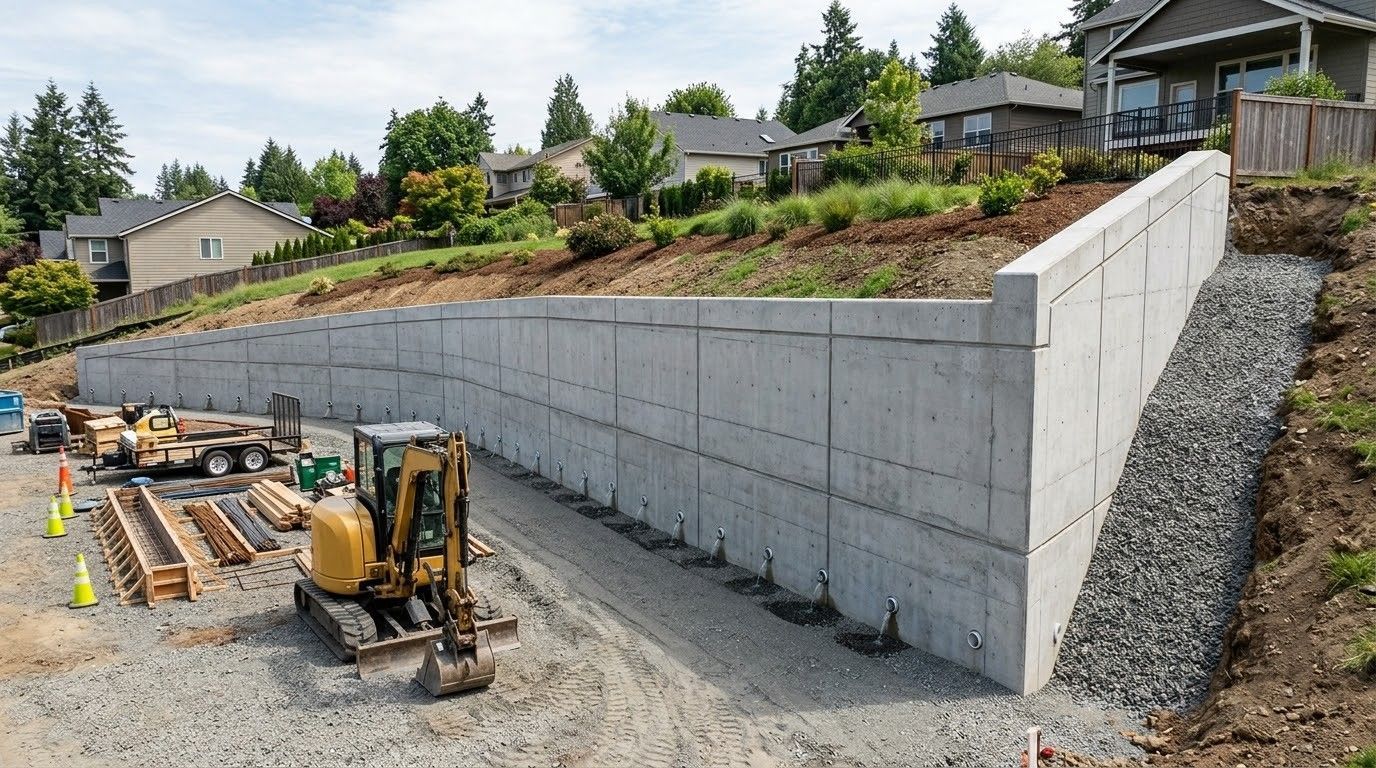
Retaining Walls and Curbing
Poured retaining structures and curbing wherever a grade change has to be held, including the drainage behind the wall so hydrostatic pressure never builds up against the back of it.
THE WORD ON OUR WORK
WHAT OUR CLIENTS SAY.
Concrete is judged years later, not on the day it is poured. Property owners around Garland County have described work delivered on time, priced honestly with nothing added at the end, and surfaces that have held up exactly as promised through several Arkansas winters since.
FAQ
FREQUENTLY ASKED QUESTIONS.
Concrete questions are usually about durability and timing: how thick a slab should be, when it can be used, and what makes some pours crack while others stay clean.
How thick should a concrete driveway be?
Four inches is standard for cars and light trucks, and 5 or 6 inches with reinforcement is worth it wherever heavy delivery vehicles or equipment will be crossing regularly. The base depth underneath the slab matters just as much.
How long before I can drive on new concrete?
Foot traffic is usually fine after a day or two, cars after about a week, and heavy loads after roughly 28 days when the concrete has reached most of its design strength. Cold weather extends every one of those.
Why do control joints have to be cut so soon?
Concrete shrinks as it cures, and the joints have to exist before the shrinkage stress does. Cutting within the first day at about a quarter of the slab depth is what keeps the crack on the line you chose.
Does concrete need reinforcement?
Steel does not prevent concrete from cracking, it holds any cracks tight and keeps the slab acting as a single piece. Anything carrying vehicle loads or sitting on a questionable subgrade is worth reinforcing properly rather than pouring plain.
Can concrete be poured in winter here?
Yes, with the right precautions taken in advance. Cold slows the set and freezing damages fresh concrete, so we watch the forecast, adjust the mix, and cover the pour. Clients Choice Contracting pours year-round throughout Hot Springs, AR.
What causes spalling and surface flaking?
Usually water worked into the surface during finishing, or de-icing salt used on young concrete. A properly finished and cured slab resists both of those, and we recommend keeping salt off any new pour through its first winter.
Do I have to remove the old concrete before repouring?
Almost always yes, because pouring over a broken slab simply telegraphs the old cracks straight up through the new surface within a year or two. Clients Choice Contracting demolishes, hauls away, and rebuilds the base before repouring anywhere across Hot Springs, AR.
How soon after grading can concrete be poured?
As soon as the subgrade has been compacted and tested, which can easily be the same week. What matters is the density rather than any waiting time, since properly compacted material does not settle further on its own.
HOW WE WORK
FROM SUBGRADE TO FINISHED SURFACE, HERE IS HOW.
STEP 01
Look at the ground, not just the layout
We check what is under the proposed pour, how water moves across it, and whether any existing base can be reused. The answer to that decides the thickness, the steel, and the drainage plan.
STEP 02
Price the pour and everything under it
You get a free written estimate covering demolition, base preparation, forming, reinforcement, concrete, and the finish. Subgrade work is shown as its own line item so you can see exactly what is going underneath.
STEP 03
Strip, cut, and compact the subgrade
Topsoil and unsuitable material come out, the area is cut to depth, and the subgrade is compacted and then proof-rolled. Soft spots are undercut and rebuilt rather than simply covered over and forgotten.
STEP 04
Place base stone and set the forms
Compacted base rock goes down to the specified depth, then forms are set to line, grade, and slope. Bracing is built for the head pressure the pour will actually generate on the day.
STEP 05
Set steel and pour to elevation
Reinforcement is placed on chairs at the correct height, then concrete is placed, screeded, and floated out to the finished elevation. Vapor barrier and any embeds go in before the truck is called for.
STEP 06
Finish, joint, and cure the concrete
The surface is finished to the agreed texture, edges are tooled, joints are cut on time, and curing is protected. Forms come off once the concrete has gained enough strength to hold its edges.
Get Your Free Estimate
ONE NUMBER FOR BASE AND POUR, FREE.
Tell us what you want poured and where through the contact page. We will look at the ground under it, tell you what the base actually needs, and put a written number in front of you covering both.
WHAT YOUR CONCRETE ESTIMATE COVERS
✓ Demolition and removal of old concrete
✓ Subgrade stripping, cutting, and compaction
✓ Base stone type and compacted depth
✓ Slab thickness and reinforcement plan
✓ Finish texture, slope, and joint layout
✓ Curing, cleanup, and a working schedule