
Trenching and Utility Excavation
TRENCHING AND UTILITY EXCAVATION IN Hot Springs, AR
Arkansas law gives utility operators two working days to mark a site once a locate request is filed, and no responsible trench opens before those marks are on the ground. Clients Choice Contracting handles trenching and utility excavation across Hot Springs, AR: water and sewer lines, electrical and conduit runs, gas and propane, irrigation, drainage pipe, and service laterals from the road to the structure. Depth, bedding, and backfill are matched to what the line is and what sits above it.
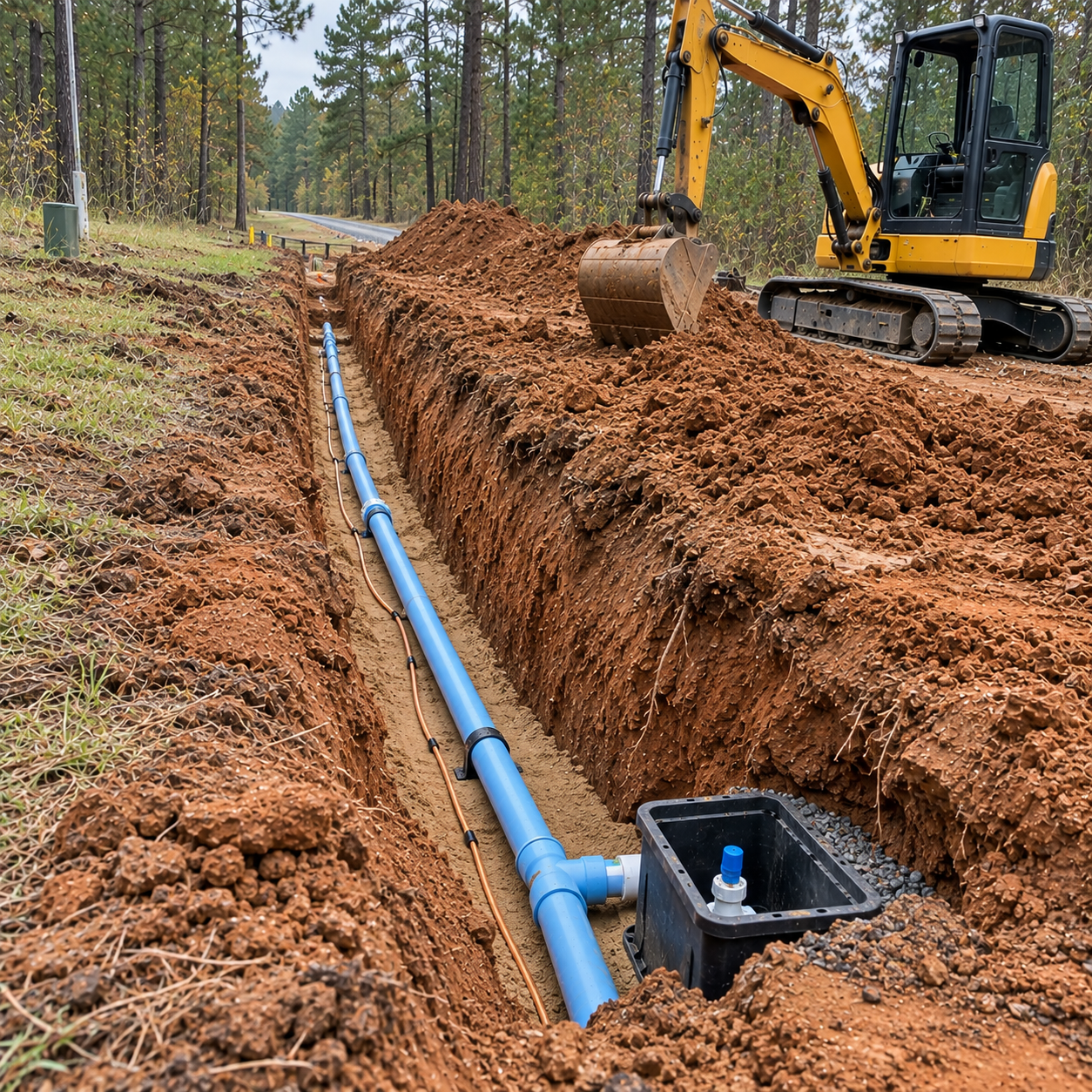
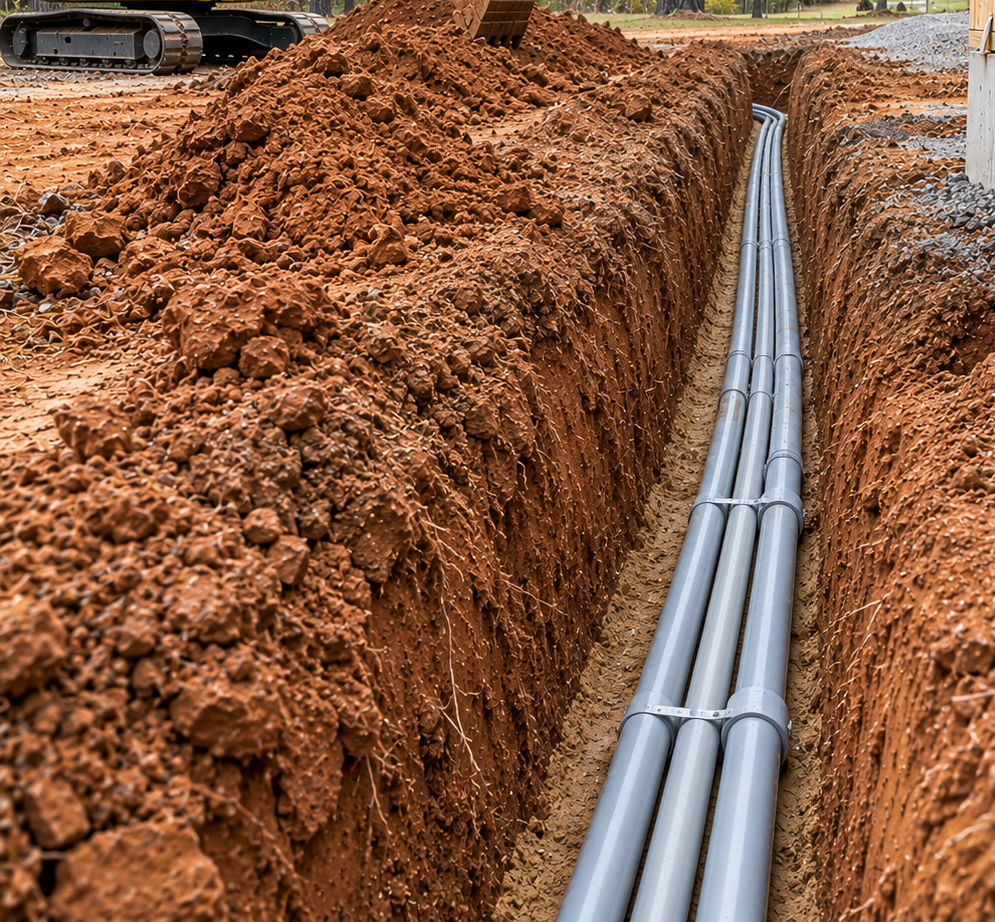
A TRENCH IS THE EASY PART.
Opening a trench takes an hour. Doing it without cutting somebody's fiber, without collapsing a wall on a person standing in it, and without leaving a settling scar down the middle of a finished yard takes considerably more. The locates get called first every time, hand digging happens near marked lines, and spoil stays back from the edge where it cannot slide back in.
Backfilling correctly is the part almost everybody rushes through, and it happens to be the part you will be looking at across your yard every day for the next 10 years.
✓ Arkansas 811 locates before every dig
✓ Hand digging near marked utilities
✓ Bedding sand or stone under the line
✓ Backfill compacted in lifts, surface restored
TRENCHING AND UTILITY EXCAVATION
ROCK IS WHY MOST TRENCHES STALL HERE.
Shale within a foot of the surface will stop a standard bucket, and a service run that should take a morning turns into a two day job with a hammer. We plan for that from the start, price it honestly rather than discovering it halfway, and reroute the line where a longer path avoids a ledge. Bedding sand also matters more in rock, because a pipe laid on broken shale gets point loaded and eventually fails.
TRENCHING ON A GRADE NEEDS ITS OWN PLAN.
Steep ground changes trenching in ways flat country never has to consider. Water runs down the trench line itself and can wash bedding out from under a pipe, so cutoffs and clay dams get built into long runs. Shallow soil over rock also means depth is genuinely hard won, and where cover is short we use sleeve, conduit, or thermal protection rather than pretending the required depth was reached.
WE TREAT EVERY UNMARKED LINE AS LIVE.
Locate tickets miss private lines constantly, because the utility only marks up to the meter. The irrigation main, the propane run to the shop, the well line, the septic feed, and whatever a previous owner buried without telling anybody are all still down there. Long experience means we probe, hand dig, and ask what has been installed over the years before assuming clean ground. Do you know where your private lines actually run?
WHY CHOOSE US FOR TRENCHING AND UTILITY EXCAVATION.
NOBODY CUTS A LIVE LINE
Locates are called on every job, private lines are traced and probed, and hand digging happens inside the tolerance zone. Nothing about that changes because a schedule is tight.
A YARD THAT HEALS OVER
Compacted backfill, saved topsoil, and reseeding mean the trench line disappears within a season instead of leaving a settled channel across the lawn for years.
PIPE THAT LASTS ITS FULL LIFE
Bedding under and around the line takes point loads off it, so a pipe surviving 50 years in service is not undone by a rock left sitting against it during backfill.
ROCK PRICED BEFORE IT SHOWS UP
Depth to shale is checked in advance, so a hammer allowance sits on the estimate from the start rather than arriving as a change order midway through the work.
TRENCHES THAT STAY OPEN SAFELY
Walls are sloped, benched, or shored to depth, and spoil stays back from the edge. That protects everybody working and keeps the excavation usable across more than one day.
ONE CREW FOR THE WHOLE RUN
Excavation, bedding, backfill, compaction, and surface restoration all come from the same outfit, so nobody is waiting on a second contractor with the trench sitting open.
WHAT WE TRENCH
OUR TRENCHING AND UTILITY EXCAVATION WORK
Trenching looks the same from the surface and differs completely underneath depending on what is going in. These are the six runs we open most often across Garland County and the Tri-Lakes.
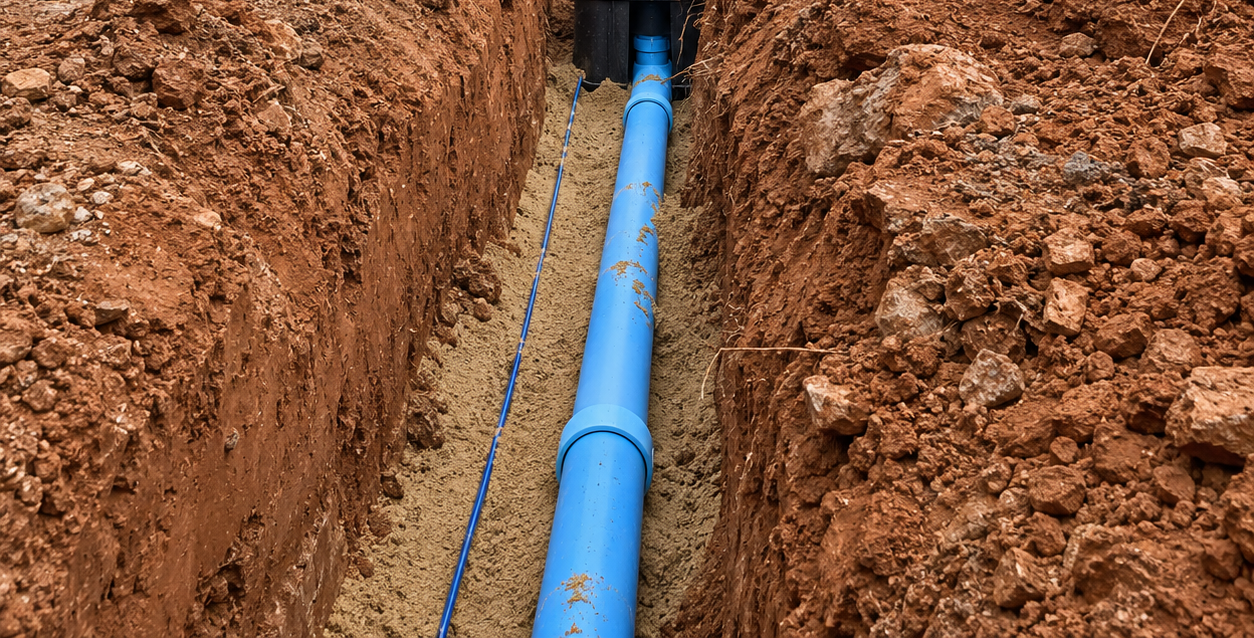
WATER LINES
Water Service and Main Trenching
Service lines from the meter or the well to the structure, cut below frost depth and bedded in sand. Tracer wire and a proper shut-off are included so the line can be found and isolated later.
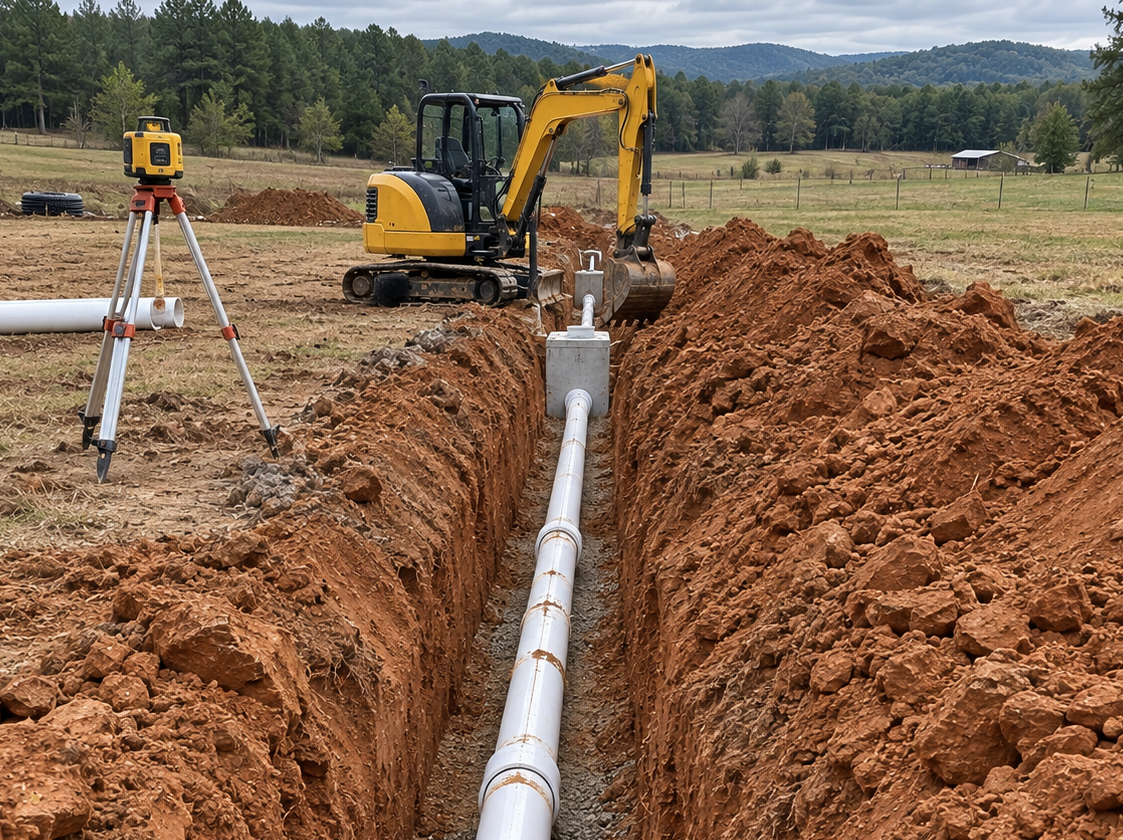
SEWER
Sewer and Septic Line Excavation
Gravity sewer and septic runs installed on a measured fall, because a line that is too flat blocks and one that is too steep drains liquid off the solids. Grade is checked every joint.
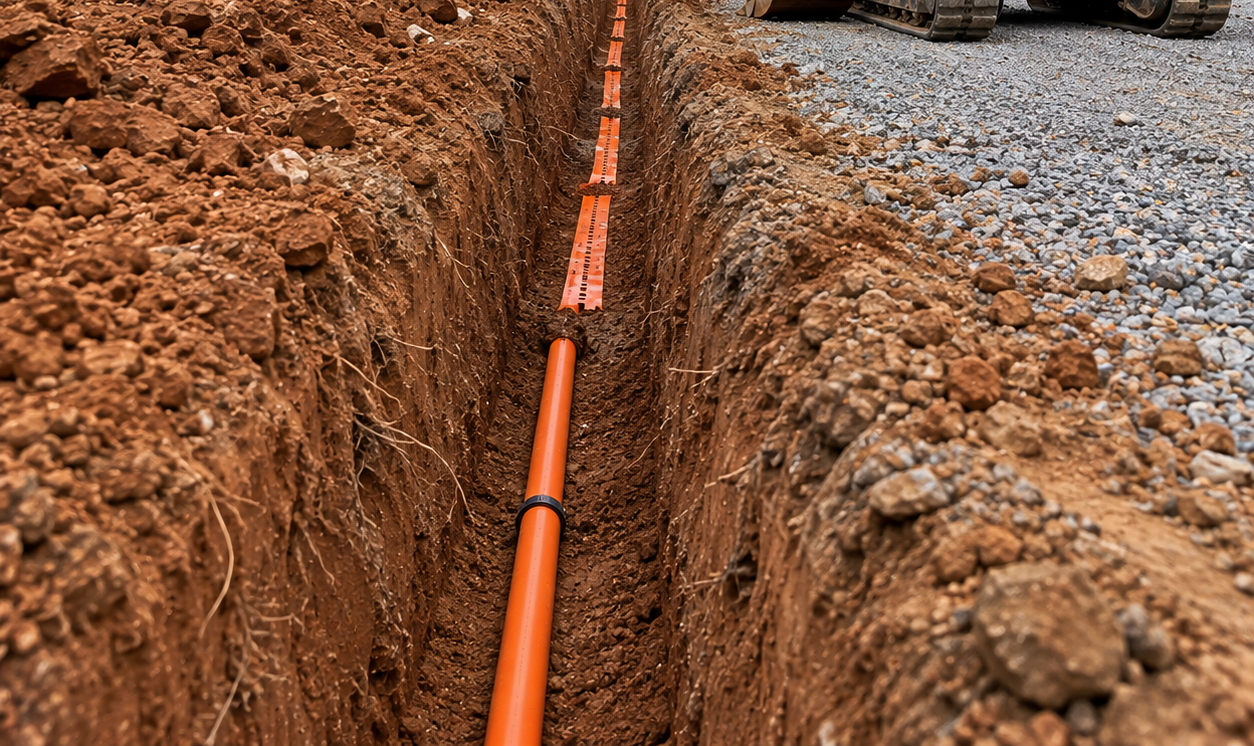
ELECTRICAL
Electrical and Conduit Trenching
Service laterals, feeder runs, and conduit to shops, wells, gates, and outbuildings dug to code depth for the wiring method. Warning tape goes in above the line, and conduit is proved before backfill.
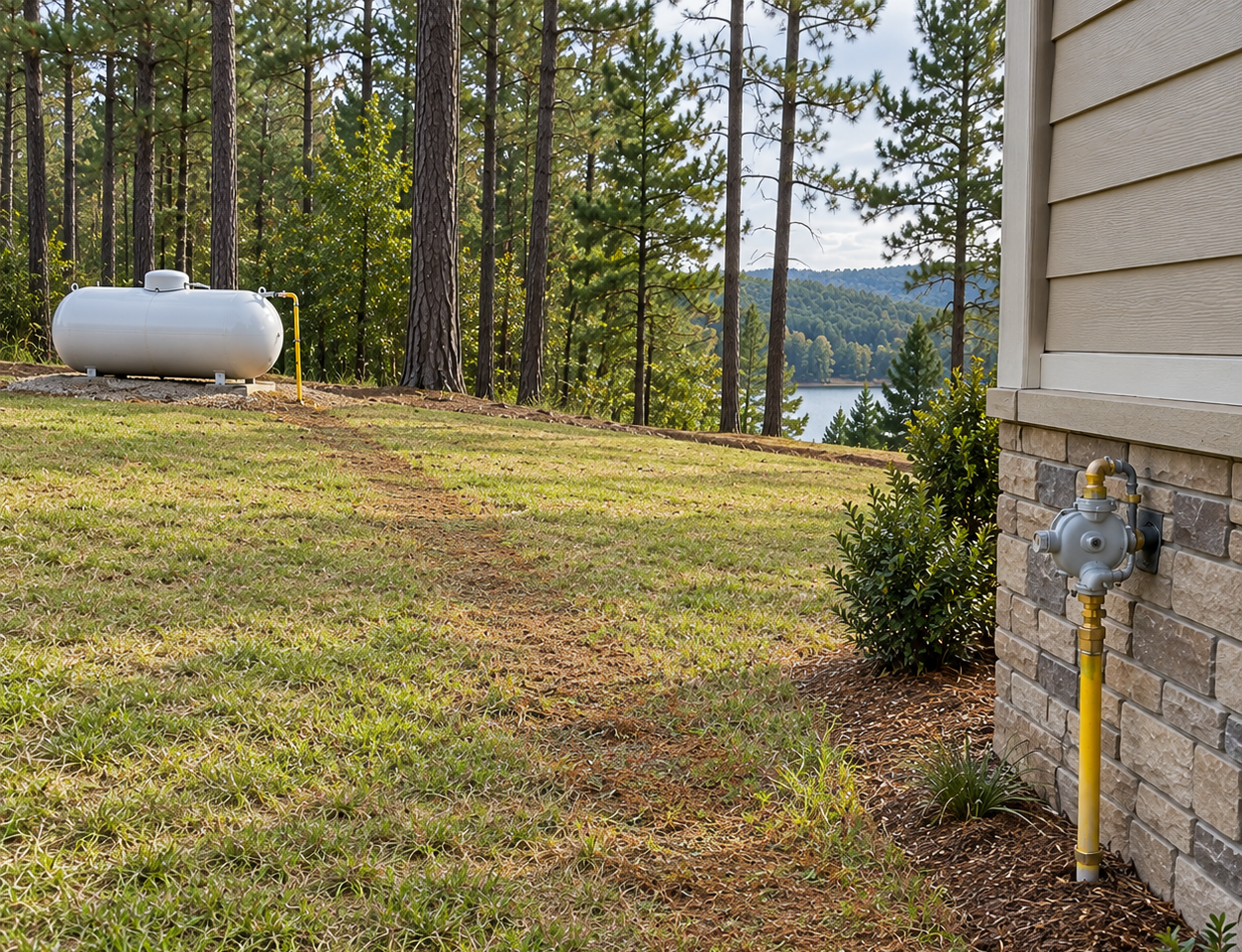
GAS AND PROPANE
Gas and Propane Line Trenching
Buried runs from tanks and meters to appliances, dug to depth with tracer wire and marked backfill. Coordination with the licensed installer keeps the tie in and the pressure test on schedule.
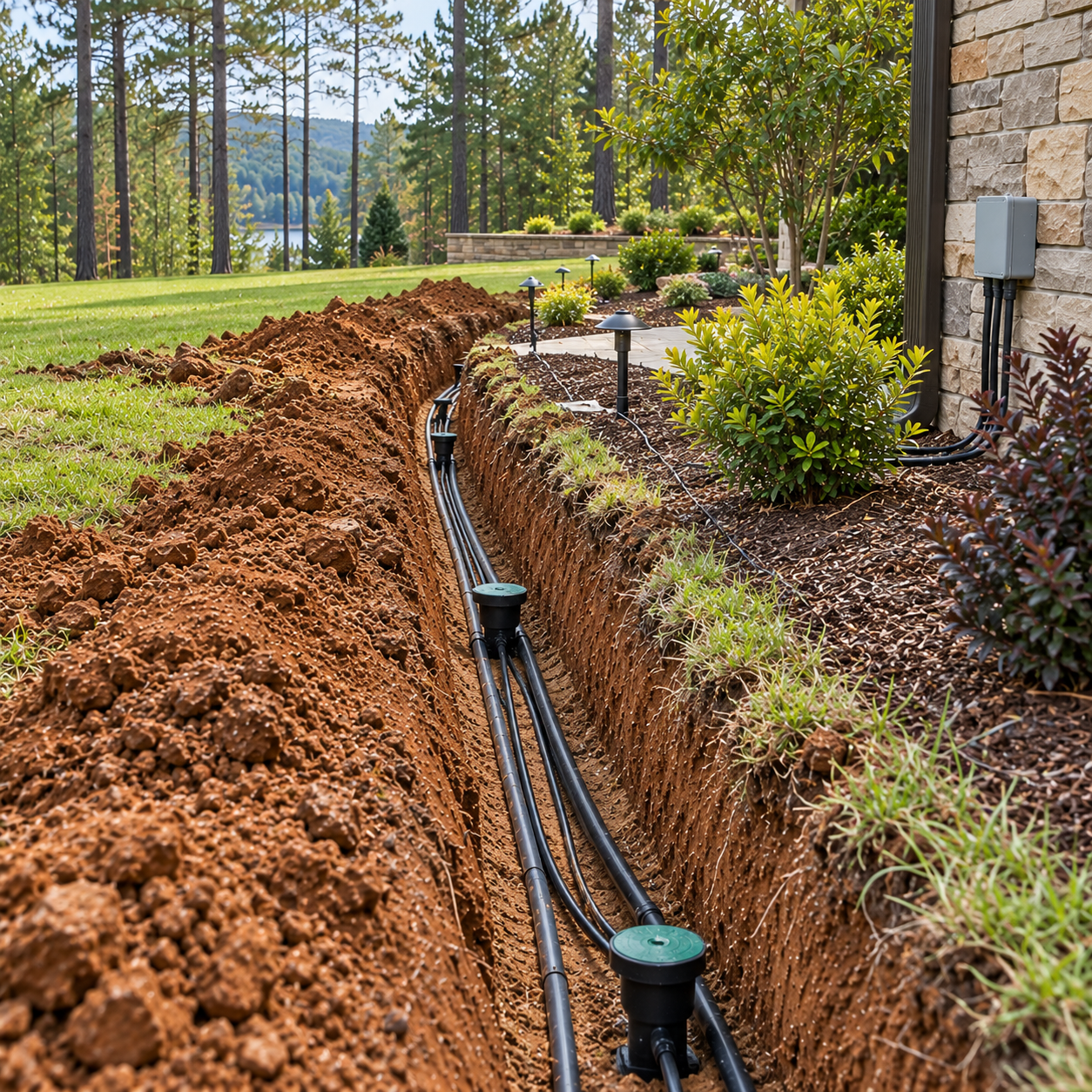
IRRIGATION
Irrigation and Low-Voltage Trenching
Narrow, shallow trenches for sprinkler mains, drip zones, and low-voltage lighting. Cut clean so the turf closes back over quickly rather than leaving a visible line across a finished lawn.
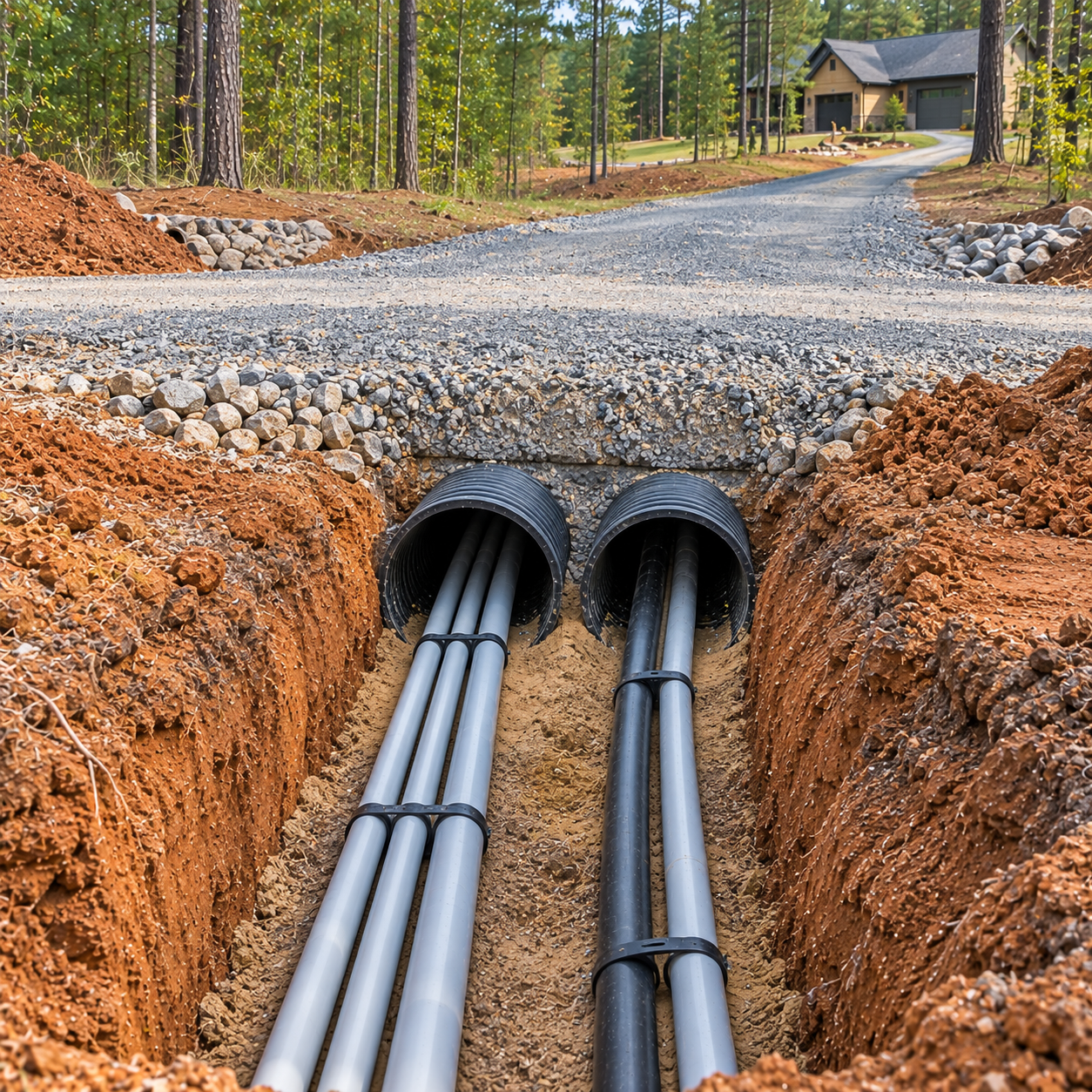
BORING AND SLEEVES
Under Driveway Sleeves and Crossings
Sleeves placed under drives, walks, and patios so future lines can be pulled through without breaking concrete. Existing hard surfaces are crossed by sleeving rather than cutting wherever it is possible.
THE WORD ON OUR WORK
WHAT OUR CLIENTS SAY.
Utility work is judged on what you cannot see afterward. Property owners around Garland County have written about long days worked, jobs finished properly rather than merely finished, and yards left in a condition that did not need a landscaper to come and repair.
FAQ
FREQUENTLY ASKED QUESTIONS.
Trenching questions are mostly about depth and safety: how deep a given line has to go, what happens near existing utilities, and how the yard looks once everything is covered back up.
How deep does a water line need to be buried?
Below the local frost depth so that it cannot freeze, which in this part of Arkansas is a relatively shallow requirement compared with northern states. Traffic loading and the utility's own standard often push the depth further down.
How deep should buried electrical conduit go?
It depends on the wiring method and whether conduit is used, with common residential depths running somewhere between 18 and 24 inches. Direct burial cable has to sit deeper than the same circuit run inside rigid metal conduit does.
What happens if you hit rock partway down the trench?
We break it with a hammer, reroute around it, or use a shallower method with added protection, and we tell you which one before proceeding. Clients Choice Contracting prices rock as its own line on Hot Springs, AR jobs.
Do you locate private utility lines too?
The 811 ticket only covers the utility side of things up to the meter. Anything you or a previous owner installed past that point is private, so we probe, trace, and hand dig wherever those lines might reasonably be.
How long does a trench stay open?
As briefly as we can possibly manage it. Most residential runs are opened, installed, and backfilled the same day. Where an inspection is required, we schedule it so the trench is not left sitting open over a weekend.
Will there be a visible line across my yard afterward?
Not for long at all, provided the backfill has been done properly. Material goes back in compacted lifts, saved topsoil goes over the top, and the strip gets seeded, which usually closes over completely within a single growing season.
Can a trench be dug close to a house foundation?
Yes, with care. Clients Choice Contracting hand digs and uses compact machines near foundations on Hot Springs, AR properties, because undermining a footing or cracking a block wall costs vastly more to repair than the trench itself ever will.
Why does a sewer line need a specific slope?
Too flat and the solids settle out and block the pipe. Too steep and the water runs away from the solids, leaving them behind. A quarter inch of fall per foot is the usual target for residential lines.
HOW WE WORK
FROM LOCATE TICKET TO RESTORED YARD, HERE IS HOW.
STEP 01
Walk the route and ask what is buried
We look at the proposed run, check what surfaces it crosses, and ask what has been installed on the property over the years. Private lines are found by asking before they are found by digging.
STEP 02
File the locates and wait for the marks
The 811 ticket goes in and the operators get their full two working days to mark the site. Nothing gets opened until those marks are down, whatever the schedule looks like that week.
STEP 03
Price the run, including the rock
You get a free written estimate covering length, depth, bedding, backfill, and restoration, with a stated allowance for rock. Sleeving under existing hard surfaces is listed separately whenever the route happens to need it.
STEP 04
Open the trench to line and grade
The excavation is cut on the planned alignment at the depth the line requires, sloped or benched where depth demands it, and spoil is placed clear of the edge on the uphill side.
STEP 05
Bed the line and prove the install
Bedding sand or stone goes down first, the pipe or conduit is laid and checked for grade, tracer wire and warning tape are installed, and everything is tested or proved before it disappears.
STEP 06
Backfill, compact, and restore the surface
Material goes back in lifts with compaction on each one, saved topsoil returns to the top, and the strip is graded and seeded. Hard surfaces are patched back to match what was there.
Get Your Free Estimate
PRICE THE RUN BEFORE YOU DIG, FREE.
Tell us what the line is and where it has to go through the contact page. We will walk the route, check the depth to rock, and put a written number in front of you before any ground is opened.
WHAT YOUR TRENCHING ESTIMATE COVERS
✓ Route, total length, and required depth
✓ Locate filing and private line tracing
✓ Rock allowance and hammer time if needed
✓ Bedding material under and over the line
✓ Backfill, compaction, and tracer wire
✓ Topsoil, seeding, and hard-surface patching