
Grading and Leveling
GRADING AND LEVELING IN Hot Springs, AR
A yard needs to fall roughly 2 percent away from a house, and a gravel drive needs a proper crown on it before it will shed anything at all. Clients Choice Contracting handles grading and leveling across Hot Springs, AR: finish grading around new construction, reshaping yards that hold water, cutting level pads for shops and barns, crowning and ditching driveways, and correcting the negative slope that quietly sends runoff straight at a foundation instead of carrying it safely away.
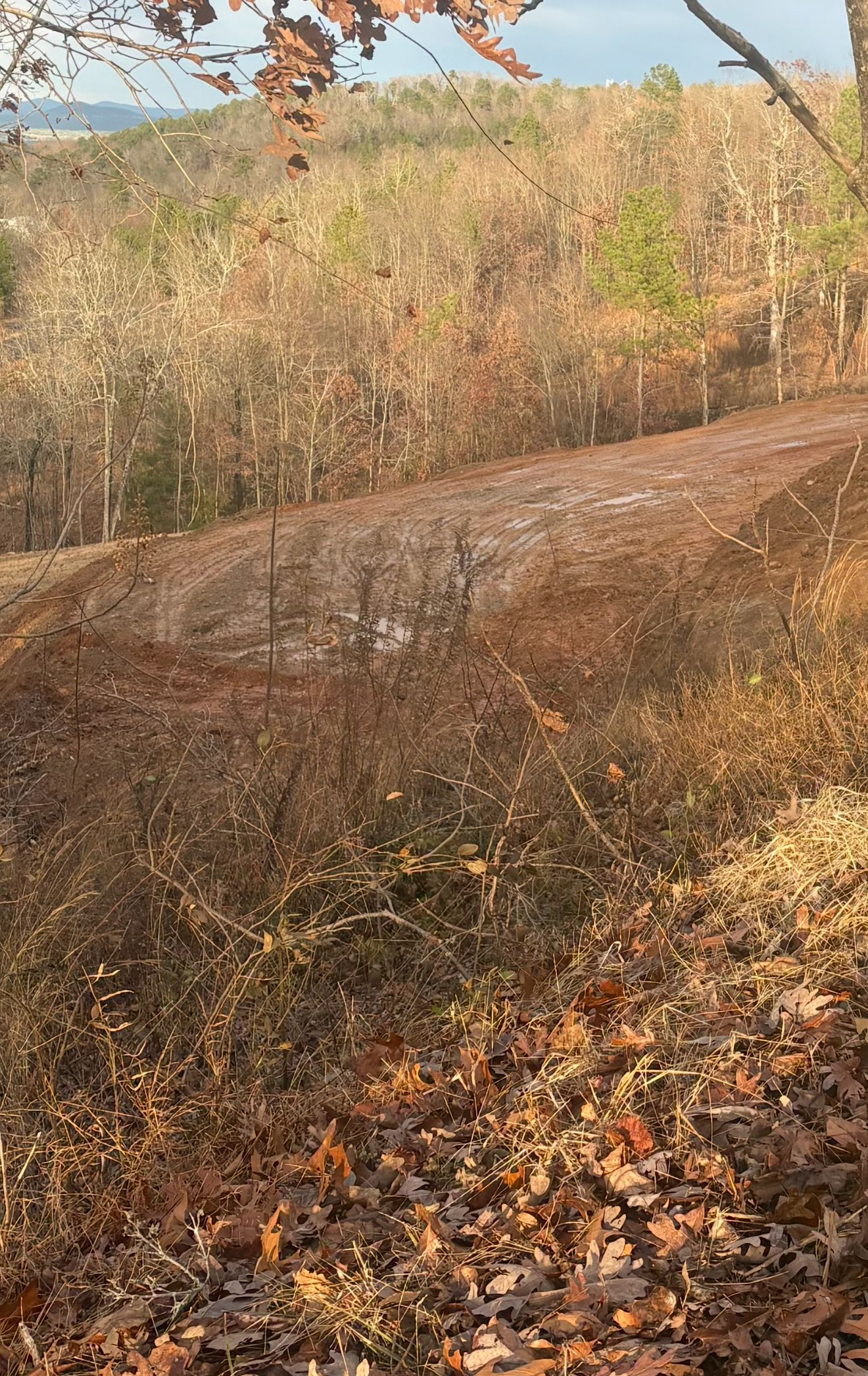
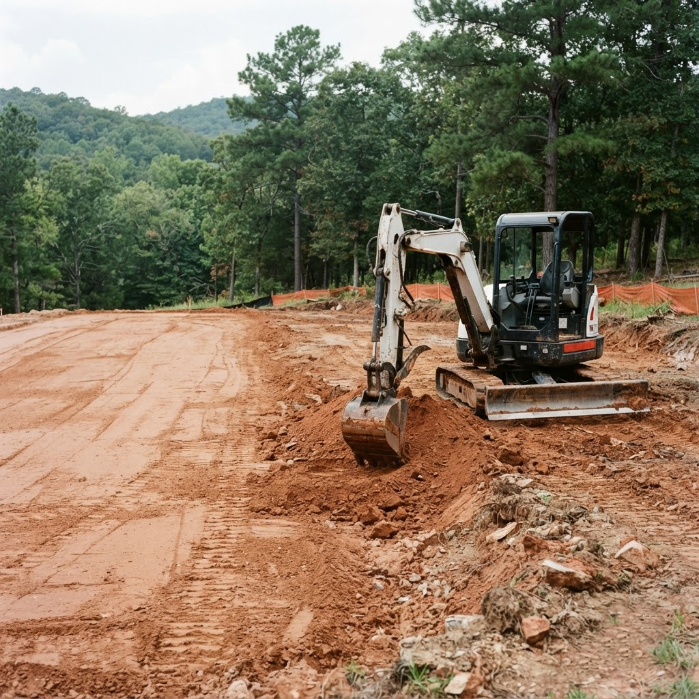
LEVEL AND FLAT ARE NOT THE SAME THING.
People ask for a level yard and mean a smooth one. Truly level ground is the worst thing you can build here, because water needs somewhere to go and 58 inches a year will find the low point whether or not you designed one. Good grading is smooth to walk on and mow, while quietly carrying every drop away from the places that matter.
That balance is the whole skill of the trade: enough fall to keep water moving off the surface, laid in gently enough that nobody standing in the yard ever notices it is there.
✓ Positive fall away from every structure
✓ Surfaces smooth enough to mow
✓ Swales that carry water to a real outlet
✓ Topsoil replaced before seeding
GRADING AND LEVELING
THE LOW SPOT IN YOUR YARD IS FIXABLE.
Standing water a day after rain, a soggy strip along one wall, mulch washing into the driveway, moss where grass used to be. Those are grading symptoms, not landscaping problems, and adding soil on top rarely solves them for long. We find where the water is actually coming from, cut a path that takes it somewhere useful, and rebuild the surface so the fix is invisible when the grass comes back.
UPHILL NEIGHBORS SEND YOU THEIR WATER.
Ground around the Tri-Lakes rarely sits still. Runoff arriving from an uphill neighbor, a driveway acting as a channel, and shallow shale that will not absorb anything all push water across the surface fast. Grading here means intercepting that flow above the house with a swale or a berm, then shaping the yard below to move what gets past. A machine simply smoothing the surface will not hold through one spring.
WATER DECIDES WHETHER A GRADE WORKED.
Anyone can leave a yard looking good on a dry Friday. The test comes with the first two inch rain, when either the water leaves the way you planned or it finds the path you missed. Years of watching how these hillsides drain tells us where to put the fall before seed goes down, and it is why we grade to the storm rather than to the photo. Would you rather find that out during the storm?
WHY CHOOSE US FOR GRADING AND LEVELING.
A DRY FOUNDATION, YEAR-ROUND
Water moves away from the walls instead of pooling against them, which keeps crawl spaces dry and takes hydrostatic pressure off a basement during the heaviest weeks of spring.
GROUND YOU CAN ACTUALLY USE
Yards get flat enough for furniture, play equipment, and a mower without ruts or scalped high spots, so the space becomes usable rather than just tidy.
NO MORE WASHED OUT DRIVEWAY
A crowned surface with working ditches sheds rain instead of channeling it, which means gravel stays where you paid to put it after every storm.
GRASS THAT ACTUALLY TAKES
Stockpiled topsoil goes back on the finished surface, so seed roots into something with life in it rather than into compacted shale subsoil that nothing wants to grow in.
PROBLEMS SOLVED AT THE SOURCE
We trace where the water is entering the property first, so the fix works upstream rather than treating the puddle where it happens to be showing up.
ONE VISIT, ONE FINISHED YARD
Rough grade, drainage, topsoil, and seeding happen in a single mobilization, so the yard is not left torn open waiting on another contractor to come back.
WHAT WE GRADE
OUR GRADING AND LEVELING WORK
Grading covers everything from a builder's rough cut to the final quarter inch under new sod. These are the six versions of the work we take on most often across Garland County.
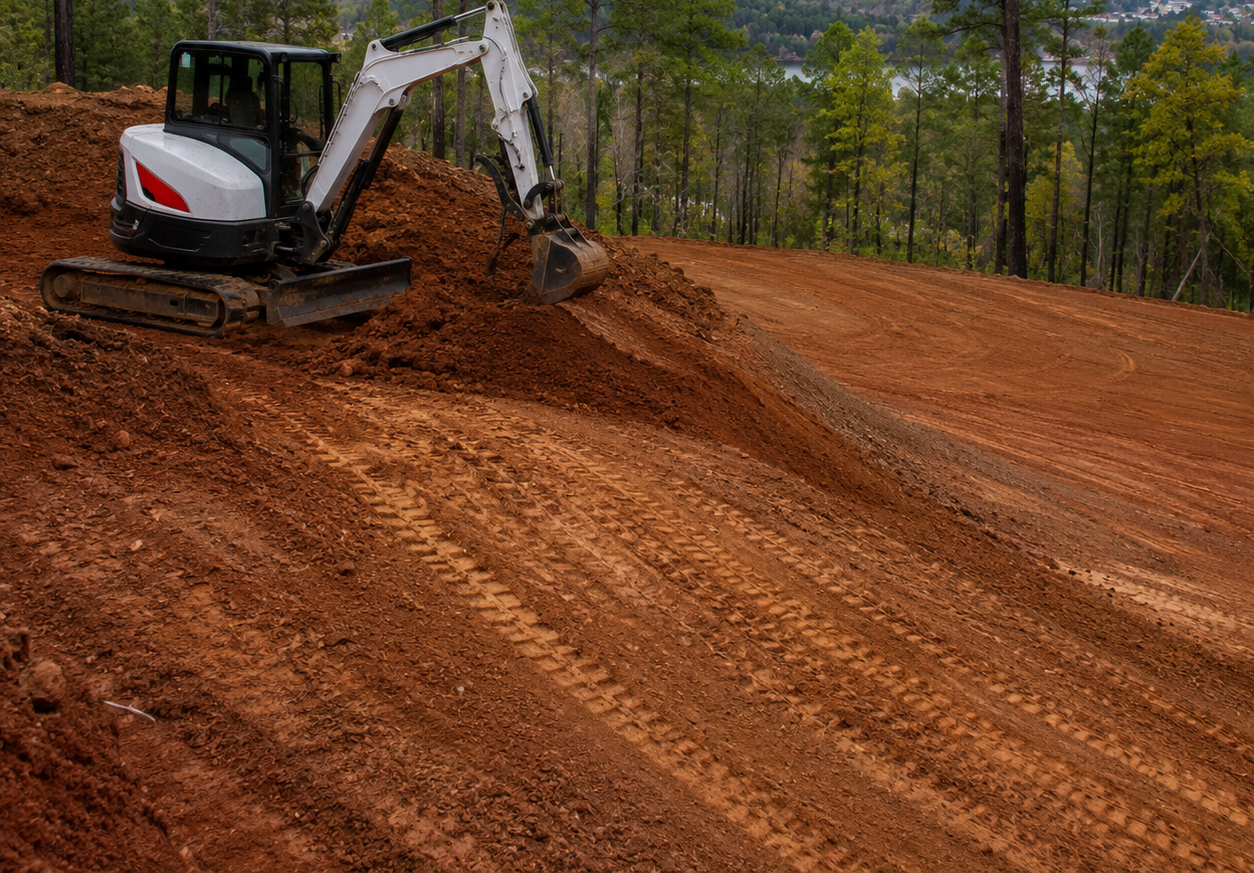
ROUGH GRADE
Rough Grading
The first shaping pass, moving material to approximate design elevations and setting the drainage pattern. This is where the site stops being raw ground and starts having a deliberate shape to it.
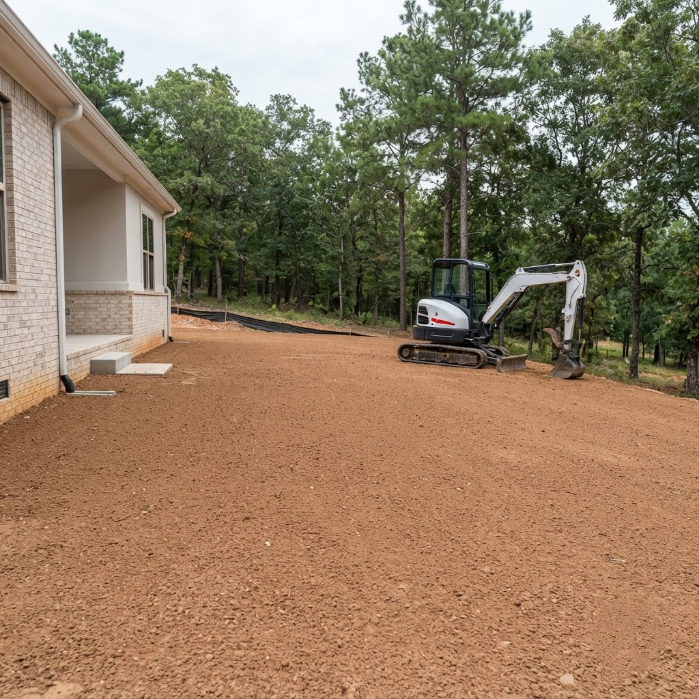
FINISH GRADE
Finish Grading and Yard Leveling
The last pass before seed or sod, taking out ruts, tracks, and the small dips that hold water. Surfaces are left smooth enough that a mower deck never scalps or bogs.
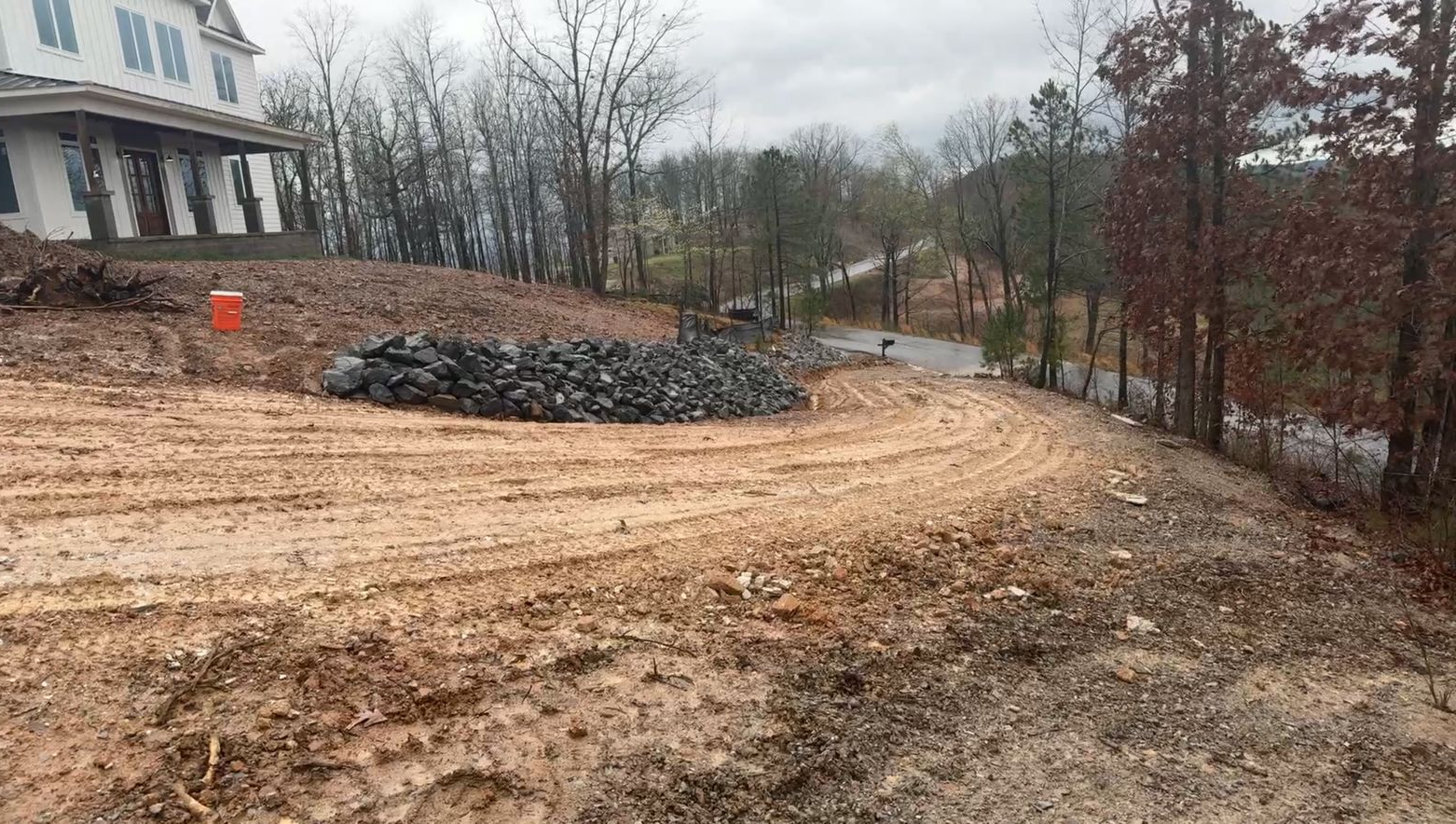
DRIVE WORK
Driveway Grading and Crowning
Gravel drives reshaped with a crown and ditched on both sides, then compacted. Base rock is added where the surface has thinned out and potholes keep coming back in the same places.
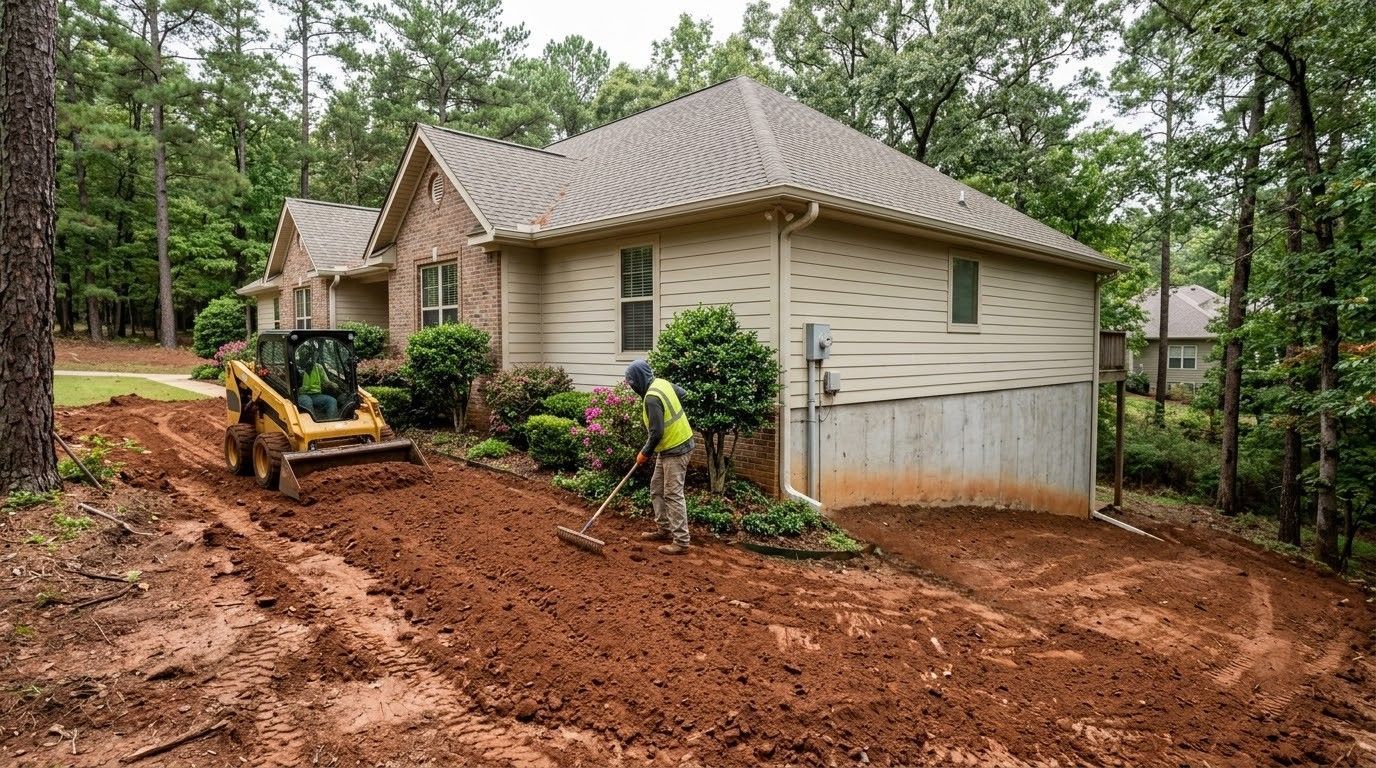
SLOPE FIX
Foundation Slope Correction
Negative grade around a structure rebuilt so the ground falls away from the walls. Existing landscaping is worked around where possible, and downspout discharge is carried well past the new grade.
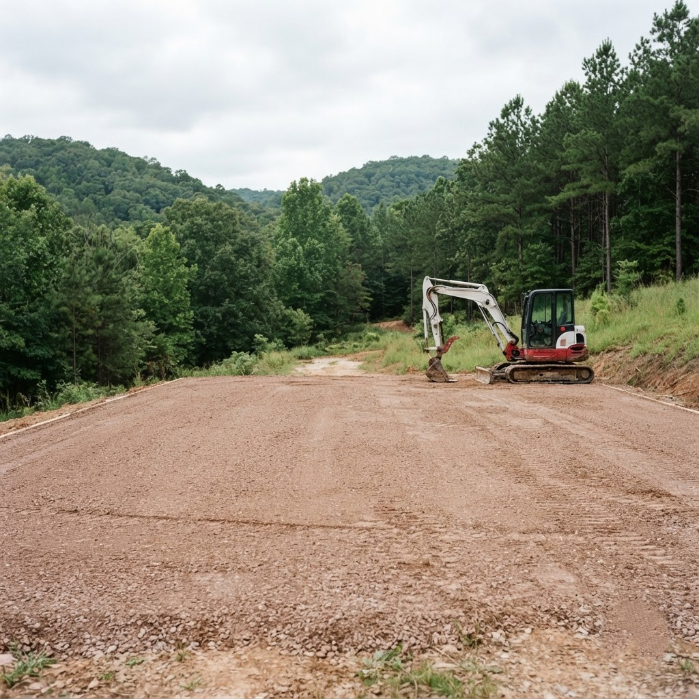
PAD LEVEL
Shop, Barn, and Parking Pads
Level working surfaces cut and compacted for outbuildings, equipment, RVs, and vehicle parking. Base material is placed and rolled so the pad carries weight without rutting after a wet week.
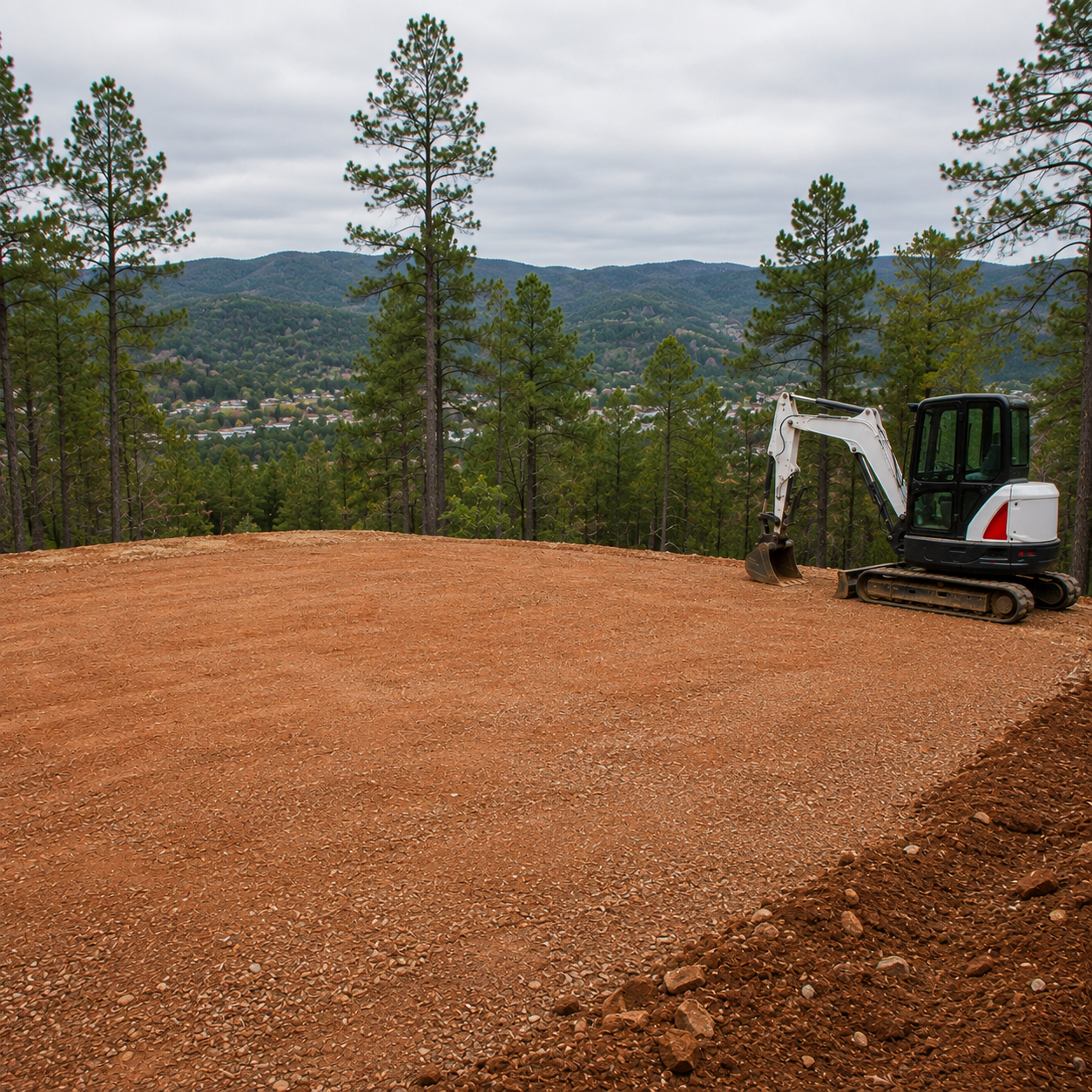
LOT PREP
Lot Leveling and Reshaping
Whole parcels reshaped for pasture, recreation, or resale, including filling old ditches and low areas. Slopes are eased to something a tractor or mower can safely cross in both directions.
THE WORD ON OUR WORK
WHAT OUR CLIENTS SAY.
The grading jobs people talk about are the ones that solved something they had lived with for years. A yard that finally drains, a driveway that stops washing out, a building site cut level out of a steep slope. The reviews get specific, which is the part we like.
FAQ
FREQUENTLY ASKED QUESTIONS.
Grading questions usually come down to slope: how much fall a yard needs, where the water is supposed to end up, and whether the problem can be fixed without tearing everything out.
How much slope should a yard have away from the house?
Residential code asks for a fall of at least 6 inches over the first 10 feet, which works out near 5 percent. Past that first stretch, roughly 2 percent is enough to keep water moving without making the yard feel tilted.
Can grading fix standing water without installing drains?
Often, yes. If there is a route to daylight anywhere nearby, reshaping the surface to reach it is cheaper and needs no maintenance. Piped systems are for the cases where the low point genuinely has nowhere to drain toward.
How long does regrading a yard take?
An average residential yard runs one to two days including the topsoil and seeding. Larger properties, heavy rock, or hauling material in or out will extend that, and wet ground stops the work entirely until things dry out.
Will regrading kill my existing grass?
The graded areas get reworked and reseeded, so yes within the work zone. We keep the disturbed area limited to what the fix actually requires, and every finished surface gets topsoil and seed before we leave your property.
What is a swale and do I need one?
A swale is a shallow, grassed channel that carries surface water across a property toward an outlet. You need one when runoff keeps arriving from uphill and the yard surface alone cannot move that volume away fast enough.
Should grading happen before or after landscaping?
Always before. Grading decides where the water goes, and landscaping simply decorates whatever shape you end up with. Planting beds and edging installed first usually have to come back out again later when the drainage finally gets corrected properly.
Can you level a yard that slopes steeply?
Usually in terraces rather than one single flat plane. Clients Choice Contracting builds benches and gentle transitions on steep Hot Springs, AR lots, because one single cut that large creates a bank that simply will not hold for long.
How soon can I seed after grading is finished?
Immediately, and the sooner the better on bare ground. Fall and early spring give the strongest establishment in this climate. Clients Choice Contracting can grade, add topsoil, and seed in a single visit on properties across Hot Springs, AR.
HOW WE WORK
FROM STANDING WATER TO DRY GROUND, HERE IS HOW.
STEP 01
Watch where the water actually goes
We look at the property for the evidence: silt lines, moss, erosion channels, and the dips that stay wet. That tells us where the runoff enters and where it needs to be sent instead.
STEP 02
Shoot elevations and set the fall
Existing grades are measured against the structures and against the available outlets, so the plan gets built on real numbers rather than on whichever way the ground happens to look like it slopes.
STEP 03
Price the work and mark the utilities
You get a free written estimate covering the areas being reshaped, material coming in or going out, and the finish. Utility locates are requested before any blade touches the ground on your property.
STEP 04
Strip topsoil and cut the rough shape
Existing topsoil is scraped aside and saved, then the subgrade underneath is cut and filled to the shape the drainage plan calls for. Fill areas get compacted rather than simply pushed roughly into place.
STEP 05
Build the swales and the outlets
Channels, berms, and discharge points are shaped and stabilized so the water has somewhere definite to go. Downspouts and driveway runoff both get tied into that path rather than being left to fight it.
STEP 06
Spread topsoil, finish, and seed
Saved topsoil goes back across the finished surface, everything is raked out smooth, and the area is seeded and covered. You walk the whole yard with us before the last machine is loaded up.
Get Your Free Estimate
WE WILL READ YOUR YARD'S SLOPE, FREE.
Show us the wet spot through the contact page and we will come look at it. You get an honest read on whether the fix is grading, drainage, or both, and a written number before anything gets torn up.
WHAT YOUR GRADING ESTIMATE COVERS
✓ The areas being reshaped and how far
✓ Slope targets away from every structure
✓ Swales, berms, and where water outlets
✓ Material hauled in or hauled off
✓ Topsoil, seeding, and erosion cover
✓ A start date and a working schedule