
Land Clearing Services
LAND CLEARING SERVICES IN Hot Springs, AR
An acre of Ouachita hillside can carry several hundred stems, which is why clearing prices track stem density and slope rather than raw acreage. Clients Choice Contracting handles land clearing across Hot Springs, AR, from selective undergrowth work around mature hardwoods to full-stem removal inside a building envelope. Stumps, root balls, and debris get dealt with the way your next step actually requires, and 30+ years on this terrain is what decides which approach a given parcel can carry.
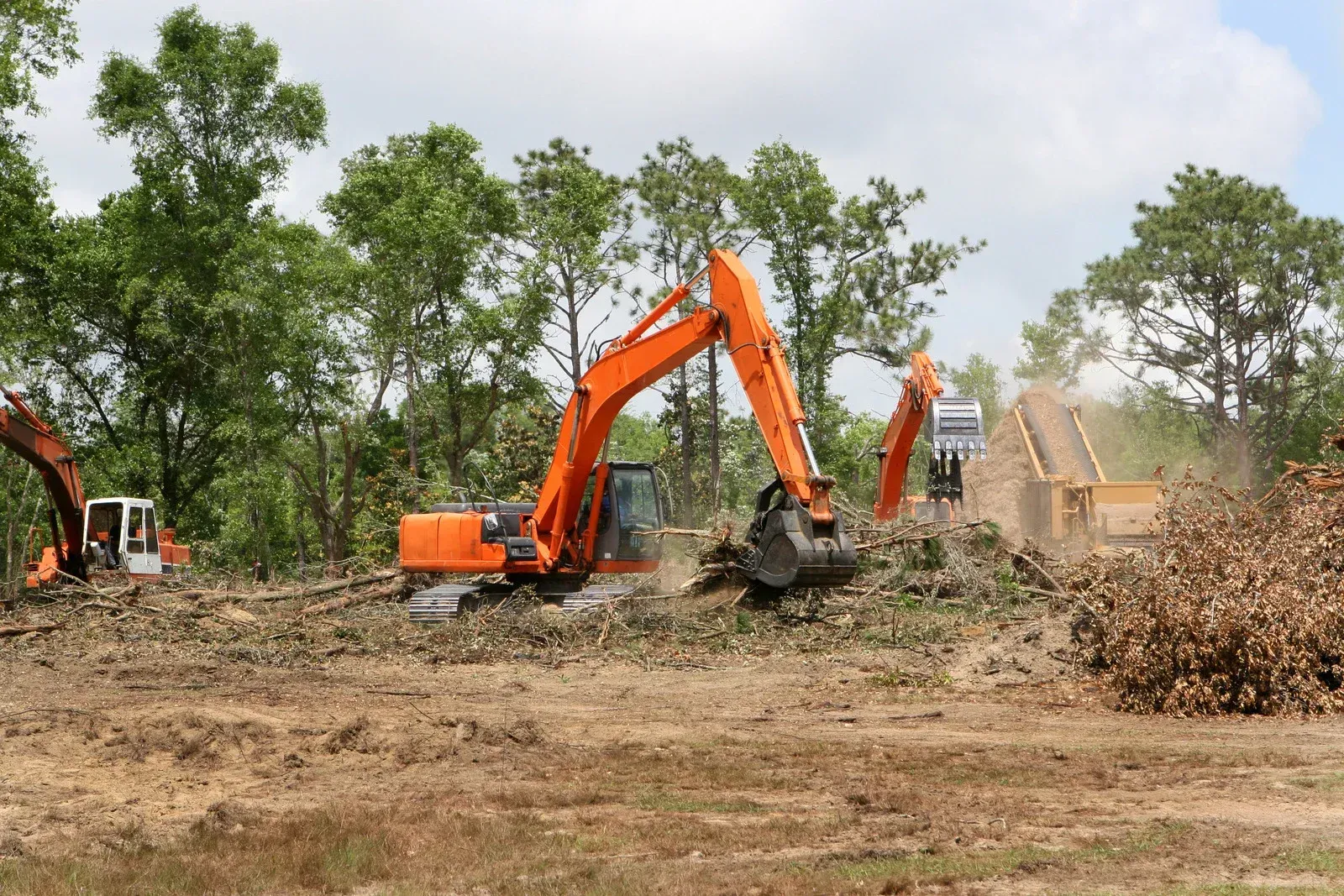
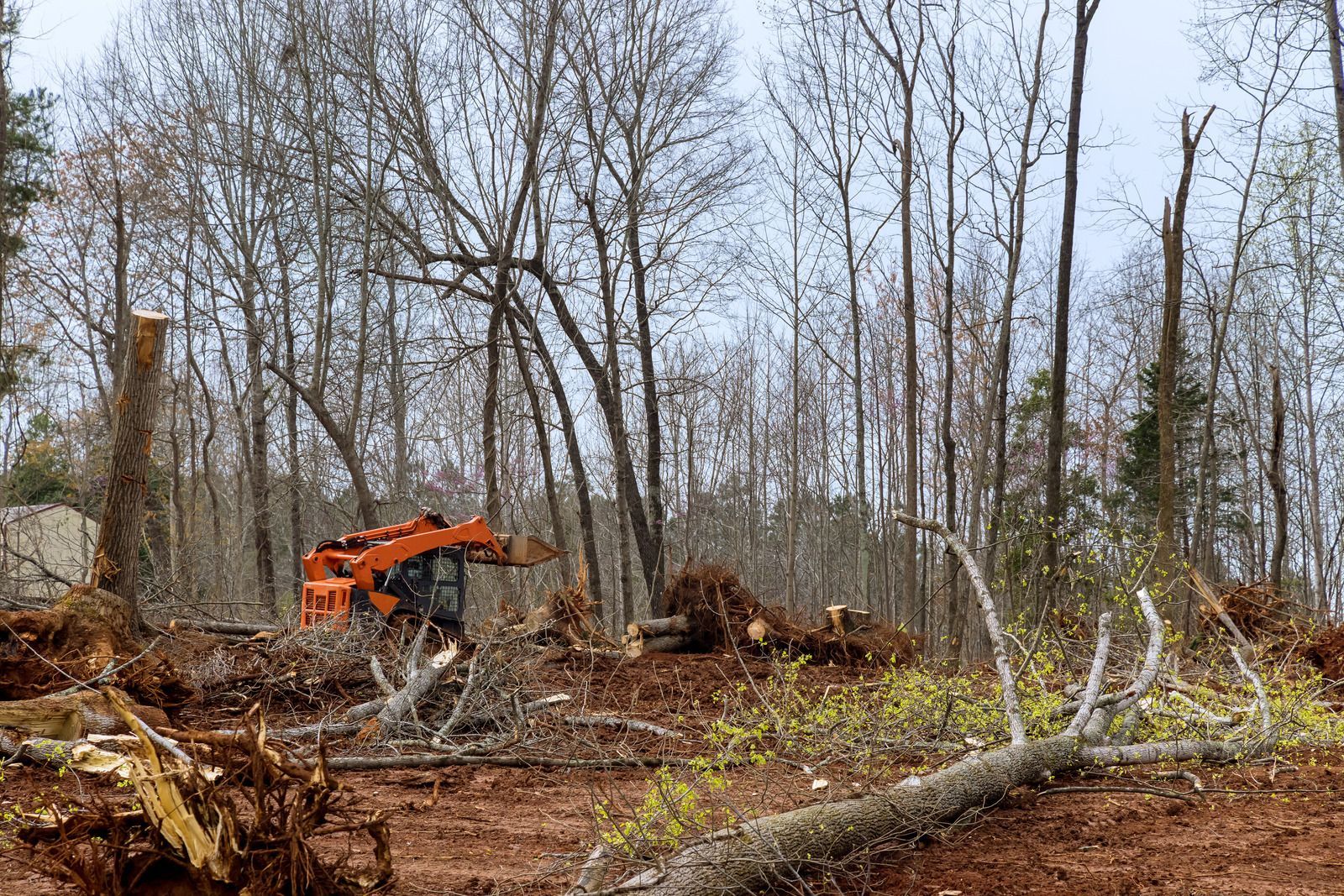
OVERGROWN IS NOT THE SAME AS UNUSABLE.
Most of the property people write off around here is fine underneath. 20 years of privet, greenbrier, and volunteer pine hides a decent building bench, a usable pasture, or a lake view that was there all along. The first thing we do is find out what is actually under the growth before anything gets pushed.
That walk decides everything else: which trees stay, where the debris goes, how much stump work the next trade needs, and whether a mulcher or a dozer is the right tool.
✓ Selective clearing that protects keeper trees
✓ Stumps ground, dug, or left by your call
✓ Burn, mulch, or haul for debris
✓ Erosion cover before the first rain
LAND CLEARING SERVICES
A CLEARED LOT SHOULD BE READY FOR THE NEXT TRADE.
Clearing that stops at knocking things down leaves the next crew doing your job for you. We take stems, root balls, and surface rock out of the working footprint, break up the windrows instead of leaving a berm along the property line, and rough the ground into something a survey crew can chain across. When the builder shows up, the lot reads as a site rather than a mess.
BRUSH IN THIS CLIMATE GROWS BACK FAST.
Warm nights and 58 inches of rain a year mean cleared ground does not stay clear on its own. Cutting at the surface buys you one season before privet and sweetgum come back thicker than before. We take stumps and root crowns where the plan allows it, and where it does not, we tell you what the maintenance cycle will realistically look like afterward.
READING A PROPERTY COMES BEFORE CUTTING IT.
Anyone can put a machine on a lot. Knowing which slope will hold once the roots are gone, which draw carries water in a hard rain, and which stand of oak is worth saving takes time on this specific ground. That judgment is what you are actually buying, and it is why we walk a parcel before quoting instead of pricing it off a satellite photo and hoping for the best.
WHY CHOOSE US FOR LAND CLEARING.
LAND YOU CAN FINALLY USE
Acreage that has been off limits for years turns into pasture, a building site, or a view. The property gets bigger without you buying another foot of it.
KEEPER TREES LEFT STANDING
The oaks and hickories worth keeping stay, because they are marked before anything starts. Shade, screening, and appraised value survive the clearing instead of disappearing with the brush.
FEWER PLACES FOR TROUBLE
Snakes, ticks, and rodents lose the cover they depend on, and a cleared buffer around structures cuts the wildfire risk that thick undergrowth carries into a dry August.
A SITE THE NEXT CREW CAN USE
Surveyors, well drillers, and framers arrive to open ground with access built in. Nobody bills you a mobilization fee to sit and wait for room to work.
SOIL THAT STAYS PUT
Exposed hillside washes fast in this rainfall. Staged clearing, retained root mat where possible, and mulch cover keep your topsoil on the property instead of in the neighbor's ditch.
ONE BILL, ONE CREW
Clearing, stump work, hauling, and rough grade come from the same outfit on the same schedule. No coordinating three contractors who each blame the one before them.
WHAT WE CLEAR
OUR LAND CLEARING WORK
Clearing is not one job. What a parcel needs depends on what you are doing with it afterward, so these are the six versions of the work we are asked for most.
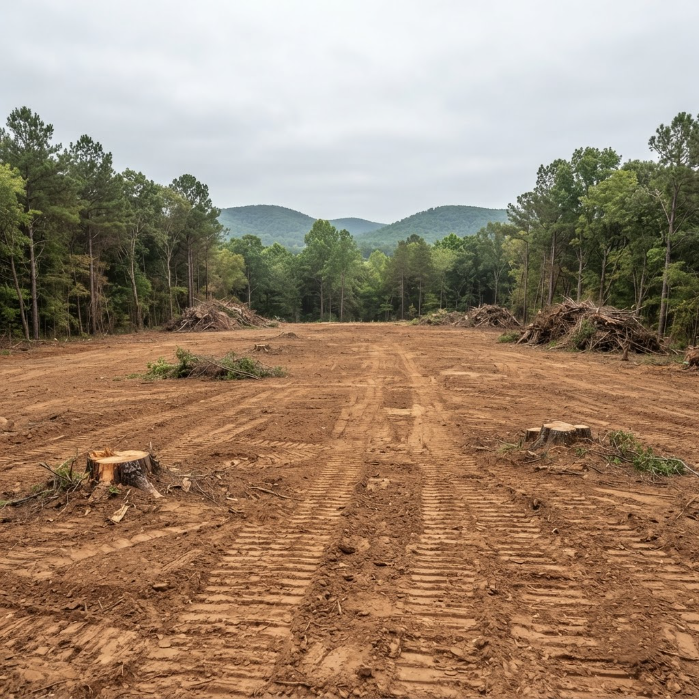
FULL CLEAR
Full Lot Clearing
Everything inside the marked footprint comes out: canopy, understory, stumps, and surface rock. The area is left at rough grade so a survey crew or a builder can start immediately.
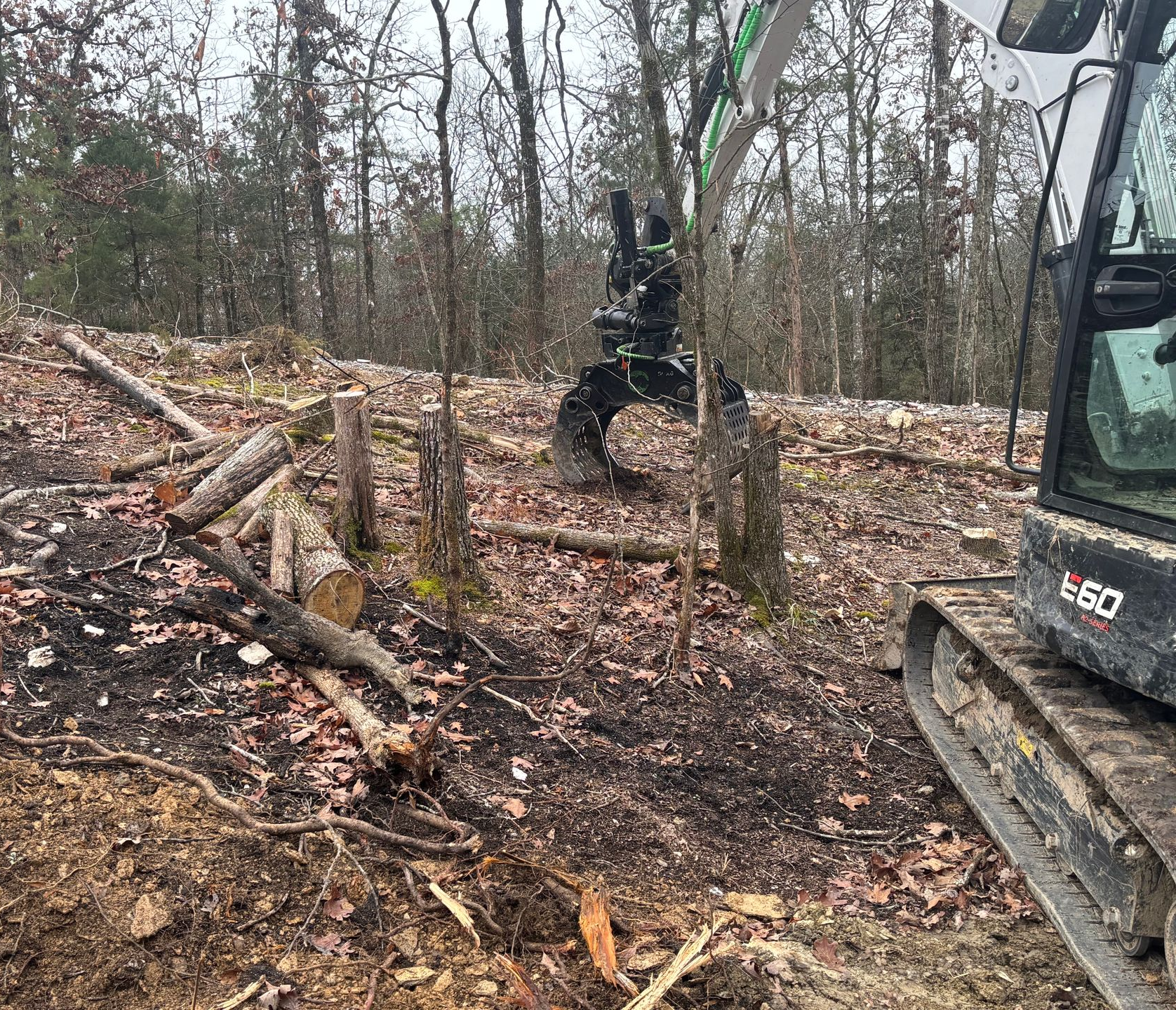
SELECT CUT
Selective Clearing
Marked trees stay and everything else goes. Common on lake lots and homesites where shade, screening, and a specific sight line matter more than getting every square foot of ground completely open.
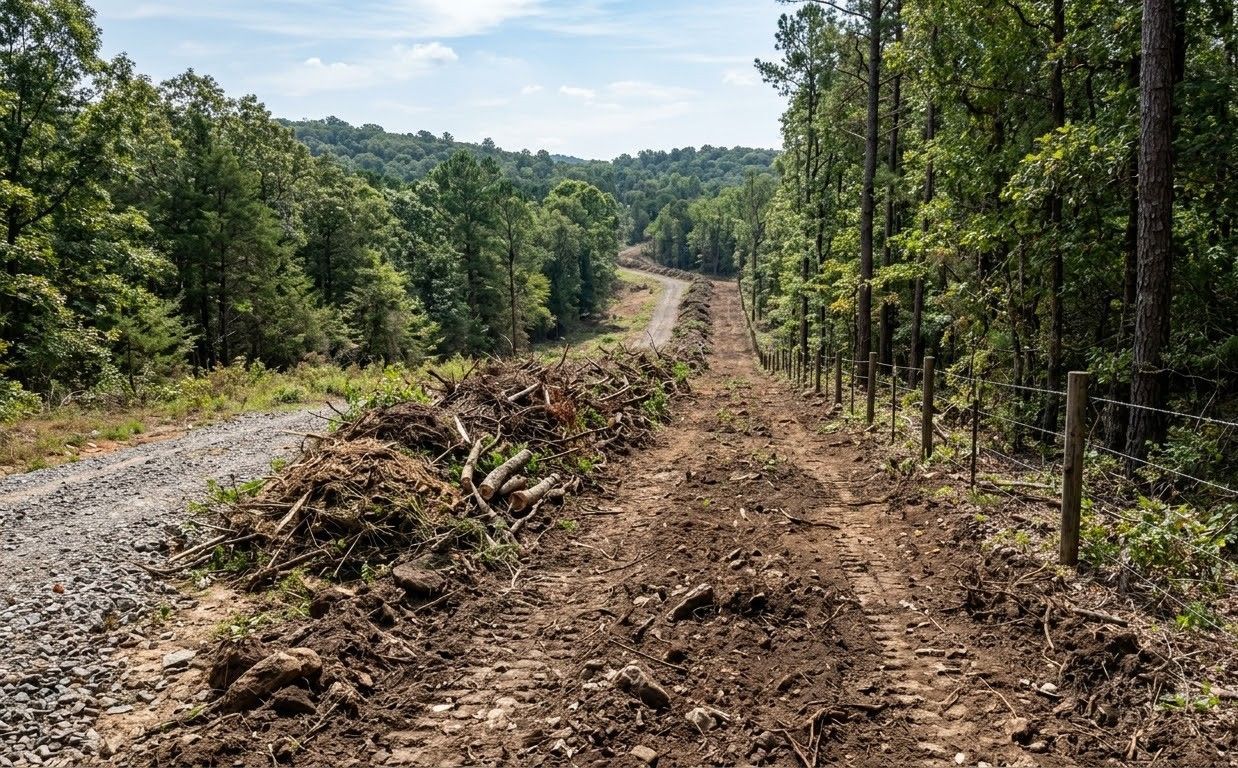
FENCE LINES
Fence Line and Right-of-Way Clearing
A clean corridor along boundaries, driveways, and utility runs. Wide enough to build, drive, or string wire without limbs in the way, and cut back far enough to stay open a while.
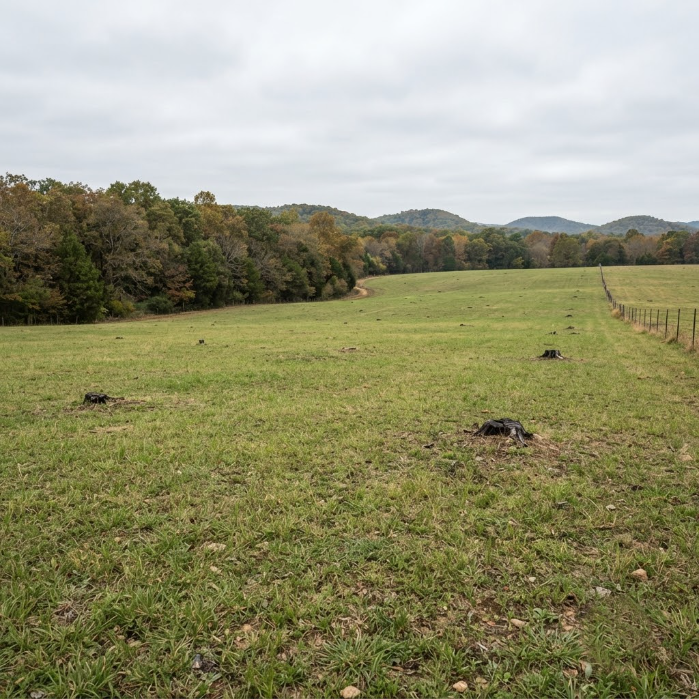
PASTURE WORK
Pasture and Field Reclamation
Fields lost to cedar, briar, and volunteer hardwood come back into production. Stumps taken low enough for a bush hog, surface smoothed enough for hay equipment to run across it safely.
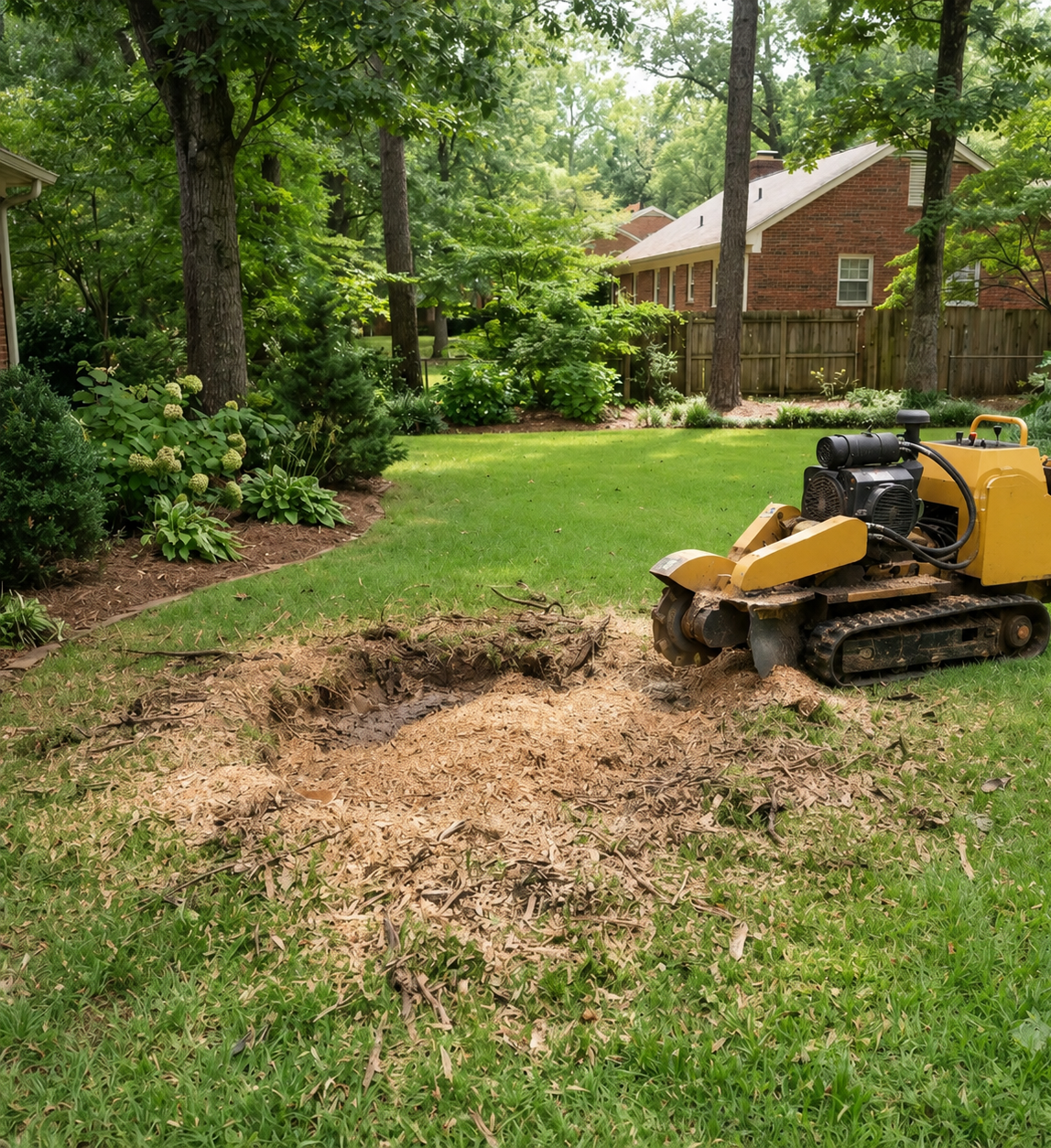
STUMP WORK
Stump Removal and Grinding
Grinding suits finished yards where the hole matters. Excavating the root ball suits anything getting a slab, pavement, or fill over it, because buried wood rots and the ground settles years later.
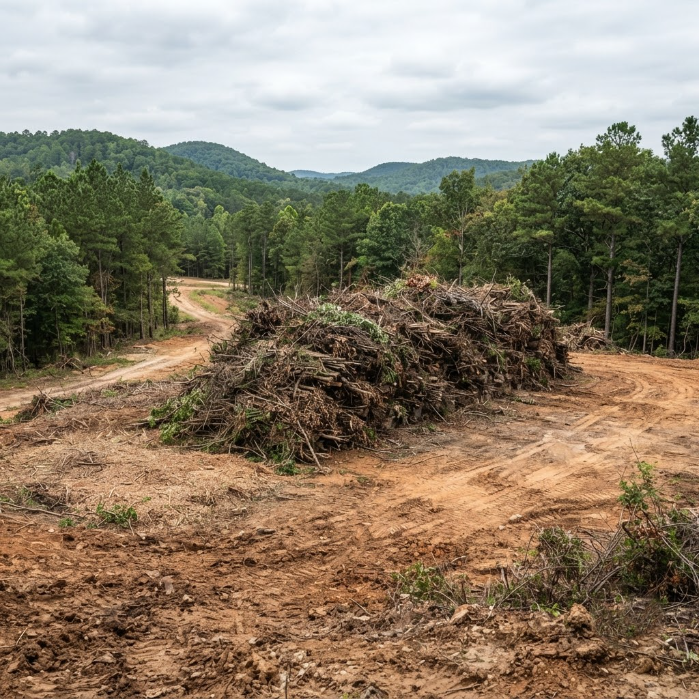
DEBRIS HANDLING
Debris Removal and Burn Management
What comes off the lot is burned under county rules, ground into mulch, or loaded and hauled. The choice changes the price and the finish, so it gets settled before we start.
THE WORD ON OUR WORK
WHAT OUR CLIENTS SAY.
The clearing jobs people tell their neighbors about are the ones that looked hopeless from the road. Property owners around Garland County have watched overgrown acreage turn into building sites, pastures, and open lake views inside a week. Their words carry more weight than ours.
FAQ
FREQUENTLY ASKED QUESTIONS.
Clearing questions usually land on the same few things: what comes out, what stays, what happens to the debris, and how long the ground stays open afterward.
Should I have the property surveyed before clearing starts?
Survey first. Corner pins, easements, and setback lines decide where clearing can legally stop, and finding them after the fact is expensive. We often clear a narrow lane so the surveyor can shoot lines through heavy growth first.
Will clearing my land change what the property is worth?
Usually upward, because buyers can see what they are buying. Overgrown parcels get discounted for the unknown underneath. Clearing that keeps mature specimen trees and a usable building bench tends to add more than clearing everything down to bare dirt.
What is the difference between clearing to grade and clearing to bare dirt?
Clearing to grade takes vegetation off and leaves the root mat holding the soil. Clearing to bare dirt removes that mat too. Bare dirt is only worth doing when construction follows immediately, because otherwise it washes in the first storm.
Do stumps have to come out if I am only putting up a fence?
Only along the fence line itself. Posts need clean ground and a straight run, so we clear a working corridor and take stumps in that strip. The rest of the stumps can stay if nothing is being built.
How close to a property line can you clear?
Right up to it, as long as the line is marked and nothing crosses it. Clients Choice Contracting works from surveyed pins on boundary jobs around Hot Springs, AR, because a tree dropped on the wrong side becomes a legal problem.
Can the timber be sold instead of cleared and burned?
Yes, if the stand justifies it. Merchantable pine and hardwood can be decked at the road for a buyer, which offsets part of the clearing. Small or scattered timber rarely covers the cost of getting it hauled out to a mill.
What happens to the topsoil while the lot is being cleared?
It gets protected on purpose. Topsoil is stripped and stockpiled before heavy machine work, then spread back over finished areas. Mixing it into subsoil during clearing is how a lot ends up needing imported soil later in the build.
How soon can grass be planted on cleared ground?
As soon as the surface is smooth and the debris is gone. Fall and early spring take best here. Clients Choice Contracting can rough grade and seed in the same visit on most Hot Springs, AR properties we clear.
HOW WE WORK
FROM FIRST WALK TO OPEN GROUND, HERE IS HOW.
STEP 01
Walk the property with you
We meet on site, look at what you want the land to do, and mark keeper trees, boundaries, and problem areas together. Nothing gets priced from a map, because a map does not show slope or rock.
STEP 02
Put a written number in front of you
You get a free written estimate covering scope, debris handling, stump depth, and the finish grade you can expect. It is broken out so you can see what each decision costs before agreeing to it.
STEP 03
Clear the permits and the locates
Stormwater filings go in where the disturbed area calls for one, and utility locates get requested early so the marks are on the ground before equipment is. Neither step is skipped to save days.
STEP 04
Build access and stage the work
A haul road goes in first, often on the alignment of your future driveway. Staging areas, burn locations, and stockpile spots get set so material moves once instead of being shuffled around the property.
STEP 05
Clear, stump, and handle the debris
Growth comes down in sections rather than all at once, which keeps exposed soil to a minimum. Stumps are pulled or ground to the agreed depth, and debris is burned, mulched, or hauled the same week.
STEP 06
Rough grade and cover the ground
The lot gets shaped so water leaves it, ruts are pulled out, and exposed areas are seeded, matted, or mulched. We walk it with you before the equipment loads out for the last time.
Get Your Free Estimate
FIND OUT WHAT IS UNDER THE BRUSH, FREE.
You do not have to know what the property can become. Send us the address through the contact page, and we will walk it, tell you what is workable, and price the clearing in writing.
WHAT YOUR CLEARING ESTIMATE COVERS
✓ Acreage and the exact clearing footprint
✓ Which trees stay and which come out
✓ Stump depth and how they are removed
✓ Debris handling: burn, mulch, or haul
✓ Rough grade and erosion cover included
✓ A start date and a working schedule