
Dirt Work and Earthmoving
DIRT WORK AND EARTHMOVING IN Hot Springs, AR
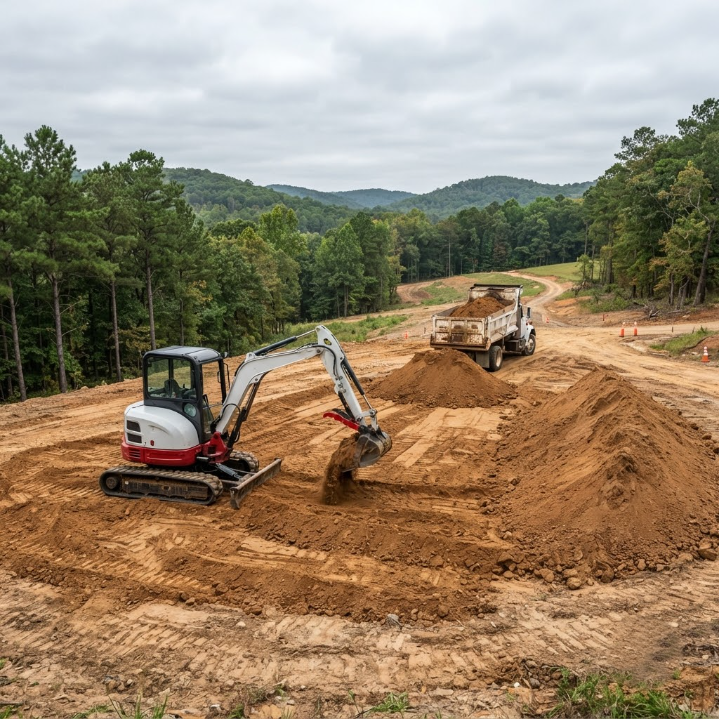
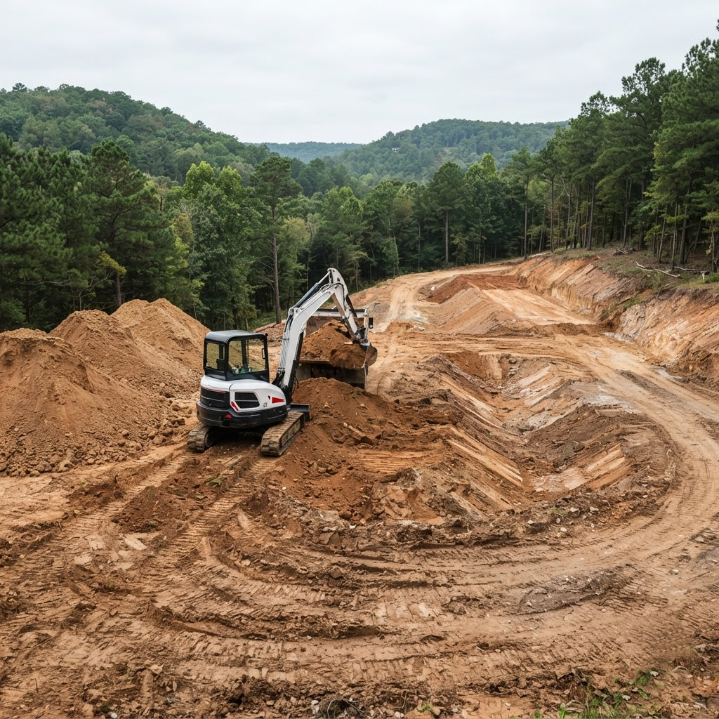
A single cubic yard of damp Arkansas fill weighs close to 2,700 pounds, which is why moving it twice costs so much more than planning the route properly once. Clients Choice Contracting handles dirt work and earthmoving throughout Hot Springs, AR: cut and fill balancing, structural fill placement, hauling material in and off, stockpile management, spoil from ponds and building pads, and the recontouring of whole parcels. Every load gets planned to land where it will stay for good.
DIRT IS ONLY CHEAP UNTIL YOU MOVE IT.
Material costs almost nothing sitting in the ground. What costs money is picking it up, carrying it, putting it down, and discovering it should have gone elsewhere. Half of good earthmoving is arithmetic done before the first machine starts: how much comes out of the cut, how much the fill takes once compacted, and whether those two numbers can be made to match.
When those two numbers balance, nothing has to get trucked in and nothing has to get trucked away, and the job ends up costing a fraction of what it otherwise would have.
✓ Cut and fill balanced on site first
✓ Fill placed in compacted lifts
✓ Haul in or haul off as needed
✓ Stockpiles sited where they drain
DIRT WORK AND EARTHMOVING
NOT ALL FILL IS WORTH PUTTING DOWN.
Free dirt offered by somebody clearing a site nearby is one of the most expensive things you can accept. Topsoil, organics, and broken concrete will not compact, so anything built on them settles within a couple of seasons. We check what we are placing, reject material that will not hold density, and tell you plainly when the cheap load someone offered is going to cost more than buying select fill would have.
OUACHITA MATERIAL BEHAVES ITS OWN WAY.
Shale fill is not clay and does not act like it. It breaks down under a roller, changes volume between loose and compacted states, and turns slick rather than sticky when it gets wet. Working it well means watching moisture closely, keeping lifts thin, and knowing when the material has stopped taking compaction. That knowledge only comes from years of moving this specific ground rather than dirt somewhere else.
MOVING DIRT TWICE IS HOW BUDGETS DIE.
The single biggest cost overrun in earthwork is rehandling. A stockpile placed where the driveway later needs to go, a spoil pile in the path of the septic field, fill dumped where a machine cannot reach it again. Long experience mostly buys you the habit of thinking three moves ahead, so material lands in its final position the first time and the machine hours you pay for actually produce something.
WHY CHOOSE US FOR DIRT WORK AND EARTHMOVING.
MATERIAL THAT MOVES ONCE
Loads are planned to their final resting place before anything gets picked up, so you are not paying machine hours to shuffle the same dirt around your property twice.
FILL THAT WILL NOT SETTLE
Everything placed structurally goes down in controlled lifts and gets compacted as it goes, which means the surface you accept this year is still the surface you have later.
FEWER TRUCKS, LOWER COST
Balancing cut against fill on site cuts hauling out of the budget wherever the volumes allow it, and hauling is usually the largest single line on an earthwork estimate.
A SITE THAT STILL DRAINS
Spoil and stockpiles are placed where they shed water rather than dam it, so a temporary pile does not create a permanent wet spot in the middle of your yard.
HONEST VOLUME NUMBERS
Quantities are measured and stated up front, including shrink and swell, so the estimate reflects real yardage instead of a guess that grows once the machines arrive.
ANY SCALE, ONE CREW
A single load of fill for a low spot or several thousand yards for a subdivision pad both get the same crew, the same equipment yard, and the same phone call.
WHAT WE MOVE
OUR DIRT WORK AND EARTHMOVING WORK
Earthmoving covers everything from a wheelbarrow's worth of correction to reshaping a whole hillside. These are the six jobs we are called out for most often around Garland County and the Tri-Lakes.
CUT AND FILL
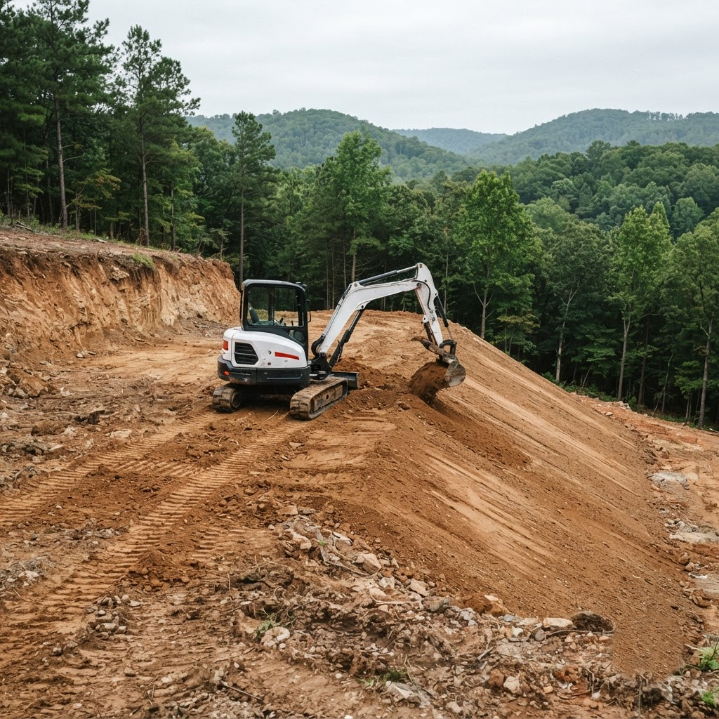
Cut and Fill Balancing
Material taken from high areas and placed in low ones so the site works without importing or exporting anything. The volumes are calculated first, because a balance that is off by 20 percent means trucks.
STRUCTURAL FILL
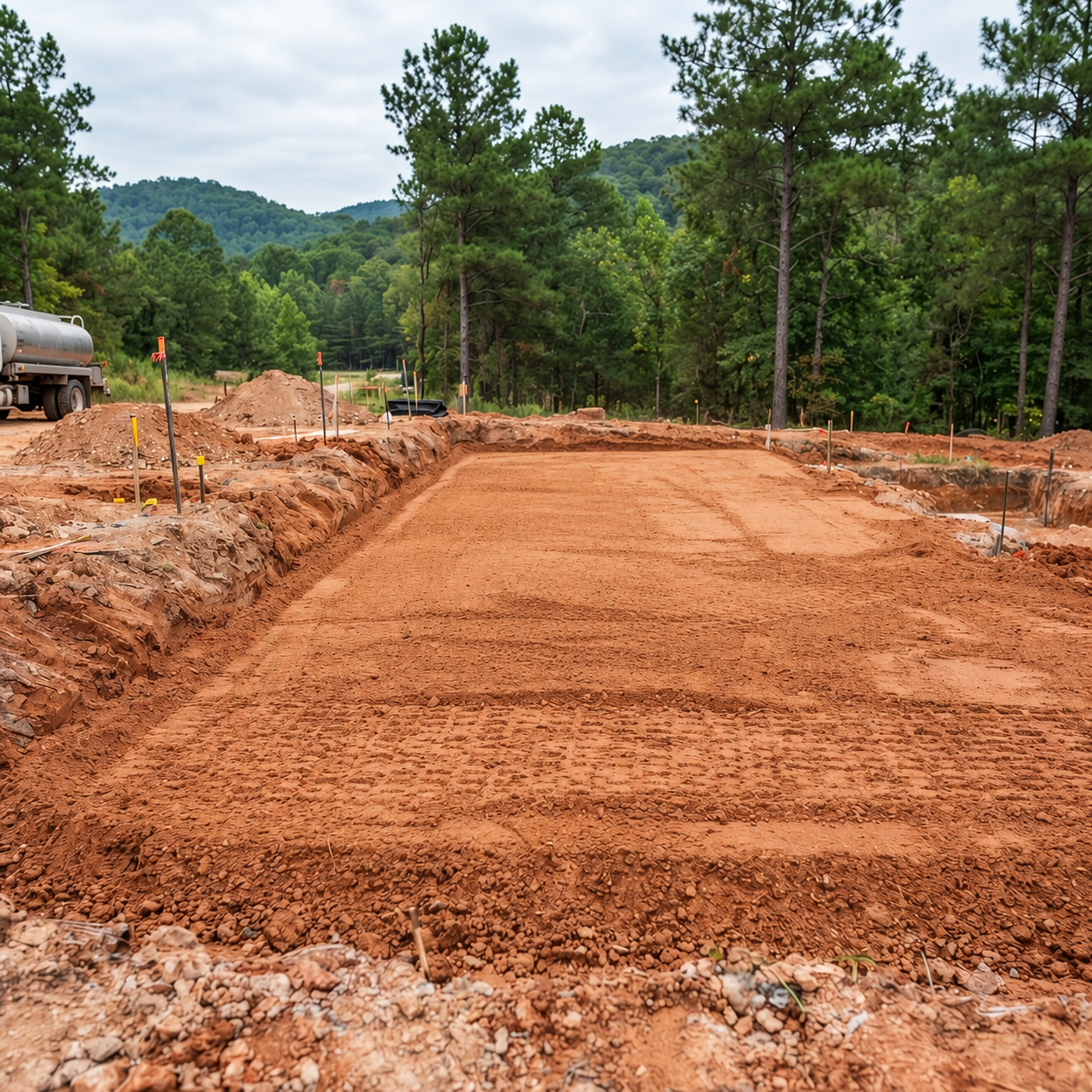
Engineered Fill Placement
Fill placed under slabs, footings, drives, and pavements in measured lifts, compacted and checked as each layer goes down. Material is selected for how it compacts rather than for how close it happens to be.
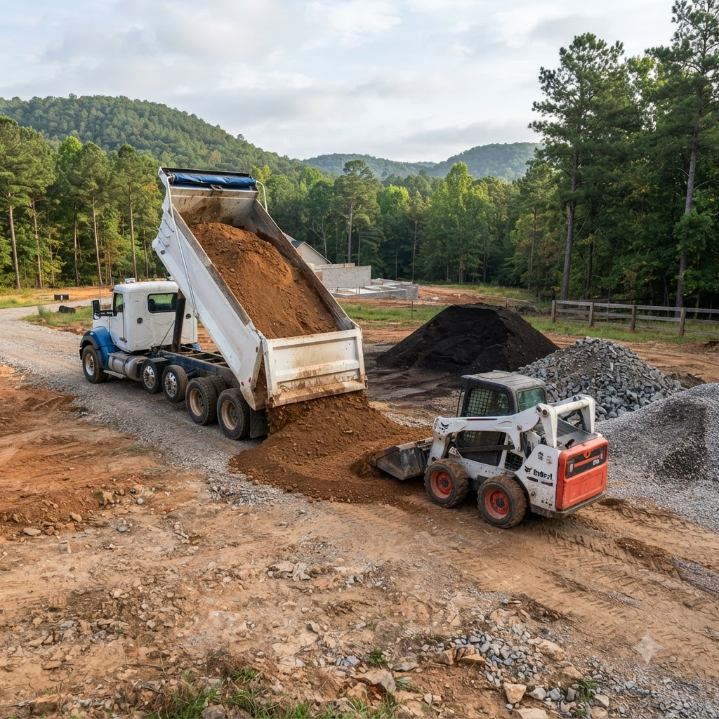
HAULING IN
Fill Dirt, Topsoil, and Gravel Delivery
Select fill, screened topsoil, base rock, and driveway gravel brought in and placed rather than simply dumped at the road. Spreading on delivery saves you a second machine visit later on.
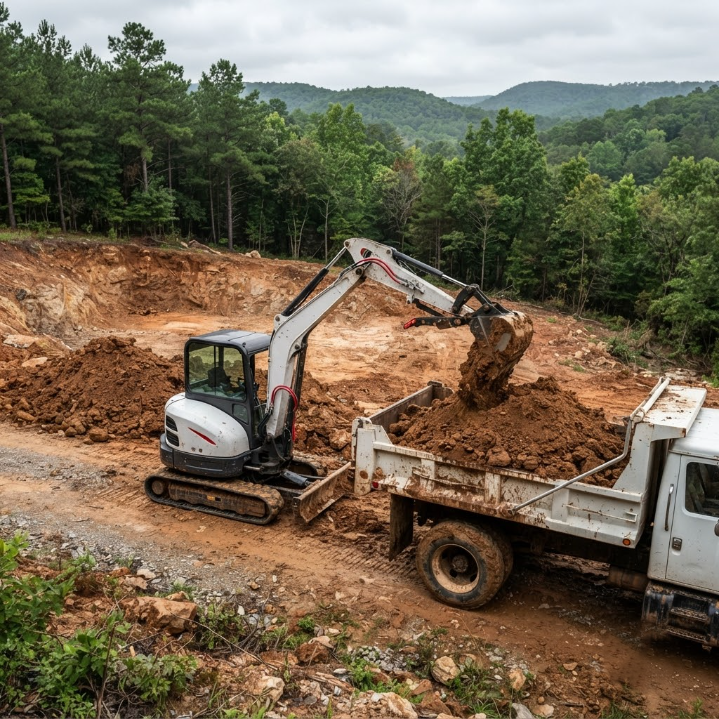
HAULING OFF
Surplus Excavation and Spoil Removal
Excess material from basements, ponds, and cuts loaded and hauled away to a legal disposal site. Where you have a low area worth filling, it goes there first and the hauling bill shrinks.
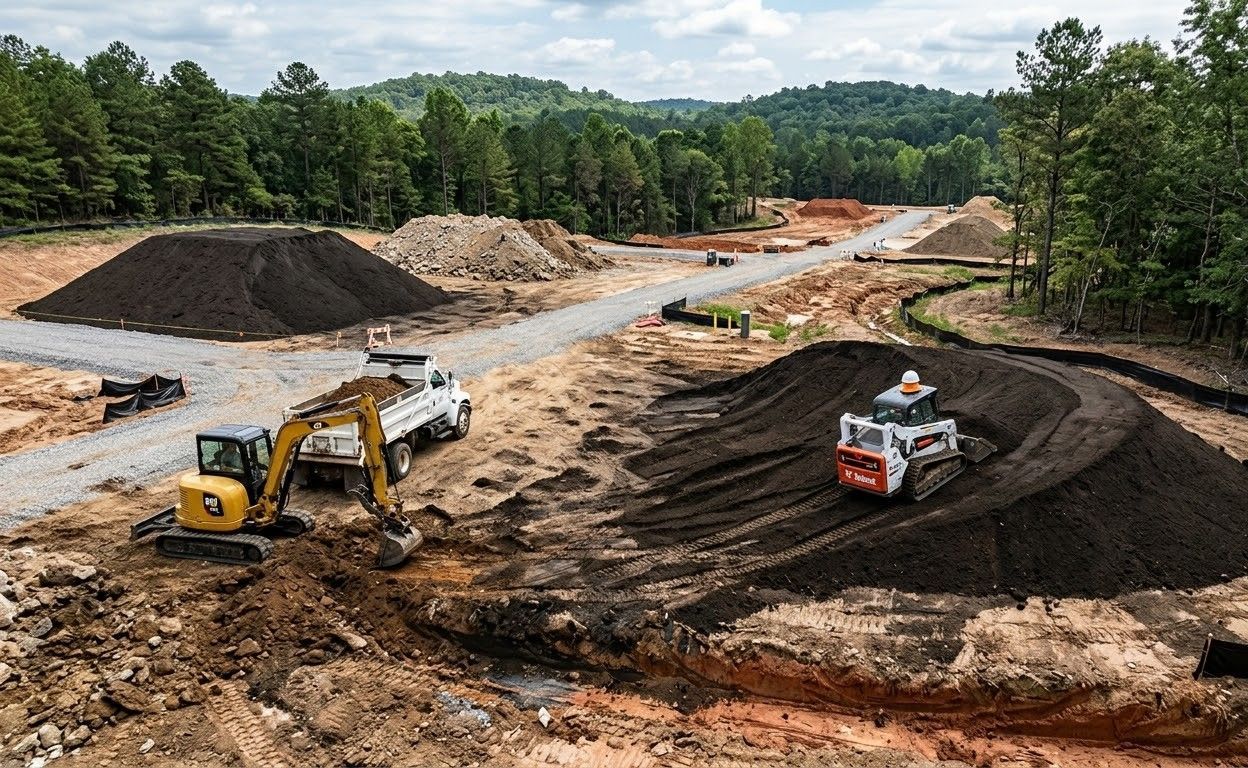
STOCKPILES
Stockpile Building and Management
Topsoil, spoil, and imported material stored in shaped piles that shed rain, sit clear of the work, and stay out of drainage paths. Piles are reclaimed and spread when the site is ready for them.
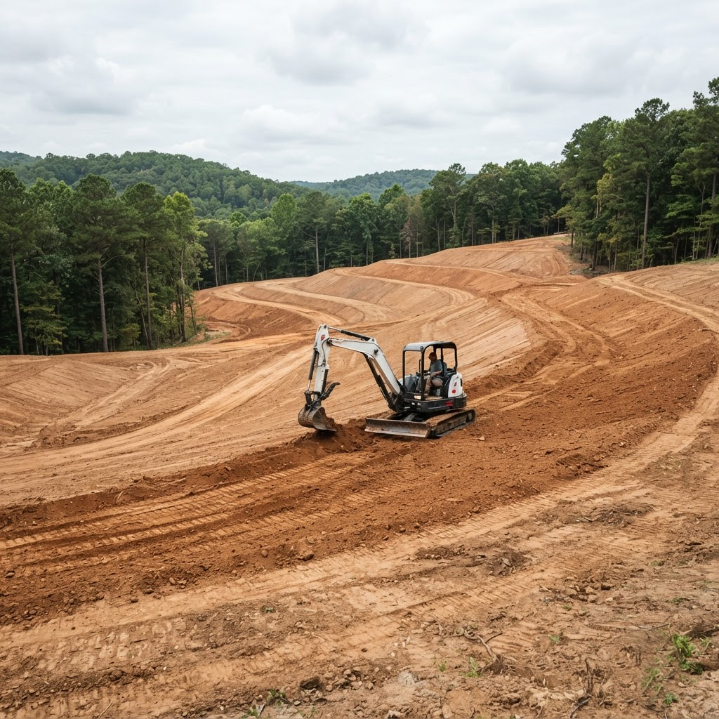
RESHAPING
Land Reshaping and Contouring
Whole parcels recontoured for pasture, drainage, recreation, or resale value. Old ditches and gullies filled, sharp breaks eased, and the finished surface left at a slope a tractor can safely cross.
THE WORD ON OUR WORK
WHAT OUR CLIENTS SAY.
Earthwork is easy to judge once it is finished, because either the ground does what you needed or it does not. Property owners around Garland County have written about watching an excavator and a skid steer work a steep slope together and turn an impossible idea into a level, finished site.
FAQ
FREQUENTLY ASKED QUESTIONS.
Dirt work questions are usually about volume and material: how much is being moved, where it is coming from, and whether what gets placed is going to hold up over time.
How is the amount of dirt on a job actually measured?
By the cubic yard, calculated from the cut and fill areas and their depths. Loose material swells and compacted material shrinks, so a good estimate accounts for both rather than quoting one raw number and hoping for the best.
Can dirt from one part of my property be used somewhere else?
Usually, and it is almost always the cheapest option on the table. The material still has to suit its new job, so topsoil goes to landscape areas while subsoil and shale go underneath structures, drives, and parking surfaces.
What is the difference between fill dirt and select fill?
Fill dirt is whatever happened to come out of a hole nearby. Select fill has been chosen or screened because it compacts predictably. Anything carrying a structural load should be select fill, and everything else can be ordinary fill.
Why does dirt have to be placed in layers?
A thick pile only compacts near the surface, which leaves the material underneath loose and ready to settle later. Placing it in lifts of a few inches and compacting each one gives you density all the way through the depth.
Do you haul dirt away or can I keep it on the property?
Either one works. Clients Choice Contracting will spread surplus material into low areas around Hot Springs, AR if you have somewhere useful for it, which costs far less than loading it up and trucking it to a disposal site.
How wet is too wet to place fill?
Once material balls up on the roller instead of tightening under it, no more compaction is happening. We stop and let it dry, because fill placed too wet will keep settling long after everybody has left the site.
Can earthmoving be done on a small lot?
Yes. Compact track loaders and mini excavators work in tight spaces where a dozer never could. Clients Choice Contracting handles small residential dirt work all over Hot Springs, AR without tearing up the surrounding lawn and the landscaping around it.
How long does dirt settle before something can be built on it?
Properly compacted fill needs no waiting time at all, which is the entire reason for compacting it in the first place. Uncontrolled fill dumped and left alone may keep settling for years, and nothing structural should be built on that.
HOW WE WORK
FROM FIRST YARDAGE TO FINISHED GRADE, HERE IS HOW.
STEP 01
Measure what actually has to move
We walk the site, take elevations, and work out the real cut and fill volumes. That arithmetic decides whether material balances on the property or whether trucks need to be part of the plan.
STEP 02
Price the yardage and the hauling
You get a free written estimate showing volumes, what stays, what comes in, and what goes out. Hauling is broken out separately, because it is usually the line worth trying hardest to reduce.
STEP 03
Plan the routes and mark the site
Haul roads, stockpile locations, and turnarounds all get laid out before anything moves, and utility locates are requested. Planning the route properly is what keeps material from being handled a second and third time.
STEP 04
Strip, cut, and stage the material
Topsoil comes off and goes to its own pile, then cut material is moved directly to the fill areas where it can be. Nothing is parked in a spot that will be needed later.
STEP 05
Place fill in lifts and compact it
Structural areas are built up in measured layers with compaction on every one of them, and moisture is watched throughout. Rock and unsuitable material get sorted out as the work goes rather than left buried.
STEP 06
Shape, drain, and finish the surface
Final contours are cut so water leaves the site properly, stockpiles are reclaimed or removed, and saved topsoil is respread. You get a full walkthrough before the last machine loads onto the trailer.
Get Your Free Estimate
HAVE THE YARDAGE MEASURED, FREE.
Tell us what you are trying to build or fix through the contact page. We will measure the volumes, work out whether the dirt balances on site, and put a written number in front of you.
WHAT YOUR EARTHWORK ESTIMATE COVERS
✓ Cut and fill volumes in cubic yards
✓ Whether material balances on your site
✓ Imported fill, topsoil, or gravel needed
✓ Hauling off, priced as its own line
✓ Compaction method and lift thickness
✓ Final contours, drainage, and cleanup