
Demolition Services
DEMOLITION SERVICES IN Hot Springs, AR
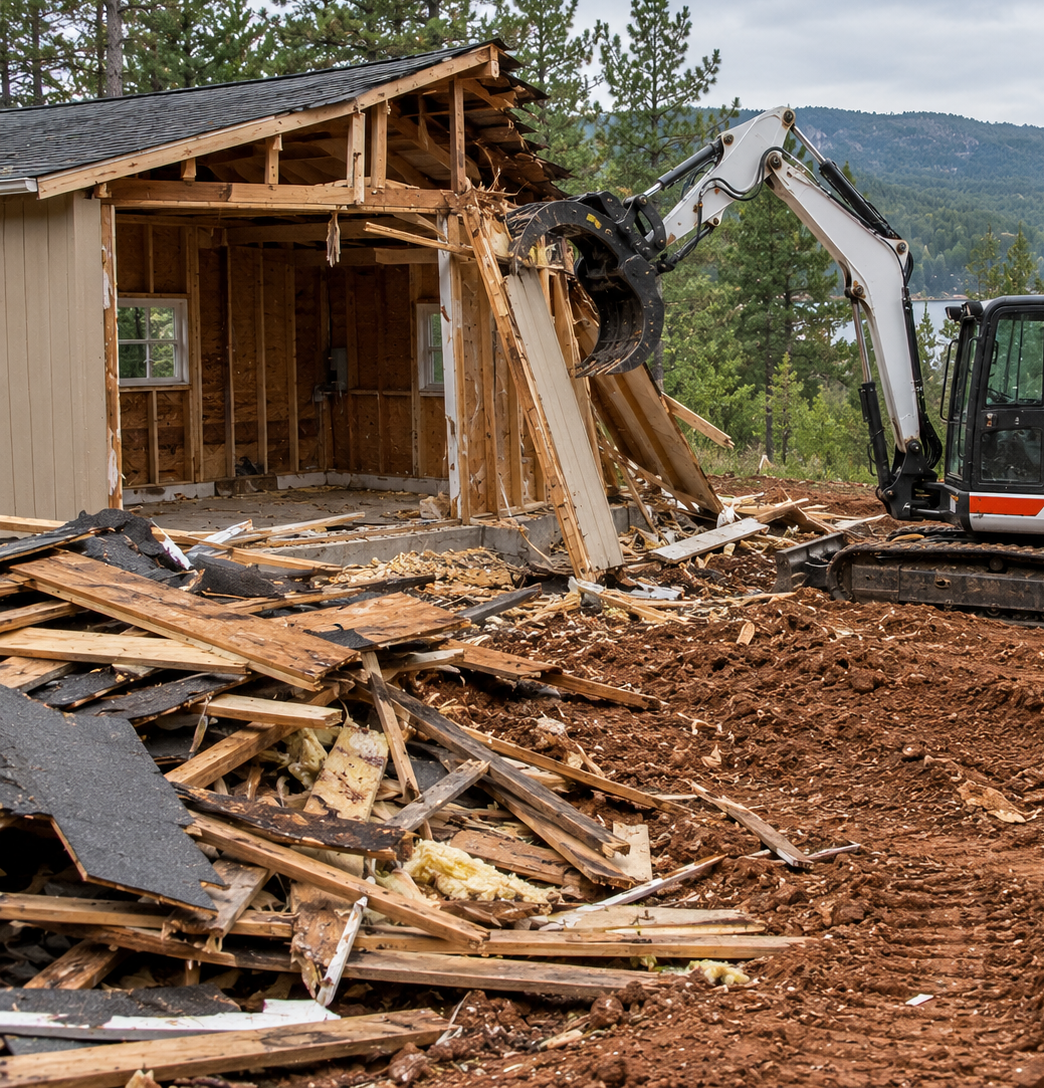
Federal rules require a written notification before most structural demolitions, and utility disconnects have to be confirmed in writing before anything comes down. Clients Choice Contracting handles demolition across Hot Springs, AR: houses and mobile homes, barns and outbuildings, concrete slabs and foundations, swimming pools, interior strip-outs, and fire or storm damaged structures. Everything is separated and hauled off, and the hole left behind is backfilled in compacted lifts to a grade you can actually build on afterward.
PAPERWORK COMES BEFORE THE MACHINE.
Knocking a building down takes a day. Getting to that day means confirming the power is cut and the meter pulled, the gas capped, the water killed at the main, and the notifications filed. Skip any of those and you get a fire, a flood, a fine, or a stop work order, and each costs more than the demolition did.
We work through that list before the excavator ever comes off the trailer, because a structure that comes down cleanly does so because of what happened the week before.
✓ Utility disconnects confirmed in writing
✓ Required notifications filed in advance
✓ Salvage pulled before anything comes down
✓ Hole backfilled to a buildable grade
DEMOLITION SERVICES
WHAT GETS HAULED AWAY IS MOST OF THE JOB.
The demolition itself is a fraction of the work and a fraction of the cost. The real expense is loading, hauling, and legally disposing of everything that used to be a building, and separating what can be recycled from what cannot. Concrete, metal, and clean wood have different destinations from mixed debris, and sorting on site rather than at the gate is what keeps disposal from dominating the bill.
SLOPED SITES COMPLICATE A TEARDOWN.
A structure sitting on a Ouachita slope brings problems flat sites never do. Machines need a working bench that is genuinely stable, debris cannot be allowed to run downhill toward a neighbor or a creek, and the hole left behind has to be filled and compacted rather than left to slump. Drainage gets planned before the walls come down, so exposed ground is not left washing through the next storm.
TAKING SOMETHING DOWN IS MOSTLY PLANNING.
The sequence matters more than the force. Which wall goes first, where the machine stands, how a roof is dropped without throwing material outward, what has to be protected, and where the debris pile builds so loading stays efficient. Years of doing this teaches you to walk a structure and see the order it wants to come apart in. What is going to occupy the ground once the building is gone?
WHY CHOOSE US FOR DEMOLITION SERVICES.
A CLEAN SITE, NOT A DEBRIS FIELD
Everything leaves the property, including what is under the surface. You are left with graded, compacted ground rather than a rubble pile somebody else will have to deal with.
NOTHING LEFT BURIED TO SETTLE
Foundations, footings, slabs, and old tanks come out rather than being buried in place, so whatever gets built here later is not sitting on top of somebody's shortcut.
PAPERWORK HANDLED PROPERLY
Disconnects, notifications, and disposal documentation are managed on our side, which keeps the project clear of fines and keeps a future closing from stalling over a missing record.
SALVAGE YOU GET TO KEEP
Beams, fixtures, brick, barn wood, and equipment are pulled before demolition if you want them. Material worth keeping should not disappear into a dumpster by accident.
NEIGHBORS AND STRUCTURES PROTECTED
Adjacent buildings, fences, trees, and utilities are protected before work starts, and dust is controlled with water. The property line matters just as much on demolition day.
READY FOR THE NEXT BUILD
Backfill goes in compacted and the site is graded to drain, so the ground is genuinely ready for the next project instead of needing a second earthwork contractor.
WHAT WE DEMOLISH
OUR DEMOLITION WORK
Demolition covers everything from a single interior strip-out to taking a whole homestead back down to bare ground. These are the six we handle most often across Garland County and the Tri-Lakes.
STRUCTURES
House and Building Demolition
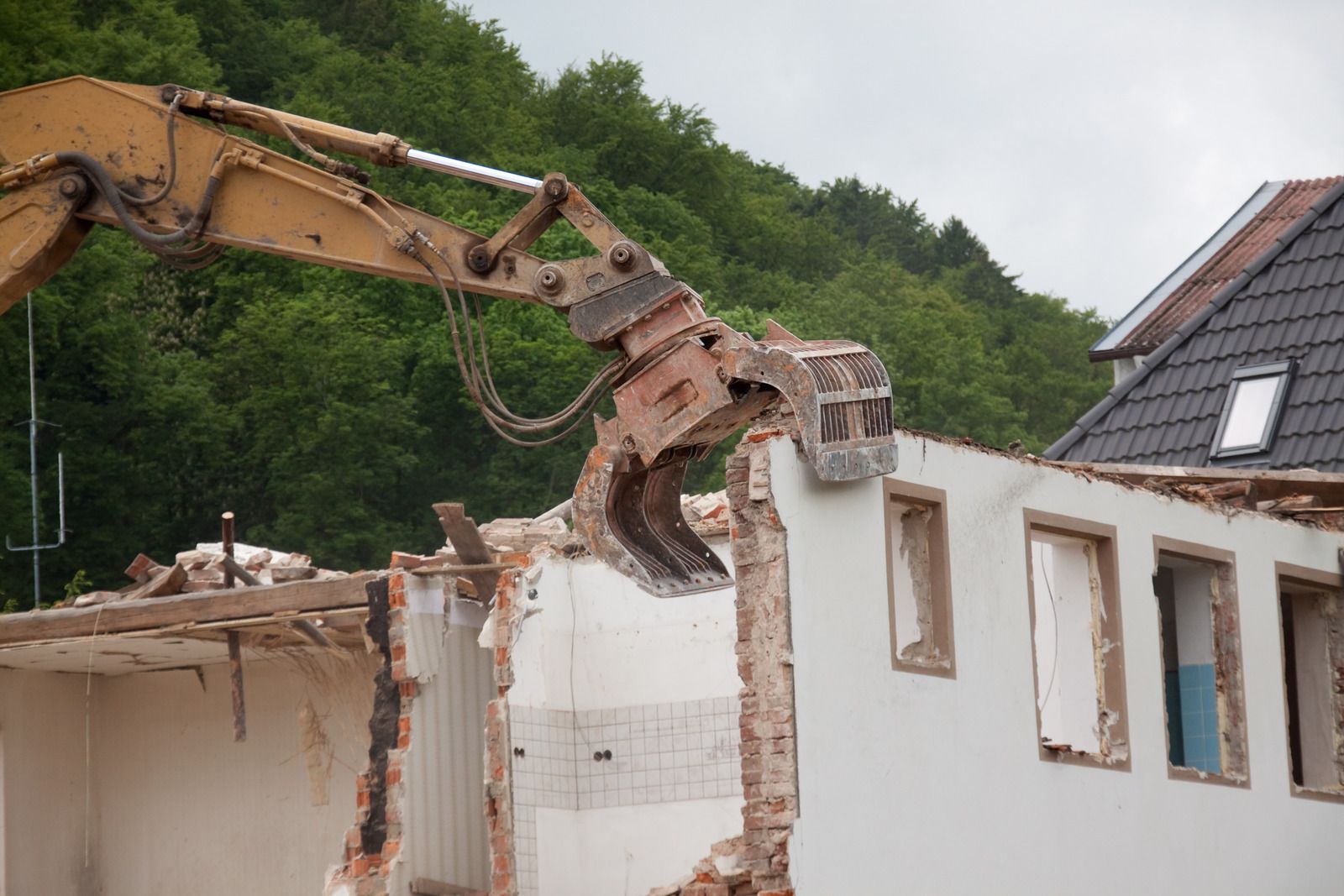
Full teardown of houses, shops, and commercial structures, including the foundation and slab. Utilities are confirmed dead, the debris is separated and hauled, and the site is backfilled and graded.
OUTBUILDINGS
Barn, Shed, and Outbuilding Removal
Barns, sheds, carports, and derelict outbuildings taken down and cleared away. Old barn timber and tin are set aside for you first whenever the material is worth keeping or reselling.
MOBILE HOMES
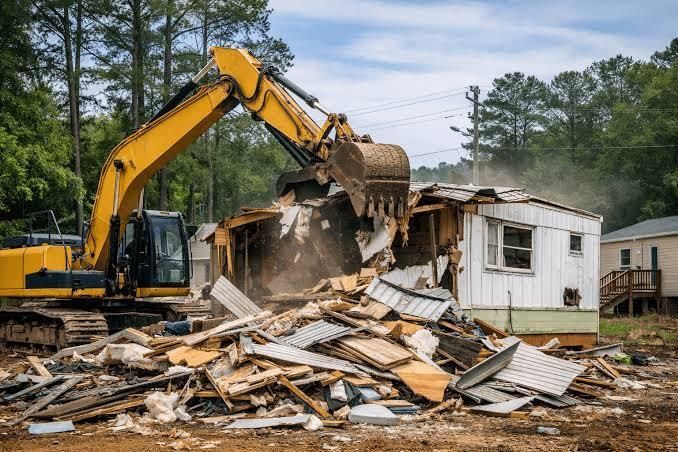
Mobile Home Demolition and Removal
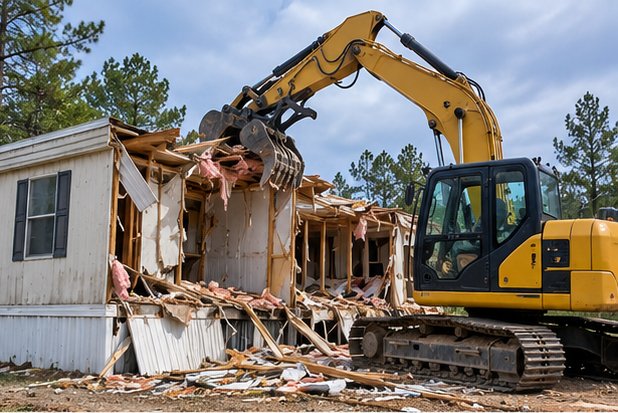
Single and double-wide units dismantled or removed whole, with the frame, skirting, piers, and any attached additions all taken as well. Tie-downs and anchors come out of the ground too.
CONCRETE
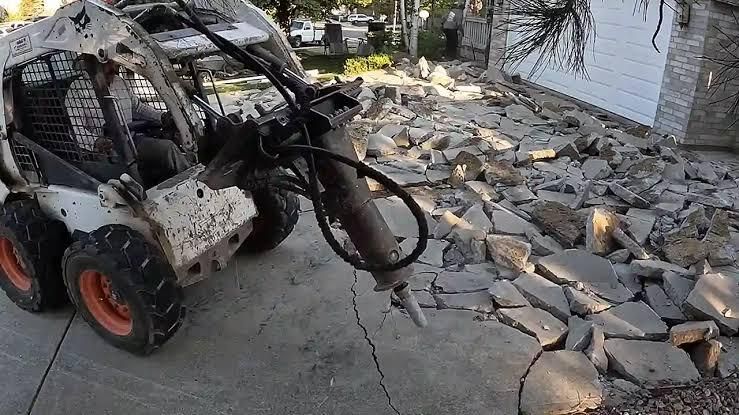
Slab, Foundation, and Driveway Removal
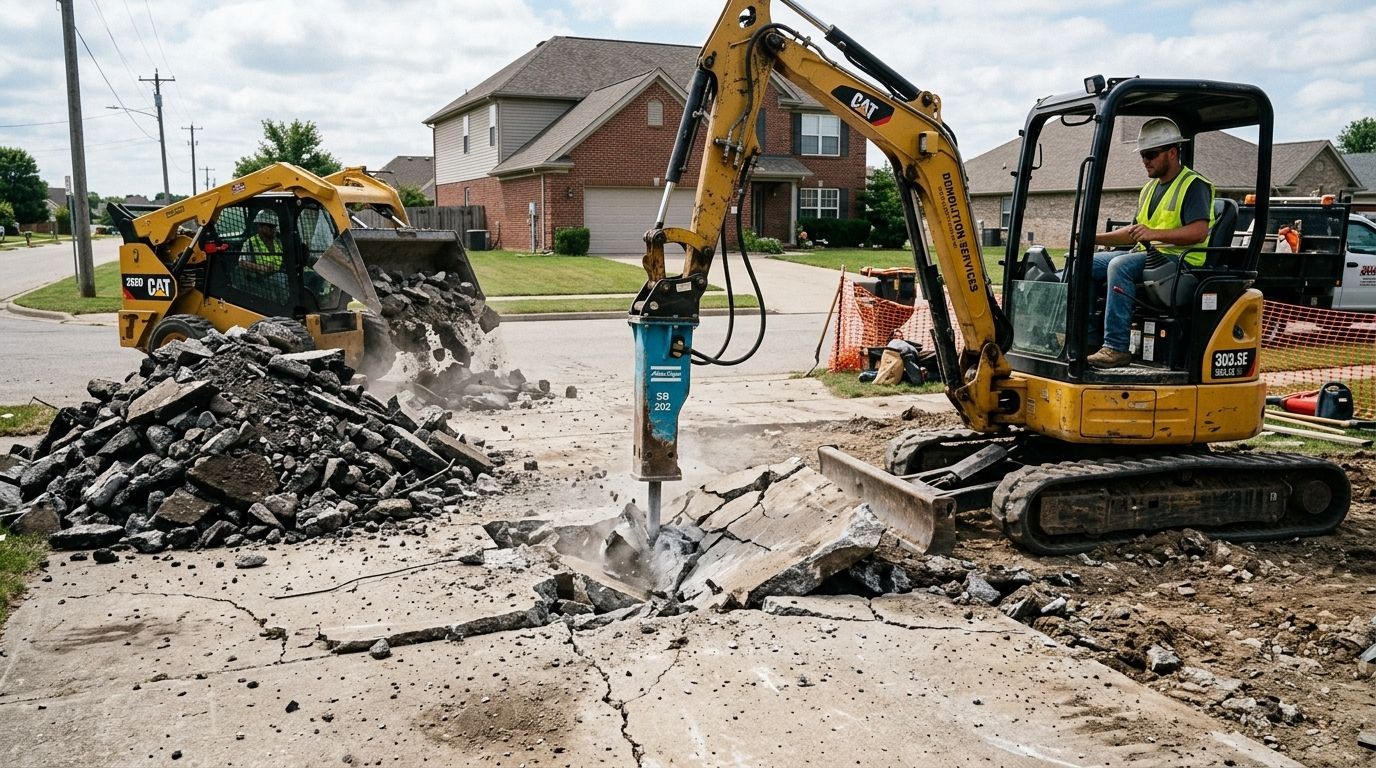
Concrete broken out and hauled away, including driveways, patios, slabs, footings, and foundation walls. The broken concrete is separated out for recycling rather than sent to a landfill as mixed debris.
POOLS
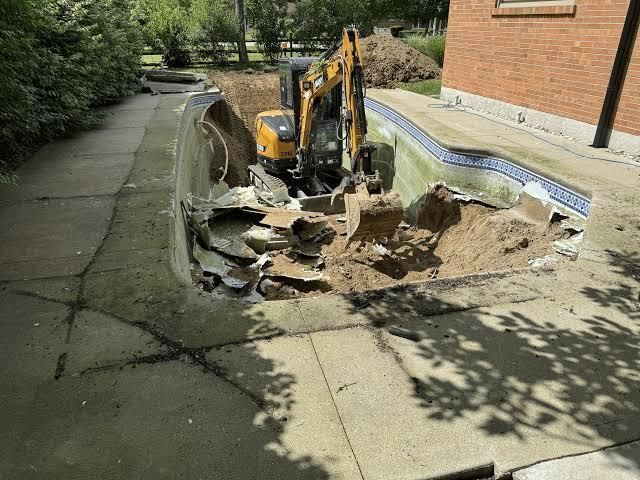
Swimming Pool Removal and Fill
Pools removed entirely or partially demolished and filled to whatever your situation requires. Full removal is the option that keeps disclosure clean and leaves the ground genuinely buildable later on.
INTERIORS
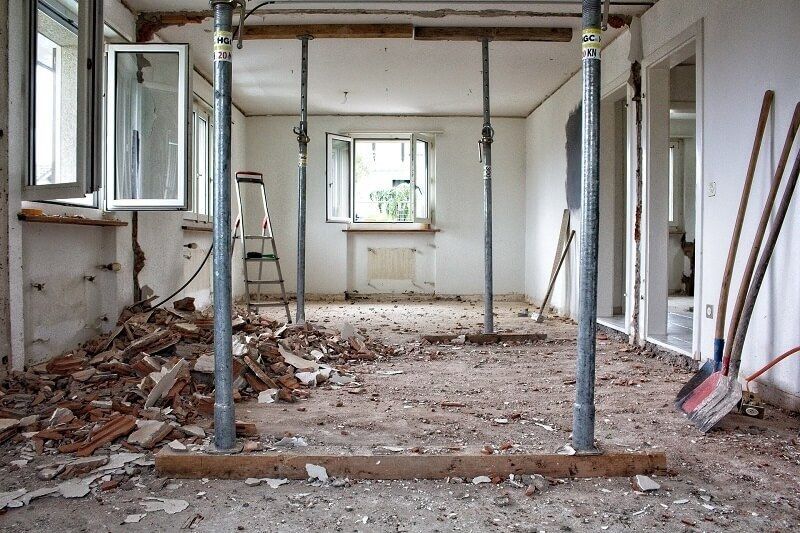
Interior Strip-Out and Selective Demolition
Interiors taken back to studs and subfloor for a remodel, with structural elements left untouched. Careful removal around what stays is a different skill from bringing a whole building down.
THE WORD ON OUR WORK
WHAT OUR CLIENTS SAY.
Demolition is easiest to judge by what is left behind. Property owners around Garland County have described sites cleared fast, work finished on schedule without the price moving, and ground handed back level and ready for whatever they had planned to build there next.
FAQ
FREQUENTLY ASKED QUESTIONS.
Demolition questions are mostly about process and aftermath: what has to happen before a structure comes down, where the debris goes, and what condition the ground is left in.
What has to be done before a building can be demolished?
Utilities have to be disconnected and confirmed, the required notifications filed, salvage removed, and any hazardous material properly addressed first. Clients Choice Contracting works through that entire checklist well before demolition day on every project across Hot Springs, AR.
How long does it take to demolish a house?
The teardown itself is often a single day, and the hauling, foundation removal, backfill, and final grading typically add several more on top. Access, structure size, and how far the disposal site sits all affect that total considerably.
Does the foundation have to come out too?
It should if anything is ever being built there again, because a buried foundation creates settlement and drainage problems later on. Leaving it in place is only reasonable when the ground is going to stay undeveloped for good.
What happens to the debris from a demolition?
It is separated on site and taken to the appropriate destination for each type. Concrete and metal both go to recycling, clean wood is handled separately, and mixed material goes to a licensed landfill with the disposal documented.
Do you handle asbestos or hazardous material?
Any survey and abatement work is carried out by licensed specialists before we start, and it has to be fully complete before demolition begins. Older structures in particular deserve that inspection rather than an assumption made on site.
Is a partial pool removal a bad idea?
It is cheaper and faster, and it does have to be disclosed whenever the property is sold. Full removal costs more up front and leaves ground you can build on, which is usually the better long term choice.
Can a structure be taken down without disturbing what is next to it?
Yes, given the right approach and enough planning. Clients Choice Contracting uses selective demolition and protective measures on tight Hot Springs, AR sites, working piece by piece rather than simply pulling an entire wall over in one movement.
What condition is the site left in afterward?
Cleared, backfilled with compacted material, and graded so that water drains away properly. Anything less means the next contractor has to redo the earthwork, which is exactly why we treat the finish grade as part of the job.
HOW WE WORK
FROM WALLS TO CLEAN GROUND, HERE IS HOW.
STEP 01
Walk the structure and the access
We look at what is coming down, what has to be protected, how machines will reach it, and where debris can be staged. The age and the construction type both change the approach considerably.
STEP 02
Price the demolition and the disposal
You get a free written estimate that separates the demolition itself from the hauling, disposal, and backfill. Disposal is usually the largest portion, so it is shown rather than buried inside a total.
STEP 03
Kill the utilities and file the notices
Power, gas, water, and sewer are all disconnected and confirmed with each provider, and the required notifications go in. Nothing at all comes down until every one of those steps has been documented in writing.
STEP 04
Pull the salvage and set up protection
Anything you want kept is removed first, then adjacent structures, trees, and utilities are all protected. Dust control and site security both go in before the first wall is touched by a machine.
STEP 05
Take it down in a planned sequence
The structure comes apart in whatever order keeps material falling inward and keeps the loading efficient. Foundations, slabs, and any buried tanks all come out along with everything that was standing above them.
STEP 06
Haul, backfill, and grade the site
Debris is separated and hauled to the right destinations, the excavation is backfilled in compacted lifts, and the surface is graded to drain. You walk the finished ground with us before we leave.
Get Your Free Estimate
GET YOUR TEARDOWN PRICED HONESTLY, FREE.
Send the address and a few photos of the structure through the contact page. We will look at what is involved, work out the real disposal cost, and put a written demolition number in front of you.
WHAT YOUR DEMOLITION ESTIMATE COVERS
✓ The structure and everything below it
✓ Utility disconnects and required notices
✓ Salvage you want pulled beforehand
✓ Separation, hauling, and disposal costs
✓ Backfill placed in compacted lifts
✓ Final grading, drainage, and cleanup