
Excavation Services
EXCAVATION SERVICES IN Hot Springs, AR
The Bismarck soils covering most of Garland County give up only 10 to 20 inches before the shale starts, and the material below that runs 35 to 85 percent rock by volume. Clients Choice Contracting plans every excavation in Hot Springs, AR around that reality, from basement and footing cuts to pond digs, bench cuts, and utility pits. Machine size, bucket choice, and hammer time are decided by the material, not by whatever happened to be on the trailer.
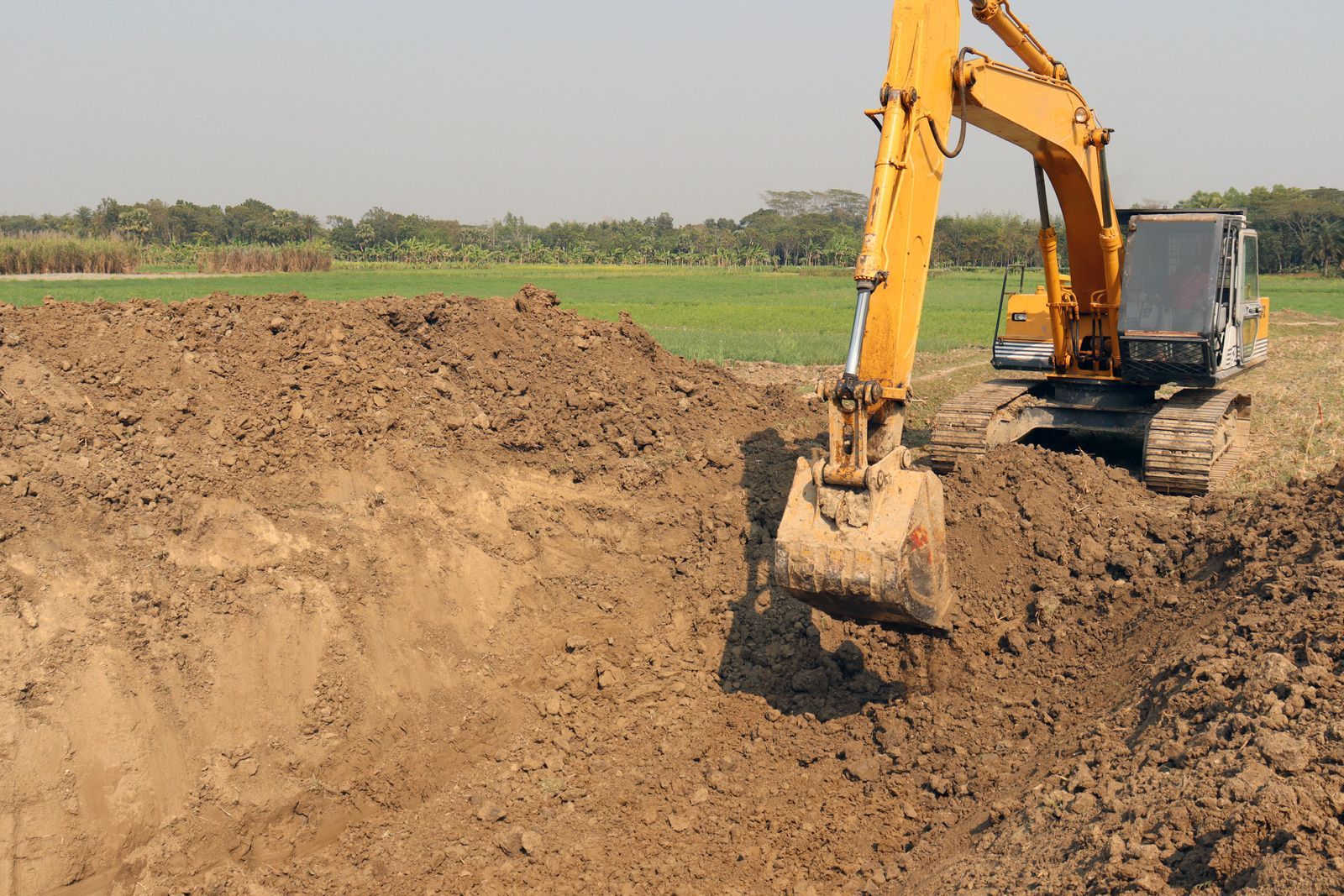
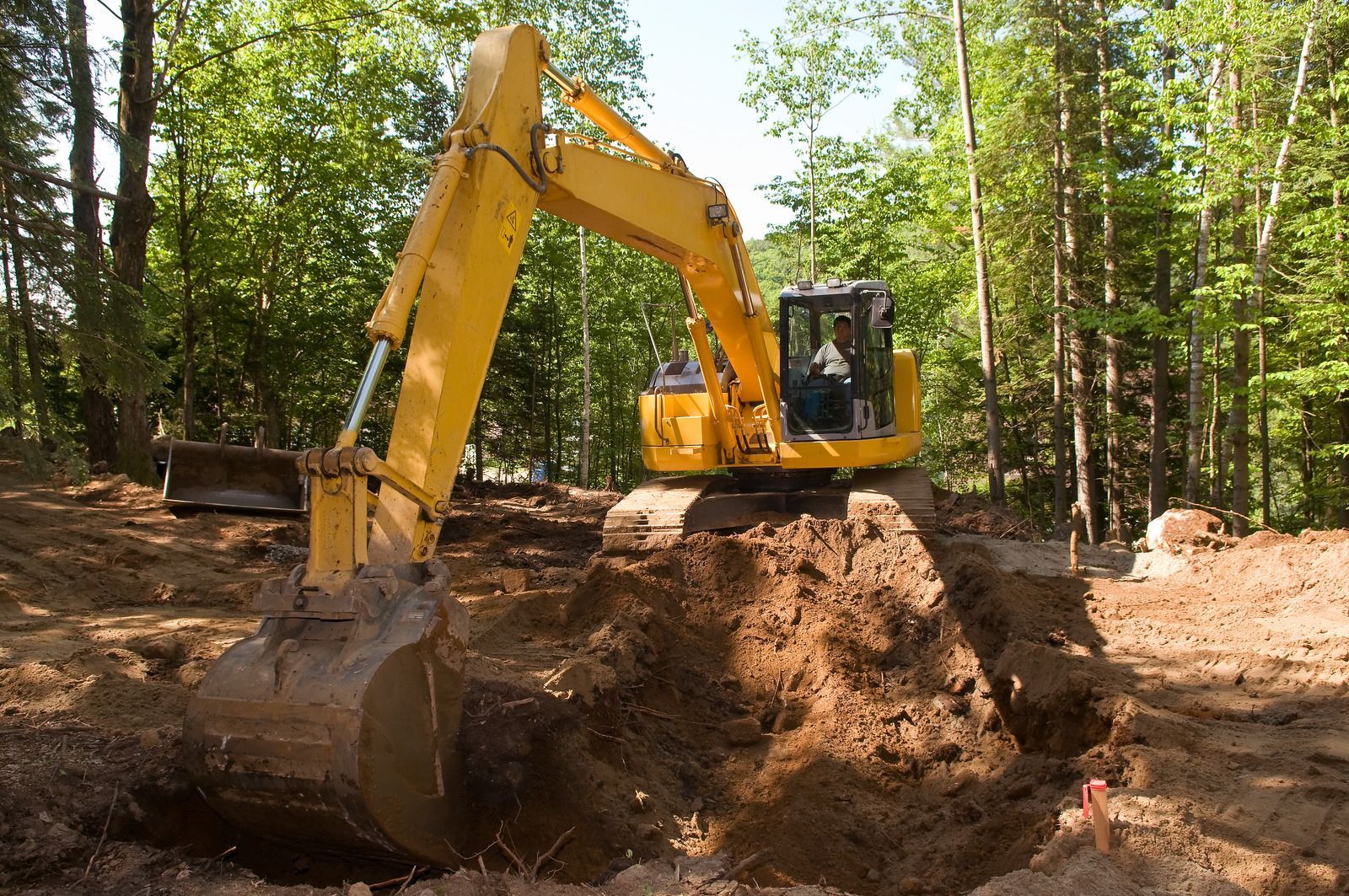
THE HOLE IS ONLY HALF THE JOB.
Anybody can open a hole. Keeping the walls stable, putting the spoil somewhere it will not slide back in, and leaving a bottom that a footing crew can actually work off takes planning done before the first cut. We set the dig sequence, the spoil placement, and the water path together, because on a hillside those three decisions are the same decision.
Get one of them wrong and you pay for it twice over: once to fix the slide that follows, and once more to move the same dirt a second time.
✓ Rock buckets, thumbs, and hydraulic hammers
✓ Spoil placed where it drains, not where it slides
✓ Bottoms cut to grade and checked
✓ Water controlled before the dig opens
EXCAVATION SERVICES
THIS ROCK DOES NOT COME OUT WITH A SHOVEL.
Tilted shale with sandstone and novaculite running through it will stop a standard bucket cold, and hitting it unexpectedly is what blows up a construction budget in the middle of a week. We probe before quoting so the rock line is a known quantity rather than a change order. When a hammer is needed, it is on the estimate from the start, along with an honest range for how much of it the site will take.
HILLSIDE DIGS BEHAVE DIFFERENTLY HERE.
Slopes on a single Ouachita parcel can run from gentle to 60 percent, and every cut into one of them creates a bank that has to stand up through the next storm. We bench cuts back rather than leaving vertical faces, key fill into undisturbed ground instead of stacking it on topsoil, and get positive drainage across the site before the excavation sits open through a weekend.
30+ YEARS OF DIGGING OUACHITA ROCK.
Experience in this trade shows up in what does not happen: no collapsed bank, no flooded footing trench, no discovery that the pad sits in solid stone. 30+ years of moving material in this county means we know which ridges hide rock at a foot, which bottoms hold water long after a rain, and which access routes will carry a loaded tandem in February. Do you want that judgment on your site before the digging starts?
WHY CHOOSE US FOR EXCAVATION SERVICES.
NO SURPRISES AT THE ROCK LINE
Depth to rock gets probed and priced up front, so the number you sign is close to the number you pay even when the shale shows up shallow.
BANKS THAT STAY WHERE THEY ARE
Cuts are benched and drained rather than left vertical, which keeps the excavation open safely and keeps your neighbor's slope from ending up inside your project.
A BOTTOM THE NEXT TRADE CAN USE
Footing and slab excavations are cut to grade and left clean, so forms go straight in and nobody spends a morning hand-shaping the floor of a hole.
DIRT THAT DOES NOT COME BACK
Spoil is placed, shaped, and drained on the first move. It is not piled at the top of a bank waiting for rain to bring it back down into the excavation.
WORK THAT KEEPS ITS SCHEDULE
Weather windows here are short. Sequencing the dig around drying time and rain forecasts keeps the site moving instead of losing a week to a soft bottom.
ONE CALL FOR THE WHOLE CUT
Clearing, excavation, hauling, and backfill all come from one crew. There is no gap between contractors where the hole sits open and quietly fills with water.
WHAT WE EXCAVATE
OUR EXCAVATION WORK
Excavation covers a wide range of jobs that share one thing: material has to leave a specific place at a specific depth. These are the six we get called for most around the Tri-Lakes.
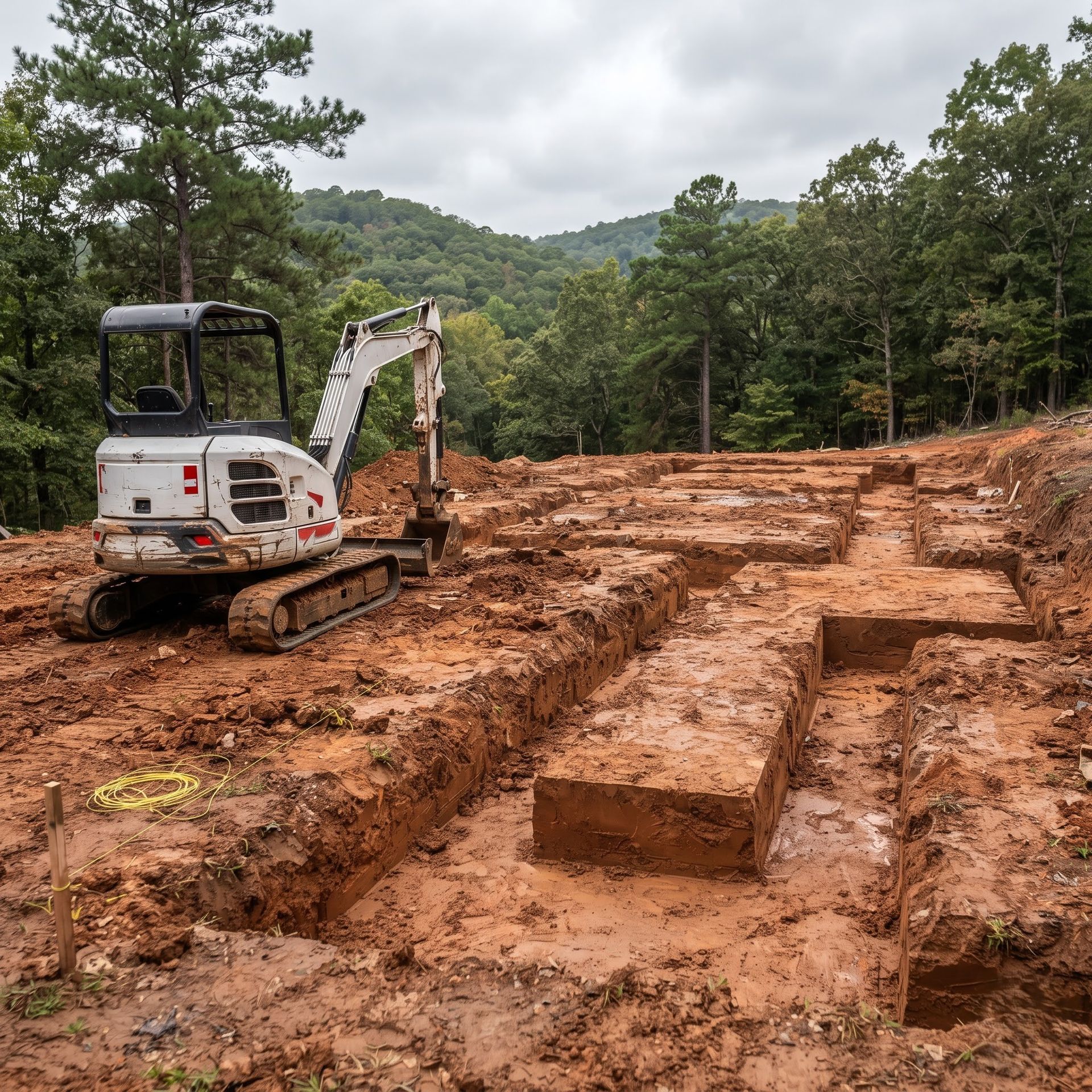
FOOTINGS
Footing and Foundation Excavation
Trenches and pads dug to the depth and width on the plan, with clean vertical sides where the soil allows and benched sides where it does not. Bottoms are cut flat and left ready for forms.
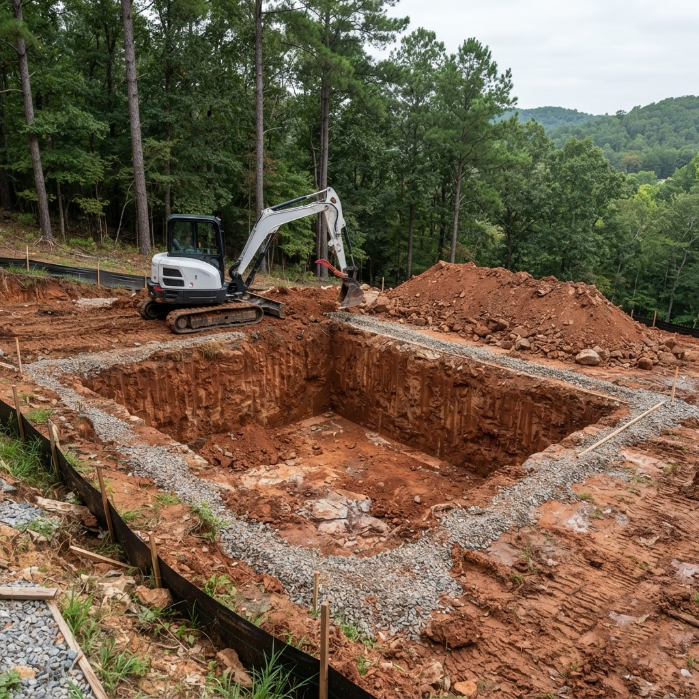
BASEMENTS
Basement and Crawl Space Digs
Full basement excavations on sloped lots, including the over-dig for waterproofing access and drainage stone. Spoil is staged for later backfill instead of being hauled off and bought back as fill.
PONDS
Pond and Lake Excavation
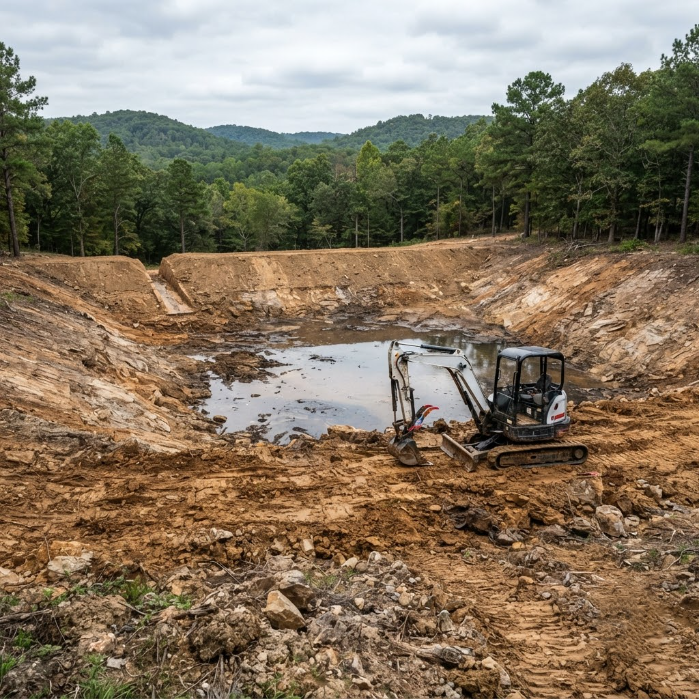
New ponds keyed into clay where it exists, existing ponds cleaned out and deepened, dams shaped and cored. Overflow and spillway elevations are set so a heavy spring does not take the structure out.
BENCH CUTS
Hillside and Bench Cuts
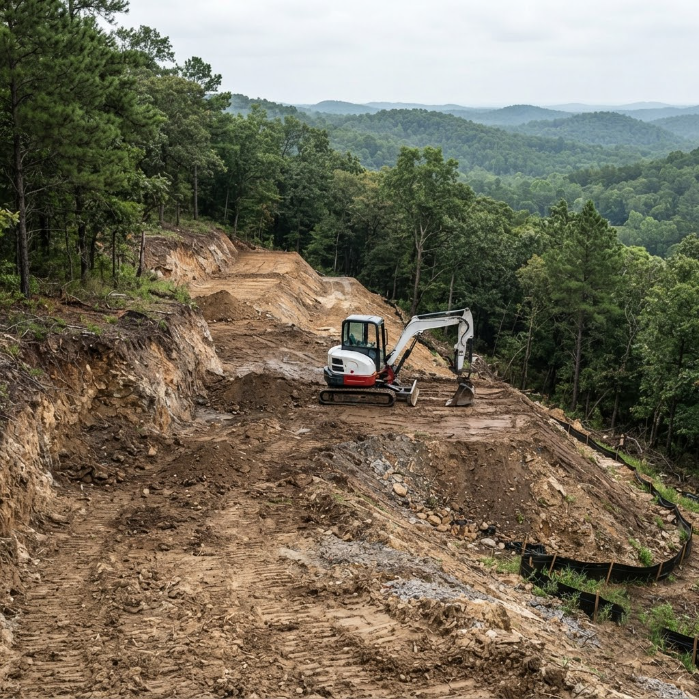
Level shelves carved into a slope for a house, shop, barn, or parking area. Cut and fill are balanced across the bench so material stays on site and the slope above stays supported.
ROCK WORK
Rock Removal and Hammering
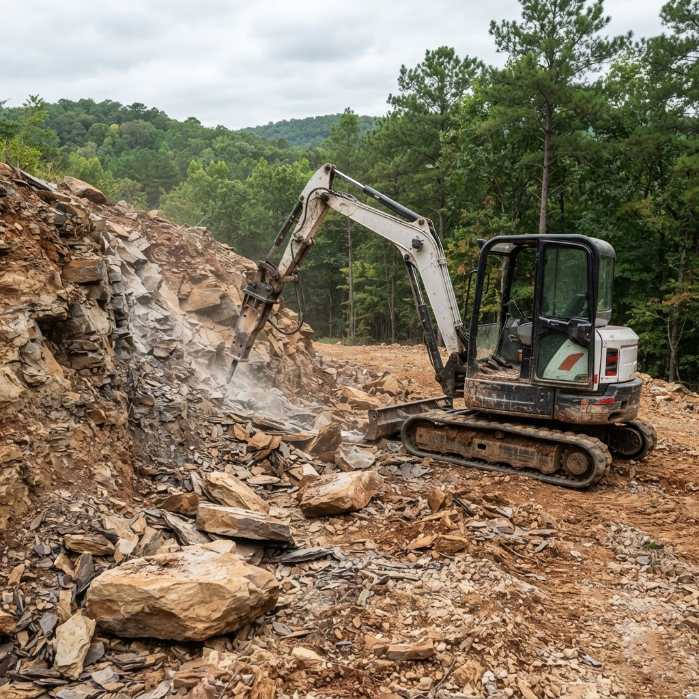
Shale ledges, sandstone seams, and boulders broken out with a hydraulic hammer and removed. Rock too large to load gets buried in fill areas where it will do no harm instead of leaving the property.
BACKFILL
Backfill and Compaction
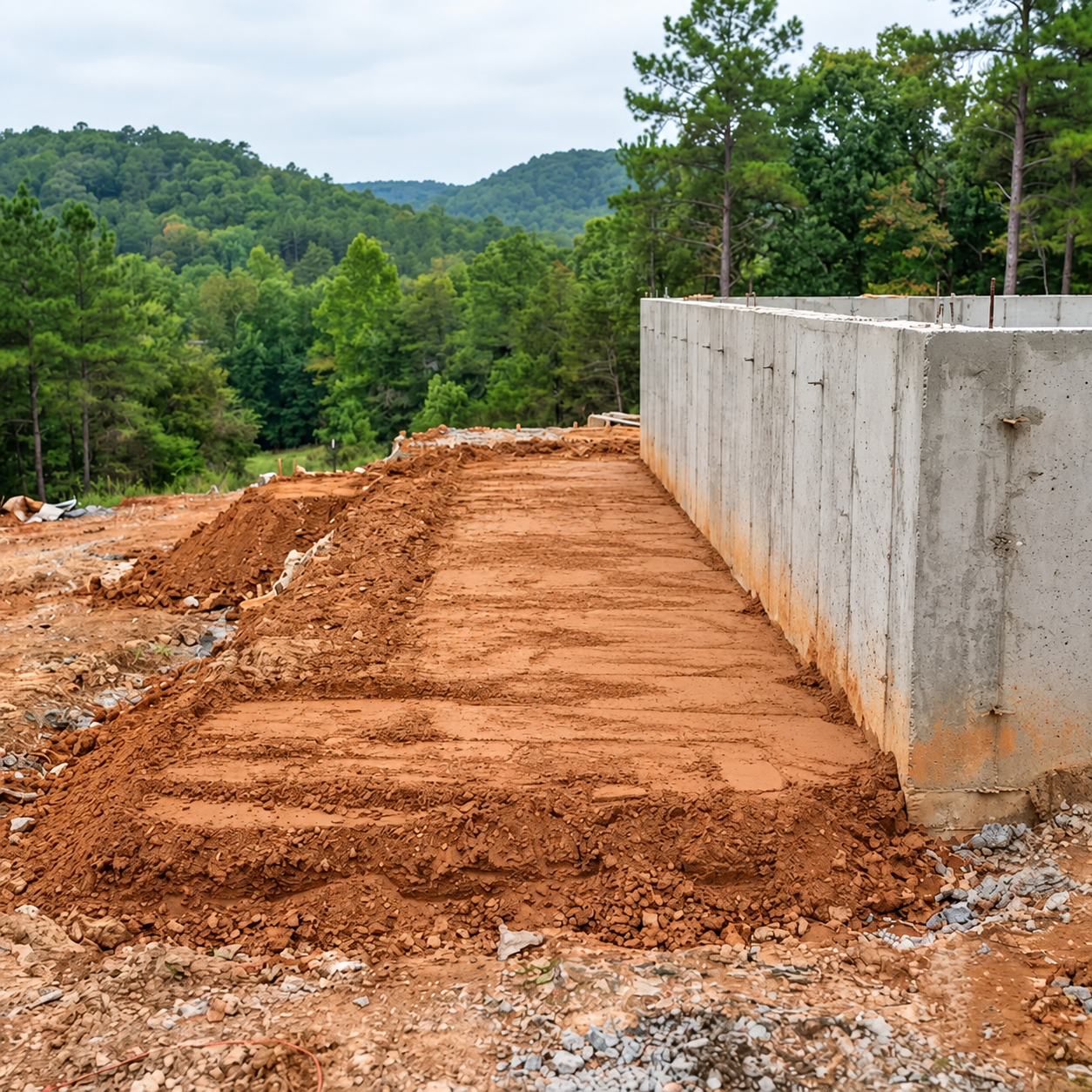
Material returned in controlled lifts around foundations, walls, and pipe, compacted as it goes. Wall pressure and settlement both come down to how the backfill went in, not what it was made of.
THE WORD ON OUR WORK
WHAT OUR CLIENTS SAY.
One customer handed over a 20 degree slope and a sketch, and got a level building site, a driveway off the main road, and a finished job on time and under the number. Excavation results are easy to see, which is why the reviews describe them in that much detail.
FAQ
FREQUENTLY ASKED QUESTIONS.
Most excavation questions are about the unknowns: what is under the surface, how deep the dig has to go, and what happens to everything that comes out of the hole.
How do you know how deep the rock is before digging starts?
Test pits with the excavator, and what neighboring sites have already shown. A few probes cost an hour and settle whether the plan on paper is workable. Guessing at rock depth is how a foundation budget doubles in the first week.
What happens to the dirt taken out of an excavation?
Most of it stays. Spoil is stockpiled for backfill and grading, surplus goes to a low spot on the property if you have one, and anything left over gets hauled off. Reusing material on site saves you the hauling cost.
How long does a foundation excavation take?
A typical residential footing dig runs one to two days in workable soil. Add rock, a steep approach, or a wet bottom and that can easily double. The estimate states plainly which conditions the schedule is built around.
Can excavation be done in winter?
Yes, and winter is often the better season here. The ground is firm, the vegetation is down, and there is less standing rain sitting in an open hole. Hard freezes rarely last long in this part of Arkansas.
What is over-excavation and why would I need it?
It means digging past the design depth to remove unsuitable material, then rebuilding the area with engineered fill. It comes up when soft clay, old fill, or buried debris happens to sit exactly where a structure is meant to bear.
How close to an existing house can you excavate?
Closer than most people expect, given the right machine for it. Clients Choice Contracting runs compact excavators for tight work around occupied homes in Hot Springs, AR, and shores or benches the cut wherever the existing foundation needs support.
Does an excavation need to be inspected before concrete is poured?
Footing excavations usually do, and the timing of it matters. We coordinate so the hole is not sitting open through rain waiting on an inspector, because a wet bottom means digging out and recompacting before anyone can pour.
What causes a trench or excavation wall to collapse?
Vertical faces, vibration, water, and spoil stacked right at the edge. Clients Choice Contracting benches or slopes the walls, keeps spoil well back from the lip, and follows the depth rules on every excavation across Hot Springs, AR.
HOW WE WORK
FROM TEST PIT TO FINISHED CUT, HERE IS HOW.
STEP 01
Look at the site and the plan together
We read the drawings against the actual ground, walk the access route, and find where water currently goes. Plans drawn off a topo map rarely account for what a hillside does in a real storm.
STEP 02
Probe for rock and soil conditions
Test pits tell us what is down there before anybody commits. That hour on site is what keeps the rock line, the bearing material, and the water table out of the surprise category.
STEP 03
Price it and call the locates
You get a free written estimate with every assumption stated plainly on it. Utility locates are requested at the same time, so the marks are already down before the first machine rolls onto the property.
STEP 04
Build access and control water first
Entry, turnaround, and haul route all go in before the dig starts. Diversion swales and silt control get installed so runoff goes around the excavation rather than into it during the first heavy rain.
STEP 05
Cut, bench, and place the spoil
Material comes out in a planned sequence, walls are benched or sloped as depth requires, and spoil is set where it drains and will be reused. Rock is hammered out and dealt with as it appears.
STEP 06
Finish grade, backfill, and clean up
Bottoms are cut to grade and checked, backfill goes back in compacted lifts, and the surrounding area is shaped to drain properly. You get a walkthrough with us before we load out the last machine.
Get Your Free Estimate
LET US PROBE BEFORE YOU DIG, FREE.
Send the address and the plan through the contact page. We will look at the ground, dig a test pit where it helps, and put a written excavation number in front of you with the assumptions spelled out.
WHAT YOUR EXCAVATION ESTIMATE COVERS
✓ Depth, footprint, and cut volumes
✓ Rock allowance and hammer time if needed
✓ Where the spoil goes on or off site
✓ Access, staging, and water control
✓ Backfill and compaction included
✓ A start date and a working schedule