
Tree Removal Services
TREE REMOVAL SERVICES IN Hot Springs, AR
A mature oak can hold several tons of wood in its trunk alone, and the direction that weight travels is decided in the first few seconds of a cut. Clients Choice Contracting handles tree removal across Hot Springs, AR: hazard trees leaning over roofs, storm-damaged trunks, dead standing timber, whole stands inside a clearing footprint, and the stump work afterward. Machine assistance and a carefully planned fall path replace guesswork wherever the drop zone happens to be tight or awkward.
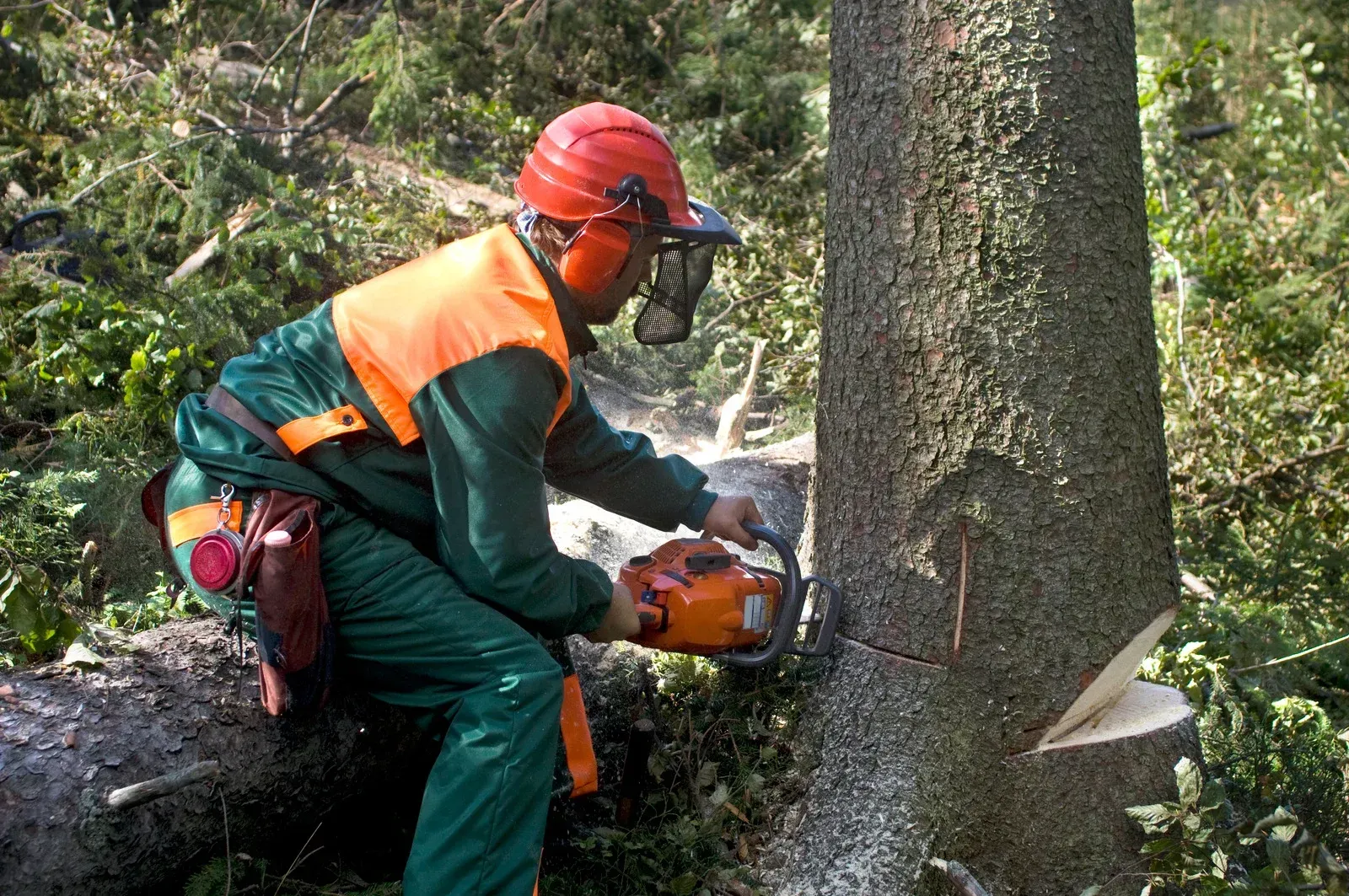
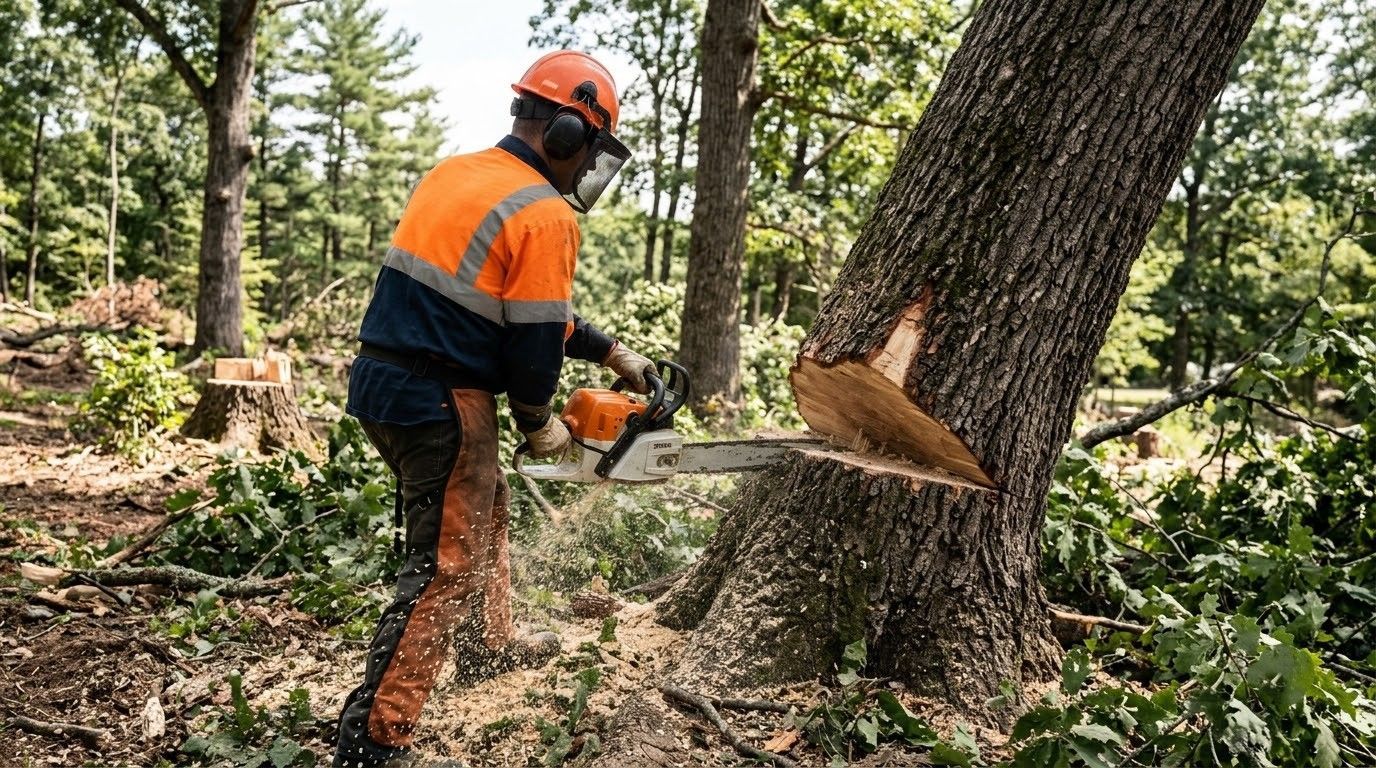
GRAVITY ONLY GIVES YOU ONE CHANCE.
A tree that goes the wrong way takes a roof, a fence, or a power drop with it, and there is no second attempt once the hinge is cut. So the work happens before the saw starts: reading the lean, the crown weight, the root plate, and the wind, then picking a fall path or deciding the trunk has to come down in sections.
On tight lots we put the excavator to work holding and steering the trunk, which turns what would be an uncertain fall into a controlled and entirely predictable one.
✓ Hazard trees near homes and power drops
✓ Sectional removal where space is tight
✓ Excavator assisted felling and steering
✓ Stumps ground or fully excavated
TREE REMOVAL SERVICES
STORM DAMAGE WILL NOT WAIT FOR GOOD WEATHER.
Ice, straight line winds, and saturated ground put trees down across this county every year, and a leaner hung up over a house is not something to look at for a week. We clear damaged and dangerous trees, cut trunks off structures carefully rather than dragging them, and open blocked driveways so you can get in and out. Hours open 7 a.m. to 7 p.m. every day of the week exist for exactly this reason.
SHALLOW SOIL MAKES TALL TREES NERVOUS.
Root plates around here often have only 10 to 20 inches of workable soil before hitting shale, so trees spread wide and shallow instead of anchoring deep. Add 58 inches of annual rain saturating that thin layer and a healthy looking pine can go over in a wind that should not have touched it. Leaning trunks and lifted soil on the uphill side are worth a look before the next storm.
EVERY TREE TELLS US WHERE IT WANTS TO FALL.
Lean, crown balance, decay pockets, old wounds, and which side the roots let go on first all point the same direction if you have looked at enough of them. That reading is the actual work, and the saw is just what carries the decision out. It is also why we will say plainly when a tree needs a climber and a crane rather than what we can safely put on the ground ourselves.
WHY CHOOSE US FOR TREE REMOVAL.
RISK TAKEN OFF YOUR PROPERTY
A leaning or dead tree over a house stops being a thing you watch during every storm, and that is worth more than the removal cost the first time weather rolls through.
NOTHING ELSE GETS BROKEN
Drop zones are planned, sections are lowered rather than dropped where space is tight, and the machine holds the trunk so nothing lands on a fence, a shed, or a septic lid.
LIGHT AND GRASS COME BACK
Removing a heavy canopy opens up a yard that has been shaded for 20 years, and grass, gardens, and solar all start working in areas that never got sun.
THE STUMP GOES TOO
Removal and stump work happen in the same visit, so you are not left with an obstacle in the middle of the yard waiting on a second contractor to appear.
CLEAN WHEN WE LEAVE
Wood is cut to length, stacked, chipped, or hauled by your choice, and the debris is picked up rather than pushed into a pile at the edge of the property.
ONE MACHINE ALREADY ON SITE
When trees are part of a larger clearing or excavation job, the equipment is already there. That saves a separate mobilization charge and a separate day out of your schedule.
WHAT WE REMOVE
OUR TREE REMOVAL WORK
Tree work ranges from one dangerous trunk beside a house to several acres of standing timber. These are the six situations we get called out to most across Garland County and the Tri-Lakes.
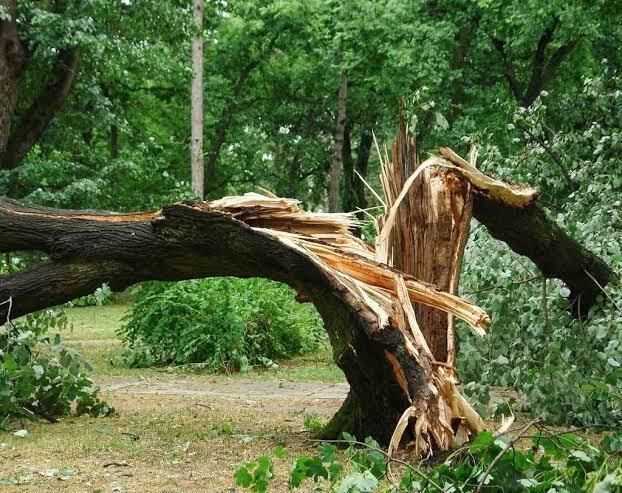
HAZARD TREES
Hazard and Leaning Tree Removal
Trees leaning over homes, drives, or power drops taken down in a controlled direction. The lean, the root plate, and the drop zone are assessed first, and sections come off where a straight fall is not safe.
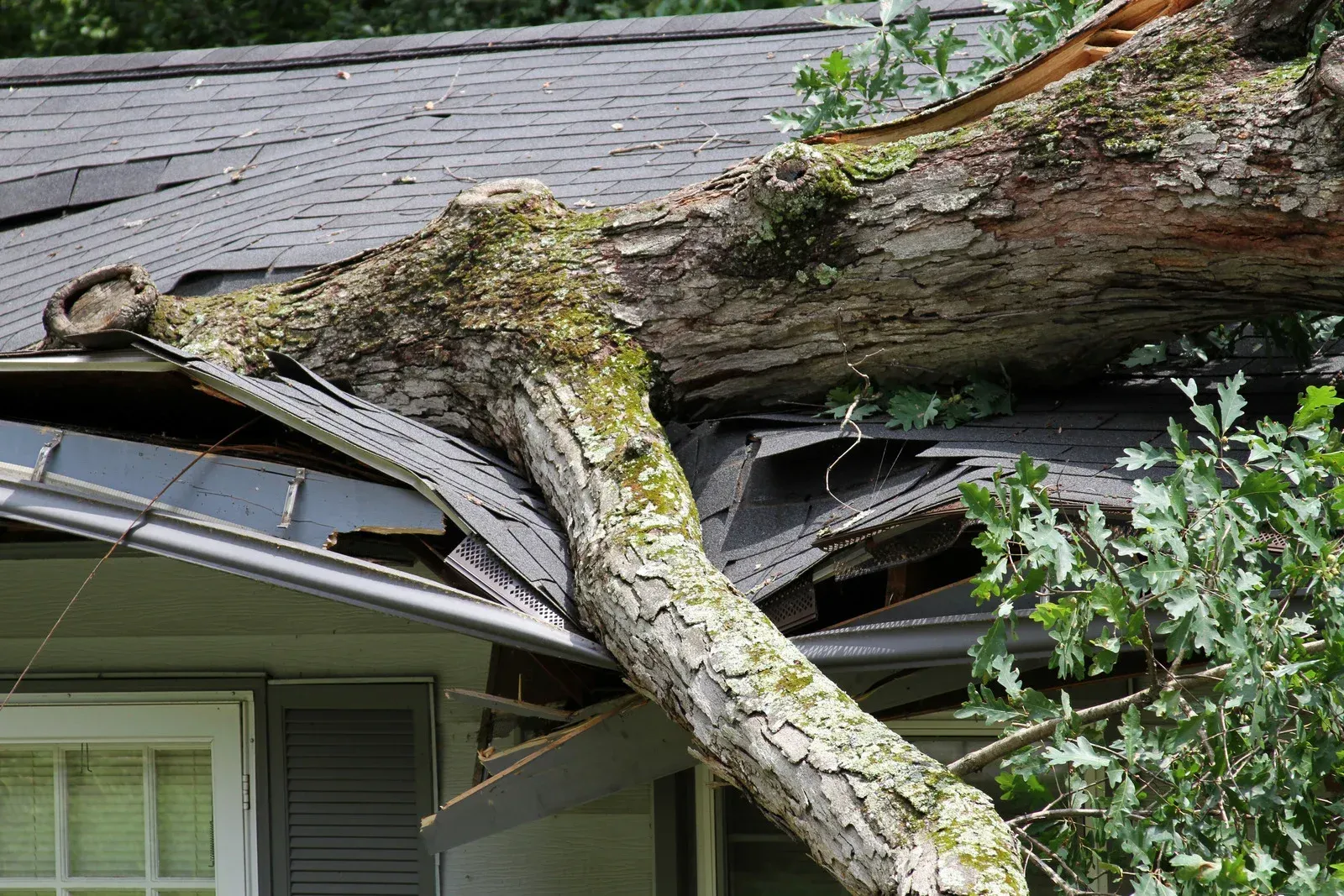
STORM WORK
Storm Damage and Downed Tree Removal
Trunks lifted off structures, hung up limbs brought down, and blocked access reopened after wind or ice. Careful cutting protects what is underneath rather than adding damage during the removal itself.
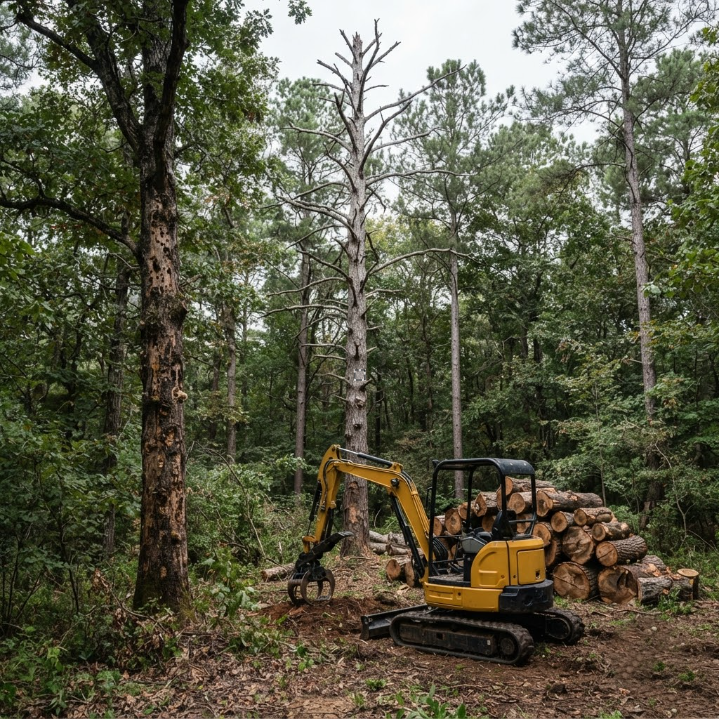
DEAD STANDING
Dead and Diseased Tree Removal
Dead pine, dying oak, and beetle killed timber removed before it drops on its own. Standing deadwood loses strength unpredictably, so it is handled with machines rather than climbers wherever possible.
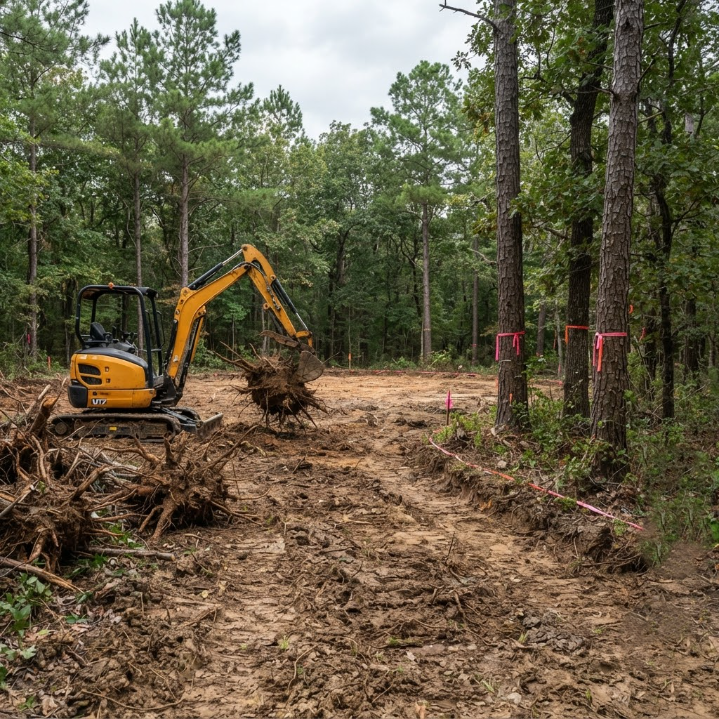
LOT TREES
Building Site Tree Removal
Trees inside a house pad, driveway, or shop footprint taken out with the root balls, so nothing rots and settles under the structure later. Keeper trees just outside the footprint are protected.
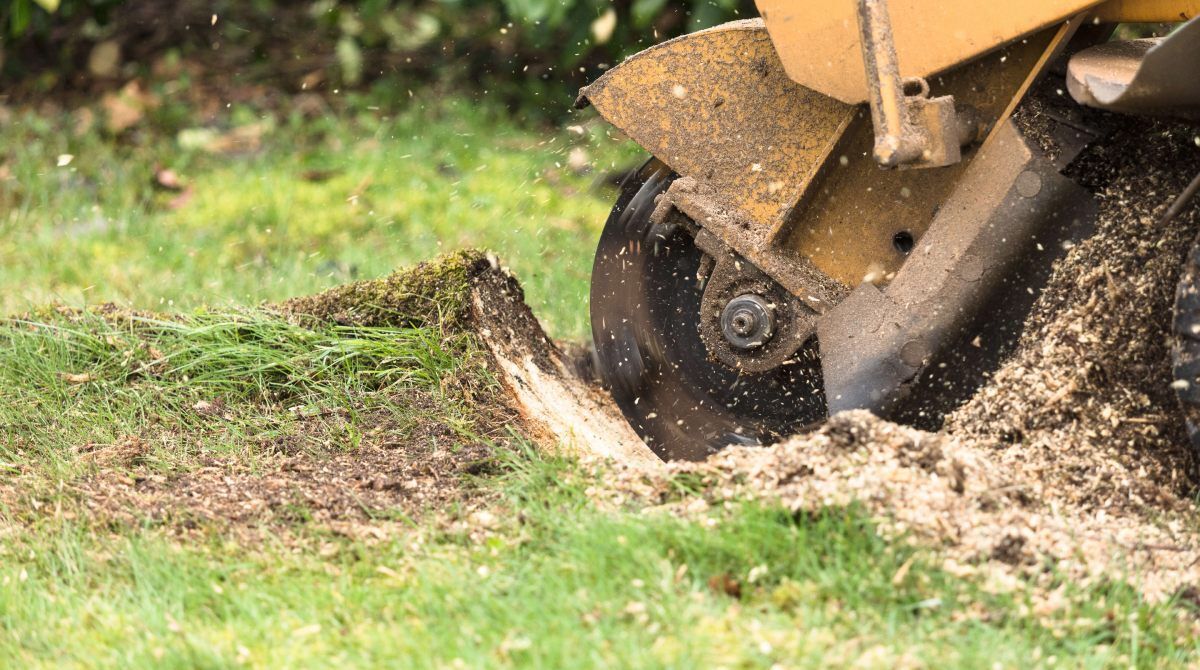
STUMPS
Stump Grinding and Removal
Grinding for finished yards where the surface matters, full root ball excavation where a slab, driveway, or fill will sit on top. Holes are backfilled and left ready for seed.
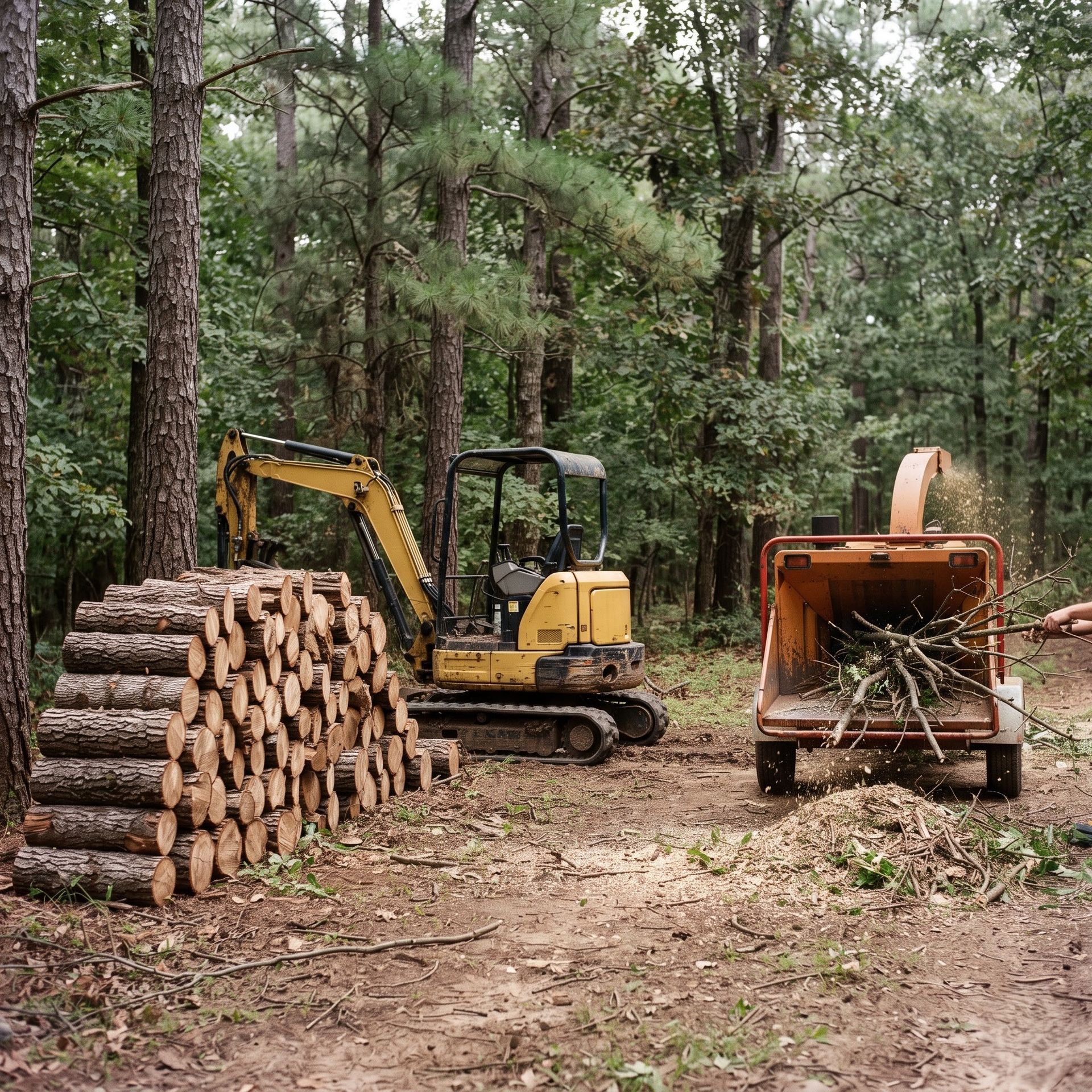
WOOD HANDLING
Log, Limb, and Debris Cleanup
Trunks cut to firewood length and stacked, limbs chipped or hauled, and the work area raked clean. Merchantable logs can be decked at the road if the timber is worth selling.
THE WORD ON OUR WORK
WHAT OUR CLIENTS SAY.
Tree work gets judged on what did not happen: no damaged roof, no broken fence, no ruts across the lawn. Property owners around Garland County have described crews that showed up on time, worked long hours, and stayed until the job was finished properly rather than merely finished.
FAQ
FREQUENTLY ASKED QUESTIONS.
Tree questions usually come down to safety and aftermath: whether a tree actually needs to come out, how it can be dropped safely, and what is left behind afterward.
How do I know if a tree needs to be removed?
Look for a lean that has changed, soil lifting on the uphill side, mushrooms at the base, large dead limbs, or a hollow sounding trunk. Any of those combined with a target underneath is worth having looked at soon.
Can a tree be removed if it is right against the house?
Yes, by taking it down in sections rather than felling the whole thing at once. The excavator holds each piece while it is cut, then sets it down well clear of the structure instead of letting it drop free.
What happens to the wood after a tree comes down?
Your call entirely. Trunks can be cut to firewood length and stacked, chipped into mulch, decked at the road for a timber buyer, or hauled off completely. The choice affects the price and gets settled before we start.
Do stumps have to be removed along with the tree?
Not always, but anything getting a slab, driveway, or fill placed over it does. Clients Choice Contracting grinds or excavates stumps on the same visit across Hot Springs, AR, since buried wood rots and the ground above it settles.
Is it better to remove trees in winter?
Generally yes, for several reasons. Bare crowns weigh less and are easier to read, firm winter ground carries the equipment without rutting, and there is far less risk to the lawn and the landscaping sitting underneath the drop zone.
Will removing a big tree damage my yard?
Some marking is normal, and we plan the job to minimize it. Track machines spread their weight out, mats go down over vulnerable surfaces, and any ruts left behind get repaired and reseeded before we leave your property.
How close to a power line can you work?
We stop well short of energized lines and coordinate with the utility for anything near a service drop. Clients Choice Contracting takes no chances around power lines on any Hot Springs, AR property, and neither should anybody else.
Can trees be removed during a clearing job at the same time?
That is usually much the cheapest way to do it. The machines are already sitting on site, so individual hazard trees, lot trees, and full stands all come out in a single mobilization instead of scheduling three separate visits.
HOW WE WORK
FROM STANDING RISK TO CLEAN GROUND, HERE IS HOW.
STEP 01
Look at the tree and the target
We assess the lean, crown weight, decay, root condition, and everything sitting underneath it. That determines whether the tree can be felled whole or has to come down in sections from the top.
STEP 02
Price the removal and the cleanup
You get a free written estimate that covers the felling method, stump handling, and what happens to the wood. Access and any protection needed for the lawn are included rather than added afterward.
STEP 03
Set the drop zone and protect the area
The fall path is cleared, mats or plywood go down over vulnerable surfaces, and vehicles and equipment are moved well clear. Utility locates get called before any stump work begins on the property.
STEP 04
Fell or section the tree safely
Straightforward trees are felled into the planned drop zone. Tight ones come down in pieces with the machine holding and lowering each one, so nothing lands anywhere that was not chosen ahead of time.
STEP 05
Handle the stump and the root ball
Stumps are ground down or excavated whole, depending entirely on what is going over the top of them afterward. The hole gets backfilled with clean material and compacted rather than being left open.
STEP 06
Clear the debris and repair the ground
Wood, limbs, and chips are dealt with the way you chose, ruts are pulled out, and disturbed areas get raked and seeded. You look over the finished area with us before we load out.
Get Your Free Estimate
GET THAT TREE LOOKED AT, FREE.
If a tree has you watching the forecast, send us a photo and the address through the contact page. We will come out, tell you honestly whether it needs to come down, and price the work in writing.
WHAT YOUR TREE REMOVAL ESTIMATE COVERS
✓ Which trees come out and which stay
✓ Whole felling or sectional removal
✓ Protection for lawn, drives, and structures
✓ Stump grinding or full excavation
✓ Where the wood, limbs, and chips go
✓ Cleanup, backfill, and reseeding